

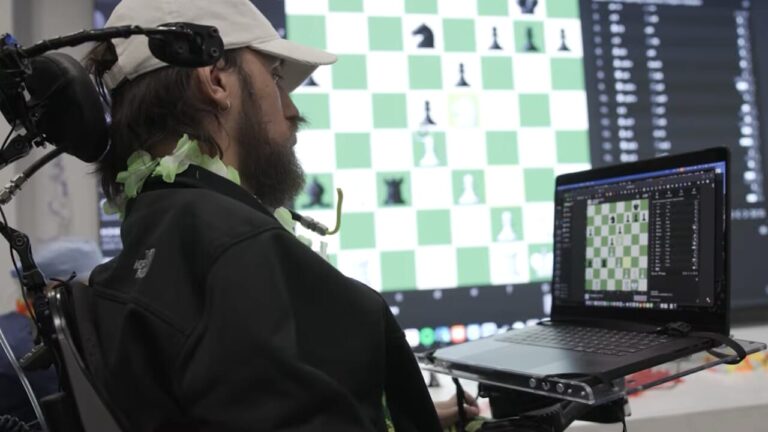
Two years have passed since Elon Musk announced that Neuralink (a start-up he co-founded) had implanted Telepathy, the first neural microchip conceived and designed to translate brain activity into digital commands, into a human patient. ‘Patient zero’, Noland Arbaugh, who became quadriplegic after a car accident, declared a few weeks after the implant, despite extremely limited mobility, that he was finally able to easily dedicate himself to his hobbies: taking Japanese lessons, playing MarioKart and chess. All thanks to that chip capable of recording the electrical activity of neurons and converting these signals into commands to control an external device.
Brain chips: what the first 2 years of tests say
Noland was the first of those that the company renamed ‘Neuralnaut’: the participants in the experimentation, during the first 24 months of the trial, rose to 21, and their direct experience seems to mark, at present, giant steps forward for neural technology. At the end of January, Neuralink released “Two years of Telepathy”, a report on the first 24 months of testing: above all, the most surprising data concerns the speed with which patients are able to type texts with their mind. In fact, several subjects would be able to ‘type’ up to 40 words per minute thanks to the interface that interprets the brain signals associated with language, converting them into characters on the screen. This is a typing rhythm – the Neuralink researchers point out – comparable to that of a person using a physical keyboard at a moderate speed.
Among the most surprising stories tracked in the report is that of Audrey, the first woman to host ‘Telepathy.’ After suffering a spinal cord injury twenty years ago, he was unable to independently control a computer for nearly two decades, having to constantly rely on his partner’s care to complete his daily tasks. Despite her limited experience using technology, the patient was able to quickly master Telepathy and rediscover her love for art. Thanks to the chip she is able to create complex works, “visually transmitting her story through abstract art – we read in the report -. After obtaining online recognition” Audrey now “aims to open a physical gallery to further exhibit her work and inspire others”.
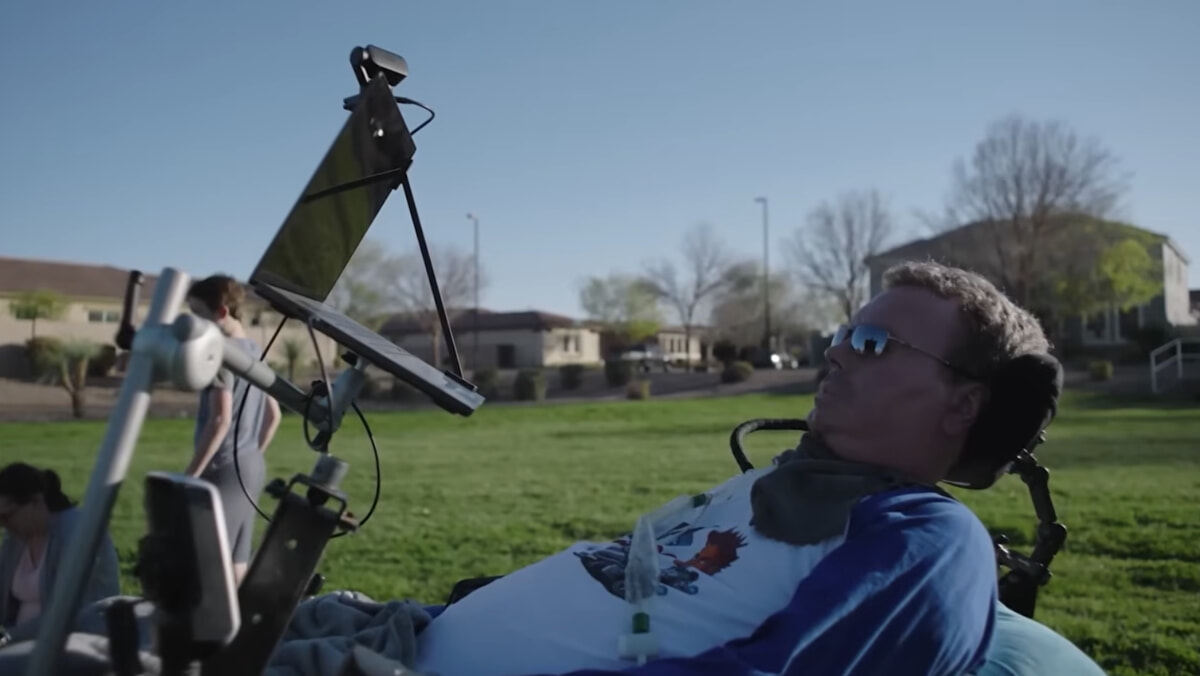
Among the 21 Neuralnauts there is also Brad, the first participant in the program suffering from ALS, whose main frustration linked to paralysis was not being able to look around. An inability that did not allow him, for example, to see his son compete in robotics competitions due to the inability to move his neck. Now, thanks to Telepathy, he can rotate a camera – attached to his wheelchair – thanks to his telepathic cursor, and thus have a 360 degree view of his surroundings.
Next steps: restore your voice and sight
Neuralink’s focus is on the progress achieved, but above all on the surprising results that could be achieved in a not so distant future. In fact, advances in typing speed and telepathic control could pave the way for new interfaces capable of restoring not only textual communication but also speech itself in people suffering from serious language disorders caused by neurological diseases such as ALS or stroke. To achieve this objective, the clinical study called ‘Voice’ was recently launched: the announced intention is to “read the signals coming from the brain regions involved in the production of language” and guarantee patients “communication at a conversational speed of 140 words per minute”.
And the bar is raised even further with ‘Blindsight’, the experiment – announced by Elon Musk in March 2025 – to restore sight to the blind which has already entered the operational phase: thanks to three thousand electrodes – triple compared to the first version – the neural chip could be able to directly stimulate the visual cortex, bypassing damaged eyes and optic nerves. Despite the enthusiasm, the scientific community is rather skeptical about the results and calls for maximum caution: the doubts, in particular, concern how the brain might react in the long term – therefore after 5 or 10 years of use of the chip – and the actual lifespan of these implants.