

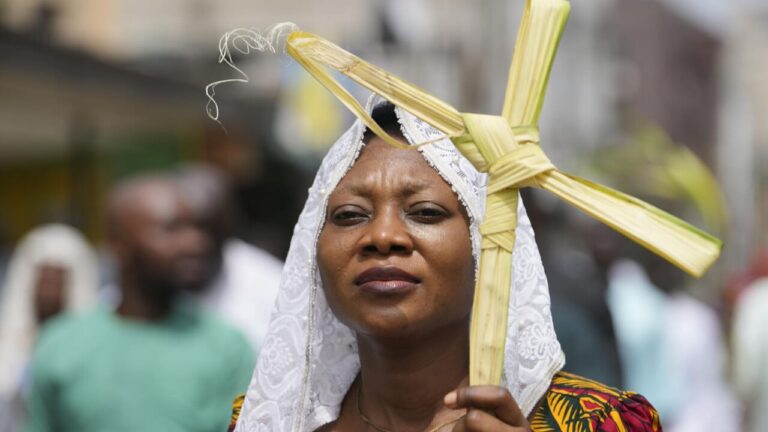
Christmas night in Nigeria was not only marked by religious celebrations, but by the roar of explosions. The United States Africa Command (AFRICOM) conducted a series of airstrikes in Sokoto state, in the north-west of the country, hitting locations identified as operational bases of terrorists affiliated with the Islamic State. But Donald Trump went beyond the real anti-terrorist purpose of the joint attack agreed with Abuja.
The alleged genocide of Christians according to Trump
The president of the United States in fact framed the air raids as an emergency humanitarian intervention aimed at stopping what he defined as a “Christian genocide”. This position is not new for the Trump administration, so much so that in November 2025 it included Nigeria in the list of “countries of particular concern” for religious freedom, a move prompted by Congressman Riley Moore. The Republican from the state of West Virginia had in fact denounced the killing of over 7,000 Christians in 2025 alone (with an average of 35 victims per day), defining the persecution of Christians as “alarming and systematic”.
For years, Christian groups and activists have pressured the Biden administration to reclassify Nigeria as a “country of particular concern,” a category reserved for states where religious freedom is severely compromised and could pave the way for U.S. sanctions. During his first term, Trump had put Abuja on the list. However, the designation was revoked in 2021 by the Biden administration. In that year’s report on religious freedom in Nigeria, the State Department documented mass killings that affected both the Christian and Muslim communities, without however naming Christians as the specific target of the violence. Trump’s return to the White House was seen by activists as a new window of opportunity to reinstate the designation.
“Country of particular concern” status is an official classification under the United States’ International Religious Freedom Act of 1998. The law requires the president to declare this status when a country’s government has “committed or tolerated particularly serious violations of religious freedom.” These violations include arbitrary executions based on faith, religiously motivated torture or inhuman treatment, and other denials of a person’s fundamental rights to life, liberty, or security on religious grounds.
In the case of Nigeria there is no evidence that the government has carried out any such acts. The numbers provided by Moore, in fact, were promptly denied by Nigerian president Bola Tinubu. Strongly rejecting the US reconstruction, Tinubu said the “religious genocide” narrative reflects neither the country’s reality nor its values. “Successive governments have always worked to guarantee peaceful coexistence between different faiths”, reiterated the Nigerian presidency, underlining how the violence affecting the country is of a terrorist and criminal nature, without distinctions of belief.
The killings that happen every year in Nigeria
However, there is one fact that fuels the arguments of activists and Republicans in the White House. For over fifteen years, terrorism and insurgency have ravaged some areas of Nigeria, with a particularly severe impact in the northern regions. Since 2009, tens of thousands of people have been killed and millions forced from their homes. According to the latest Global Terrorism Index, Nigeria occupies sixth position globally in 2025, with a score of 7.658, rising from the eighth place recorded in 2023 and 2024. Every year, therefore, thousands of people are killed in Nigeria, and among the victims there are a large number of Christians and Muslims. The violence includes land battles, kidnappings for ransom, sectarian tensions and terrorism, but religious activists want Trump to see the conflict through a single lens: the persecution of Christians.
The long trail of violence: here’s why and when it started
But the trail of violence has a precise birth certificate: 1953, seven years before independence from the United Kingdom. Today’s instability is the result of British colonial design. In constructing Nigeria’s borders, the colonialists decided to bring together ethnic and religious groups with deeply divergent histories, values and social structures. This forced coexistence has created a powder keg in which religious affiliation has become, over time, the main instrument of political and social mobilization.
The social and economic situation in the country is therefore much more complex than Trump claimed. Nigeria, Africa’s largest economy, has around 200 million inhabitants, divided almost equally between Muslims – around 50%, concentrated in the north of the country – and Christians – around 40%, especially in the south. It is therefore misleading to describe Christians as a minority, as done by the US president. The violence, in fact, affects both religious communities. Data from Armed Conflict Location and Event Data (ACLED), an independent observatory on violence, show how in the last four years the number of attacks carried out by terrorist groups and rebels has remained almost stable, while the number of victims has decreased.
Muslims as well as Christians are victims of violence
ACLED data highlights how non-state actors in Nigeria have targeted both churches and mosques. Jihadist groups active in Nigeria, including Boko Haram and the West African-affiliated ISIS, target both Christians and Muslims in the Muslim-majority northeast and northwest regions. Boko Haram, in particular, seeks to impose its own radical interpretation of Islamic law and also considers Muslims deemed “not observant enough” as legitimate targets.
Alongside the jihadist matrix, organized crime fuels instability. Armed gangs, often referred to as “bandits”, operate in the north-west of Nigeria, specializing in mass kidnappings and raids for the purpose of extortion, very profitable activities especially if the Abuja government gets involved. In some cases, these groups collaborate with local militias and target churches and places of worship, not so much for religious reasons, but because they are easy targets to hit. In the last six years, attacks have focused mainly on churches, but in 2015 and 2017 alone, mosques suffered a greater number of attacks.
Further complicating the picture are the conflicts between herders and farmers, which have lasted for decades. The herders, largely Muslim (especially Fulani), and the farmers, predominantly Christian (including many Yoruba communities), clash over access to land, water and pastures. Climate change has aggravated tensions: desertification pushes shepherds to move south, invading agricultural land and generating violence that often takes on religious connotations, despite having purely economic and environmental origins.