

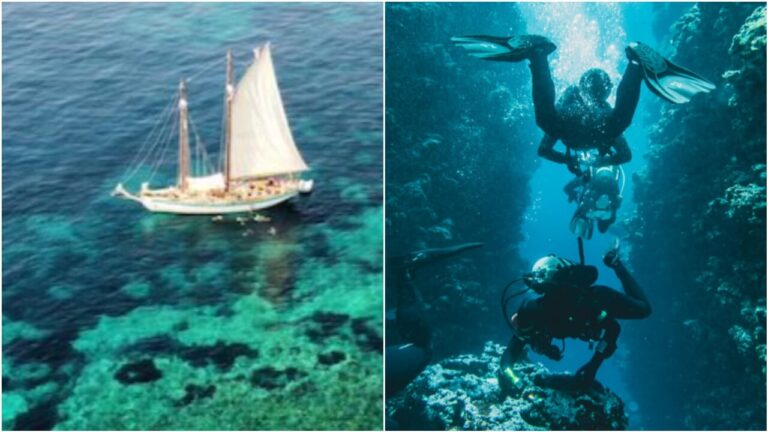
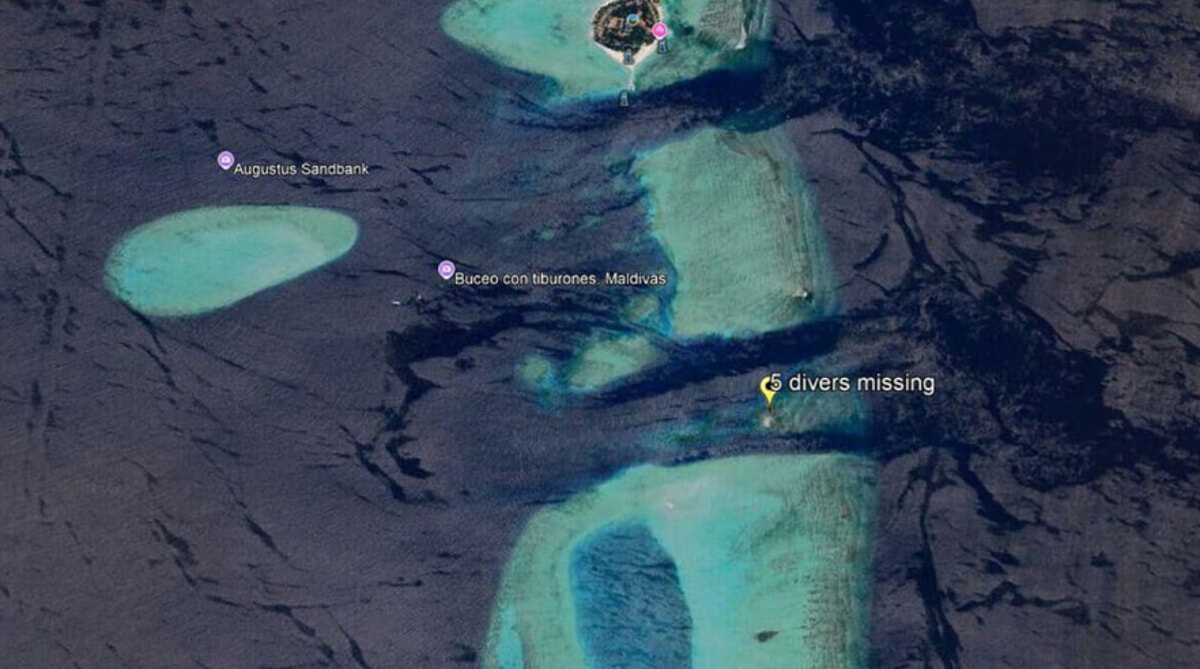
The recent tragedy in Vaavu Atoll, Maldives, claimed the life of five Italian divershas put the spotlight back on a travel formula that is as fascinating as it is complex: the tourist-scientific cruise. The victims – including Monica Montefalcone, esteemed professor of marine ecology at the University of Genoa, her daughter Giorgia Sommacal, the researcher Muriel Oddenino and two expert diving instructors, Gianluca Benedetti and Federico Gualtieri – were on board the Duke of York, a vessel used for underwater cruises (the so-called safari boats).
The Rome Prosecutor’s Office has opened an investigation into the accident, which occurred about 50 meters deep inside a cave near Alimathaa, to understand whether the death was caused by failure to comply with diving regulations, whether the weather warning was ignored or whether it was a technical error (a problem with the oxygen mixture in the tank is also hypothesized) or a human one.
The Maldives are a very frequent destination for these expeditions, which combine a passion for the sea with scientific research, in practice also known as “citizen science”, or a science done with the collaboration of citizens. It is a model of collaborative scientific research in which ordinary citizens actively and concretely participate in data collection and environmental monitoring alongside scientists.
What are scientific cruises
Unlike traditional beach holidays or standard recreational diving – which in the Maldives are strictly limited by law to a maximum depth of 30 meters -, a scientific or eco-exploratory cruise is configured as a real monitoring expedition. Not only tourists travel on board these boats, but entire teams made up of marine biologists, ecologists, university researchers and graduate students. The daily activities include a precise program that alternates sampling sessions, census of fish fauna, mapping of coral reefs and study of fragile or little explored ecosystems, such as caves and ocean channels (the kandu).
These trips are often organized in collaboration between universities, research institutes and tour operators specializing in market niches. The purpose is twofold: on the one hand it allows universities to conduct monitoring campaigns in the field by amortising logistical costs, on the other it allows very expert civilian divers (equipped with advanced patents) to actively participate in conservation projects as “citizen scientists”.
To support expeditions of this type, vessels must have above-average technical standards. As far as underwater breathing is concerned, advanced recharging systems are essential: in addition to normal compressed air (a mixture of nitrogen and oxygen), land research ships use special mixtures, such as Nitrox (a mixture of air enriched with oxygen) or Trimix (oxygen, helium and nitrogen), necessary to increase the time spent on the bottom and reduce the risks of embolism or nitrogen narcosis in deep dives.
Furthermore, flexible support means are used: the main ships (safari boats or yachts) remain anchored in safe waters, while the dives take place via smaller support boats (called dhoni), essential for accurately approaching the vertical of the dive sites.
Costs: from premium packages in Antarctica to accessible alternatives in Italy
The costs of a tourist-scientific cruise vary significantly based on the duration, the specificity of the research and the equipment of the vessel. For a standard one-week campaign in the Maldives on board equipped offshore boats, starting prices are around 2,000–2,500 euros per person for the accommodation and navigation fee alone. To this basic figure must be added several mandatory extras for this type of activity: first and foremost, obviously, international flights and local government taxes (such as the Maldivian Green Tax). Furthermore, supplements may be necessary for the use of increased capacity cylinders or special gas mixtures (Nitrox/Trimix). Finally, the costs for compulsory diving insurance for research purposes and specific hyperbaric coverage should be mentioned.
Overall, a complete package for an external participant can easily range between 3,500 and 4,500 euros. For university students or research fellows, these costs are sometimes partially covered by dedicated research funds or departmental grants, if the dive is part of the institutional tasks of the mission.
The scientific travel market does not end with tropical destinations, but ranges from a fairly wide range of alternatives with important differences in both budget and type of activity. On the one hand there are the polar expeditions to Antarctica and the Arctic, real exploratory journeys on board specialized icebreakers: in this case, an itinerary for the season has costs that start from around 9,500 euros up to over 11,000 or 12,000 euros per person, figures to which should often be added around 950 euros for the obligatory pre-departure air transfer and hotel packages, against an experience that includes dinghy excursions among the ice, conferences by international scientists and food on board.
On the opposite front, for those looking for decidedly more accessible, less exotic and short-range formulas, there are marine biology and environmental protection projects set directly in Italy, managed by historic organizations dedicated to the protection of biodiversity. For example, on the Island of Elba, summer camps are also organized for very young people which combine daily snorkeling or scuba diving sessions with theoretical lessons and nature workshops to learn to identify marine organisms.
Those who prefer a traveling adventure without deep diving can opt for mini cetacean research and monitoring cruises, such as those that sail for 4 days between the Pontine and Flegrean islands (Ponza, Palmarola and Ventotene), just to give an example, with prices starting from 550 euros. The participants stay on board a wooden schooner, sharing common life and daily tasks, and actively collaborate with researchers, dedicating themselves to whale watching, photo-identification of species and listening to the sea via hydrophones, demonstrating how the protection of the seas can be within the reach of very different budgets and technical preparations.