

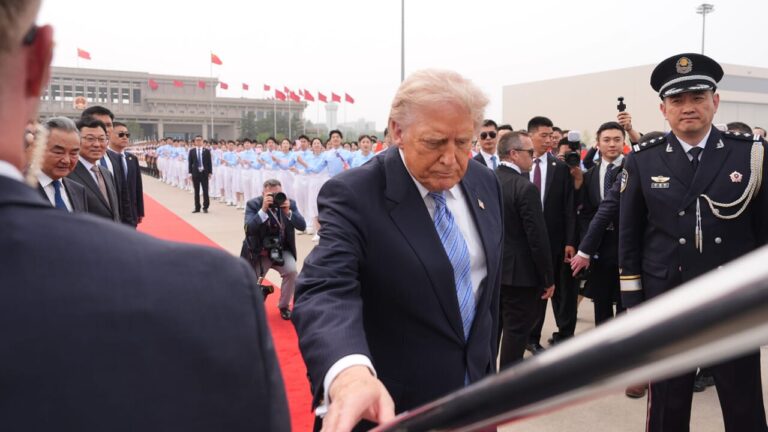
In difficulty on the domestic front and with his approval ratings now constantly declining, Donald Trump may have only one chance to get out of the quagmire: finding an agreement with Iran and reopening the Strait of Hormuz.
Trump’s approval rating is at an all-time low
According to a poll by the New York Times and Siena College, only 37% of voters approve of the president of the United States, the lowest figure of Trump’s second term and 3% lower than the percentage recorded in January. The head of the White House is paying the price above all for the war in the Middle East: 64% of Americans believe that opening a new conflict front was the wrong choice, while 69% disapprove of the economic choices of the US administration.
The numbers are in line with another CBS poll according to which 65% of voters believe that Trump’s policies are worsening the economic situation in the short term, while 37% of Republicans blame the president for increasing prices and the cost of living. The tycoon recently admitted that he doesn’t think about the financial situation of the Americans, adding that his only concern is the fact that Iran could acquire a nuclear weapon. The gaffe did not help his reputation at home and gives an idea of the climate in the United States.
Petrol costs more and more. And Trump has blunt weapons
The price of gasoline reached $4.50 a gallon, jumping by more than 50% in just a few months. The peak of over 5 dollars reached in June 2022 after the shock of the Russian invasion of Ukraine no longer seems unattainable. To contain the increases, the White House is thinking of cutting the federal tax of 18.4 cents on gasoline, but economists have already ruled that reducing the tax would not bring great benefits to motorists. Not only that. A cut, even if temporary, would risk ruining the coffers of the Highway Trust Fund, the federal fund used to build and repair highways, bridges and public transport throughout the United States. In short, the road is viable, but cutting fuel taxes won’t make a difference.
Among the options on the table there is also a particularly drastic one, so much so that it is defined as the “nuclear option”: that is, limiting (if not completely banning) crude oil exports to other countries. The measure has its own rationale, at least apparently: given that there is a global crisis, this is the reasoning that some people make, why sell oil abroad? According to CNN, a ban on exports would have the immediate effect of causing prices to collapse, but it would only be a temporary benefit. American refineries, flooded with fuel, would soon stop producing and the losses for the country’s oil companies could be huge. But the real danger would be the backlash for the global economy which would risk hitting the United States itself, triggering an economic recession.
According to Jan Stuart, global energy strategist at investment bank Piper Sandler, faced with a situation of this type “there is little the administration can do”. In short, the measures under study (and those already adopted) seem more like palliatives. As are the excise duty cuts passed by the governments of other states, including Italy. The reality, summarizes CNN, is that Trump “has only one tool left to drastically reduce fuel prices: obtaining the reopening of the Strait of Hormuz, in one way or another”.