

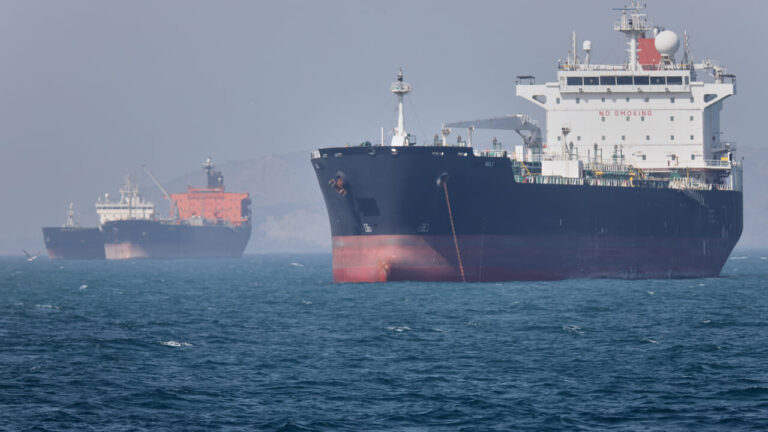
Rumors continue on the new draft agreement between Tehran and Washington. According to Iranian media, the latest text mentions restoring commercial traffic in the Strait of Hormuz to pre-war levels within 30 days as Iran’s main commitment. The United States, for its part, would withdraw military forces from Iran’s vicinity and lift the naval blockade.
The Iranian news agency Mizan writes this, adding that navigation in the Strait will be managed jointly by Iran and Oman. The United States will withdraw troops “from the area surrounding Iran,” although it is unclear whether this includes forces deployed to the region or those stationed at bases. If a final agreement is reached within two months, it will be ratified by the United Nations Security Council through a resolution, Iranian television IRIB also reports.
According to the deputy political chief of the IRGC navy, Mohammad Akbarzadeh, a new war with the United States is unlikely, but that Iran “is ready to repel any attack”. State TV also specifies that the “Islamabad memorandum” has not yet been finalized and that Tehran will not take any steps without a “concrete and tangible verification” of the commitments under the agreement.
The information released by the Iranian media was branded as false by the White House, denying these terms of the possible agreement. “No one should believe the reports spread by Iranian state media. It is a complete fabrication.”
Hormuz pivot of negotiations and Iranian negotiating power
An example of the US difficulty is the fact that the main point they would obtain, according to what was leaked in the draft, is the restoration of trade levels to pre-war levels. The risk is therefore that the war wanted by Donald Trump will lead to nothing other than the difficult renegotiation of conditions that already existed. The pivot is obviously Tehran’s control over the Strait of Homuz.
The economic war with the United States has become the main battlefield, underlined the Iranian president himself, Masoud Pezeshkian. “This time Iran’s red line is clear: documents and signatures alone are not a guarantee. The concrete guarantor of the survival of the agreement is the Strait of Hormuz”, wrote in X Ali Akbar Velayati, advisor for international affairs to the Iranian Supreme Leader, Mojtaba Khamenei. “History bears witness that all invaders who came with hegemonic desires, from Alexander the Great to Genghis Khan to Donald Trump, were absorbed into the embrace of ancient Iranian civilization.” “Geography does not lie – he added – it is the final judge of treaties written on paper”.