

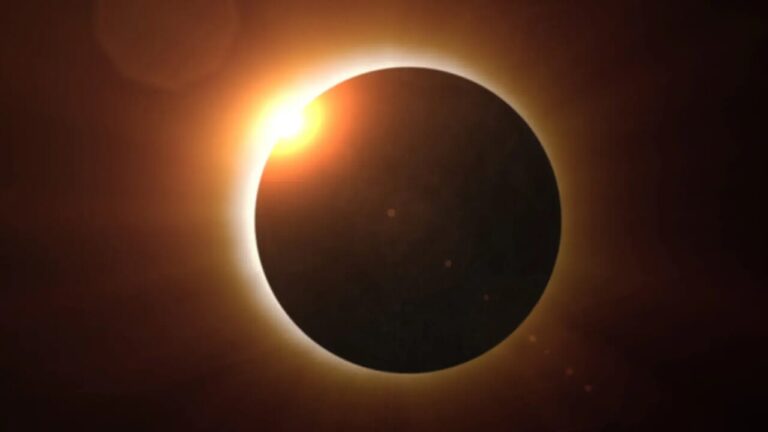
The astronomical event of the year is now upon us. On August 12th a solar eclipse will cross the northern hemisphere, giving an exceptional spectacle to millions of people, including in Italy. A more unique than rare event, given that for over 20 years we have not witnessed a total (or almost) total solar eclipse in our country. This year’s celestial phenomenon will be total along a geographic corridor that will include Greenland, Iceland, Portugal and much of Spain.
In Italy the event will manifest itself as a partial eclipse, but still very pronounced, at least in the northern areas of the country: the solar disk will be progressively hidden by the Moon starting from late afternoon, culminating in the minutes before sunset with coverage that will reach 90 percent in Milan and other cities in Northern Italy.
The map of the phenomenon
The extent of each solar eclipse varies significantly depending on the geographical position from which it is observed, as well as the time of day when the Moon covers the solar disk. While the band of totality will allow us to appreciate the daytime darkness for a few minutes in the Spanish regions, in Italy the percentage of darkening of the solar disk will show a marked gradient from north-west to south-east. The eclipse will also take place close to sunset, therefore offering a less impressive spectacle than what would be seen in the central hours of the day.
In the northern regions and along the northern Tyrrhenian coast, it will still be possible to appreciate a rather spectacular event, with coverage that will reach values close to 90 percent. The onset of the phenomenon is estimated at around 7.30pm in the Milan area, shortly before the star sets on the horizon. In the South and on the smaller islands, on the contrary, the darkening will be decidedly more contained, stopping at around 20 percent. To consult in detail the exact start, maximum and end times of the event, as well as the overall duration and the percentage of solar surface covered for each individual Italian municipality, you can use the eclipsemap.xyz portal.
Safety and observation methods
Planning the direct observation of a solar eclipse, even a partial one, requires attention and rigorous compliance with safety precautions, since infrared and ultraviolet radiation can cause irreversible damage to the retina even when the brightness appears attenuated. Traditional sunglasses, as well as x-ray films or smoked glasses, are not adequate. Instead, it is necessary to use special visors and glasses, certified for solar vision (ISO 12312-2), or at most welder’s glasses with a protection factor of at least 14 (however less recommended than specific eclipse glasses). For those who do not have adequate filters, the safest method remains indirect projection, for example using a pinhole on a piece of cardboard to project the image of the crescent Sun onto a light surface (here are INAF’s advice for building a station for indirect viewing).
The next eclipses visible from Europe
The event on August 12 opens a particularly favorable season for astronomy enthusiasts on the European continent. Spain will be the protagonist again in August 2027, when it will host another total solar eclipse clearly visible along the Strait of Gibraltar and the coasts of Andalusia, followed in January 2028 by an annular eclipse. As for Italy, the 2027 event will offer an extraordinary spectacle in the southern regions: in Sicily, and in particular on the island of Lampedusa, coverage will be close to total (exceeding 98%), making it one of the best observation opportunities from the national territory in the coming decades.