

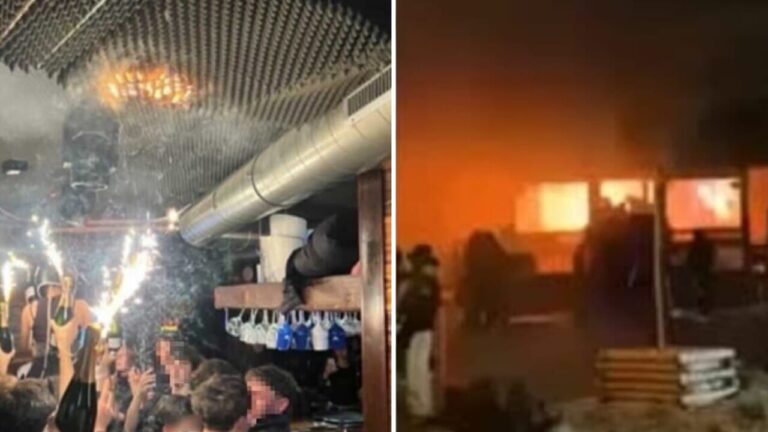
Italy was not admitted as a civil party in the trial over the Crans-Montana fire, the fire that broke out on New Year’s Eve in the Swiss club Le Constellation which caused 41 deaths. The Sion Prosecutor’s Office rejected Rome’s request. That night 6 Italian boys died and 14 were injured.
The motivation behind the decision
The decision was communicated on July 29 to the Genevan lawyer Romain Jordan who represents the Italian government. The news emerged only on August 6 because the dossier on the investigation was filed only in the last few hours. According to the Swiss magistrates, “neither the Italian citizenship of several victims, nor the costs incurred by the Italian Republic to provide assistance to its citizens who are victims of the facts prosecuted are suitable to confer the status of injured party”.
By “injured party”, underline the prosecutors, “we mean any person whose rights have been directly damaged by a crime (…) the injured party must also suffer damage in direct causal connection with the crime prosecuted”. According to the Prosecutor’s Office “it is not sufficient that it (the State, ed.) is harmed by the crime in question in the public interests that it has the task of defending or promoting; it must be directly harmed in its personal rights, like a private individual”. They then conclude: “When the state body acts as a holder of public authority, it defends public interests and cannot at the same time be directly harmed in its own individual interests.”
Italy has appealed
Through the Swiss lawyer who protects Italian interests, we read in a note from the Farnesina, a detailed and articulated appeal was presented, which “refutes all the findings of the Swiss judge of the court which are not shared and which are outdated also in light of the jurisprudence of the European Court of Human Rights, therefore we insist that the establishment of a civil party be admitted”.