

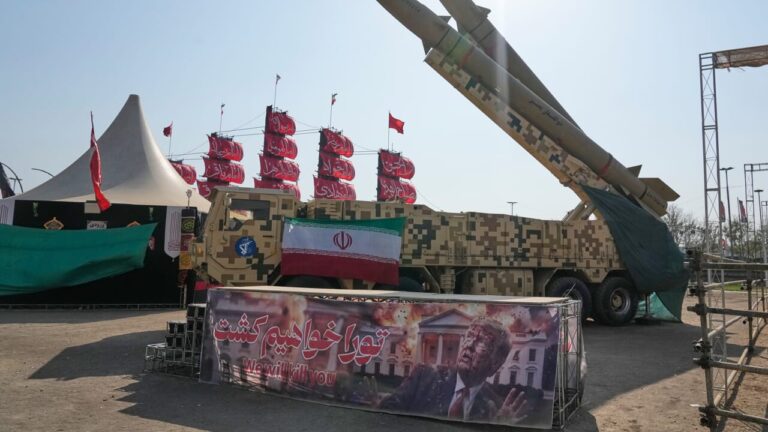
Donald Trump can still strike Iran with vastly superior military might. The problem is understanding at what price. Because five months after the start of the war Tehran seems to have identified the United States’ weak point: it does not necessarily have to win on the field, it just needs to prolong the conflict enough to make each subsequent choice made by Washington more costly than the previous one.
Iran’s new conditions for reopening Hormuz
The center of this strategy is the Strait of Hormuz, the maritime passage through which approximately one fifth of the world’s traded oil and gas passed. The negotiation mediated by Oman seemed to have brought a technical agreement on navigation closer. But on August 8, Iran’s Supreme National Security Council dramatically upped the ante.
Secretary Mohammad Bagher Zolghadr explained that the Strait will not return to normal until Washington “corrects its behavior.” The demands include an end to threats against Iran, an end to the war against Tehran and its regional allies, the lifting of the naval blockade of Iranian ports and the withdrawal of American forces from the area. Added to these conditions are the payment of war damages, the cancellation of sanctions and the unconditional release of frozen Iranian assets.
Accepting them in full would mean for Trump to concede to Iran a good part of what the United States tried to achieve with the war. Rejecting them, however, means leaving open a conflict that continues to consume men, vehicles, missiles and political capital.
Then there is another even more delicate issue. The agreement under consideration with Oman could effectively grant Tehran a permanent role in the management of ships entering the Gulf. It would be a huge change from the pre-conflict situation, when Hormuz was considered an international waterway open to navigation.
Emirates oil tankers in the crosshairs
The demonstration of how dangerous it still is to cross the Strait came on 8 August. The United Arab Emirates accused Iran of hitting a ship linked to Adnoc, the Abu Dhabi-based public energy giant, which has lost 15 of its ships since the start of the war.
It is precisely this uncertainty that makes Hormuz such an effective weapon. It is not necessary to physically block every ship: missiles, drones, skyrocketing insurance premiums and the risk of losing crews and cargo are enough to drastically reduce traffic.
And the Houthis are closing in on Saudi Arabia on the other side
The pressure isn’t just coming from the Persian Gulf. On the opposite side of the Arabian Peninsula, the Houthis are also trying to threaten the Red Sea, that is, the other major route through which Saudi Arabia can bring its oil to the markets, avoiding Hormuz.
In late July, Iranian-backed Yemeni rebels attacked Saudi oil infrastructure in Jazan and Yanbu. The Jazan site is particularly important: the refinery can process 400 thousand barrels per day and the attack damaged the gasification complex and the tank area, forcing Aramco to stop the plant.
On August 9, the Saudi Ministry of Energy announced that a new raid hit the Jazan refinery, while a Houthi attack reportedly involved Saudi Aramco’s Berri gas plant in Al Jubail, not far from Qatar.
Tehran’s strategic substance is clear: to simultaneously strangle Hormuz and the Red Sea, two of the main energy and trade corridors on the planet.
The problem of American missiles
The most serious problems for Trump, however, come from the war sector due to the shortage of Patriot and Thaad interceptor missiles. The Pentagon has ordered U.S. defense companies to submit plans within 21 days to dramatically speed up production and delivery of the most urgently needed munitions. Deputy Defense Secretary Steve Feinberg wrote to manufacturers that years-long development cycles are “not acceptable” and that production capacity must be expanded immediately.
According to estimates by the Center for strategic and international studies reported byAssociated PressPatriot interceptors would go from the 2,330 available before the war to between 759 and 827, a reduction of at least 65%. Thaad interceptors would instead have dropped from the initial 452 to an estimated availability of between 234 and 278: at least 38% less than at the beginning of the conflict.
Trump publicly claims that the United States still has “massive quantities” of munitions. But the Pentagon’s order to the war industry itself demonstrates how the replenishment of supplies has become a priority. This is one of the limits to the possibility of resolving Hormuz militarily. To reopen the Strait by force it would be necessary to guarantee the protection of commercial ships, bases, ports and infrastructures in the Gulf against Iranian missiles and drones for weeks or months. Each new Iranian salvo forces the United States to decide how many expensive interceptors to use and how much risk to accept.
And then there is Israel
To further complicate the picture there is Israel. On August 8, the commander of the United States Armed Forces Unified Combatant Command, Admiral Brad Cooper, met with Chief of Staff Eyal Zamir and other senior officers. Tel Aviv media explain that Israel has communicated to the Americans that it is ready to act again against Iran even without Washington’s support. A problem for Washington which – to reach a compromise on Hormuz – must avoid a new escalation capable of ruining the negotiation. If Israel were to strike Iran again on its own, Tehran could respond against Israel, American bases or the Gulf’s energy infrastructure, immediately reopening the military spiral.
Why Trump is “in check”
Saying that Trump is in check does not therefore mean claiming that Iran is winning militarily. Iran’s military has suffered enormous losses and its economy continues to pay for the blockade and the war. Tehran’s strategy also involves very high risks: a new attack capable of causing many American victims could provide the White House with the political reason for a new offensive.
But Iran has managed to transform Hormuz from a simple maritime strait into a negotiating leverage. Trump can continue the war, but he would consume more munitions and risk new attacks on energy infrastructure. It can attempt to open the Strait by force, but would have to commit even more resources. He can slow down Israel, risking a clash with Netanyahu. Or it can negotiate, granting Tehran at least part of what it demands.
This is the point to which Iran wants to bring the United States: not having to militarily defeat the greatest power in the world, but forcing it to choose what price it is willing to pay to get out of the war. And the more time passes, the more that price increases.