

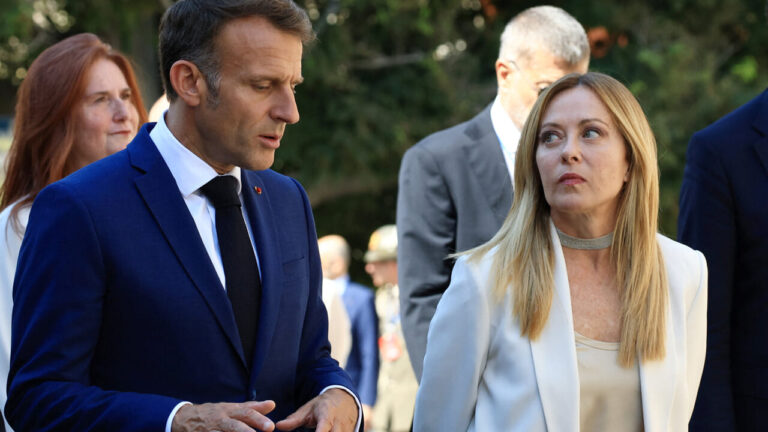
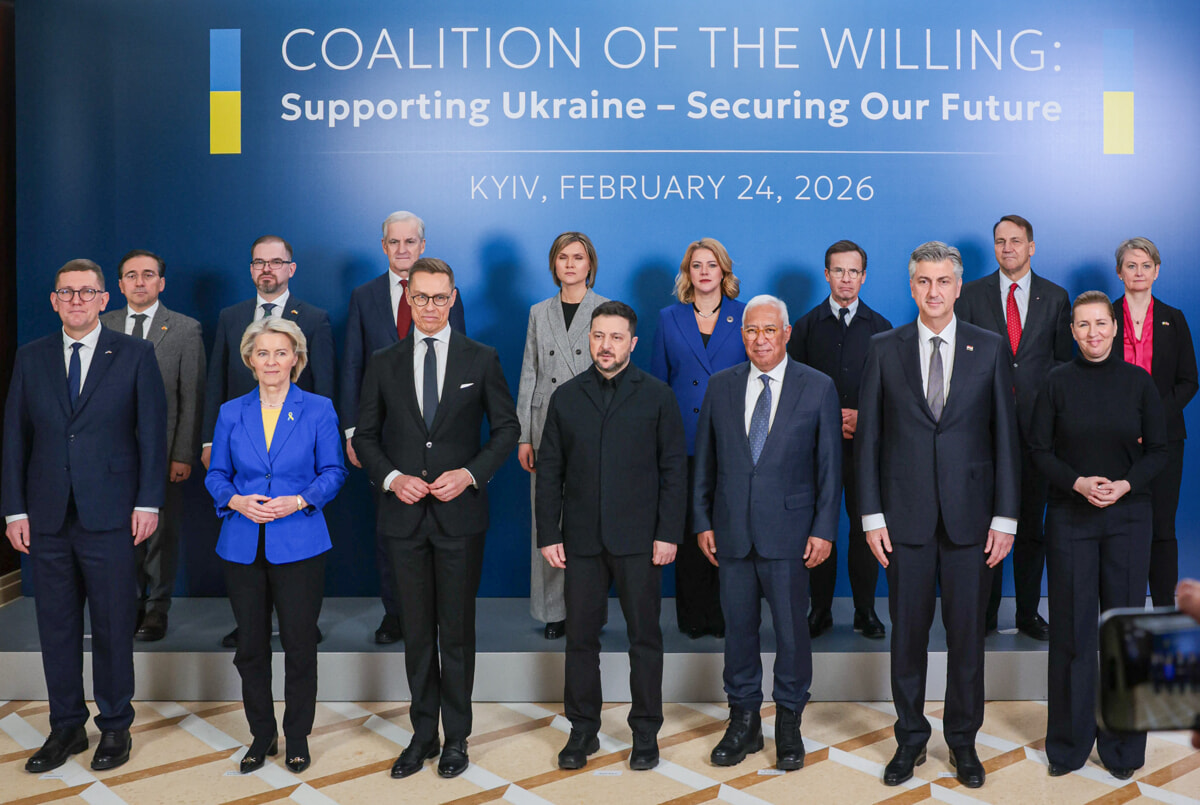
The willing accelerate their support for Kiev, driven above all by Andy Burnham. At the Coalition meeting, coinciding with the anniversary of Ukrainian independence, the British Prime Minister authorizes the provision of confidential plans for the Storm Shadow long-range missile to allow the French and Ukrainians to accelerate production of the long-range weapon in Ukraine. On the same day, French President Macron announced that the “Multinational Force for Ukraine” exercises will be conducted in October and November.
What should we expect
They will not simply be tanks firing blanks on a firing range, much less a direct threat to Russia. The large military exercises of the so-called Coalition of the Willing will have one objective above all: to test in advance how to bring a European military force to Ukraine in case the war with Russia ends.
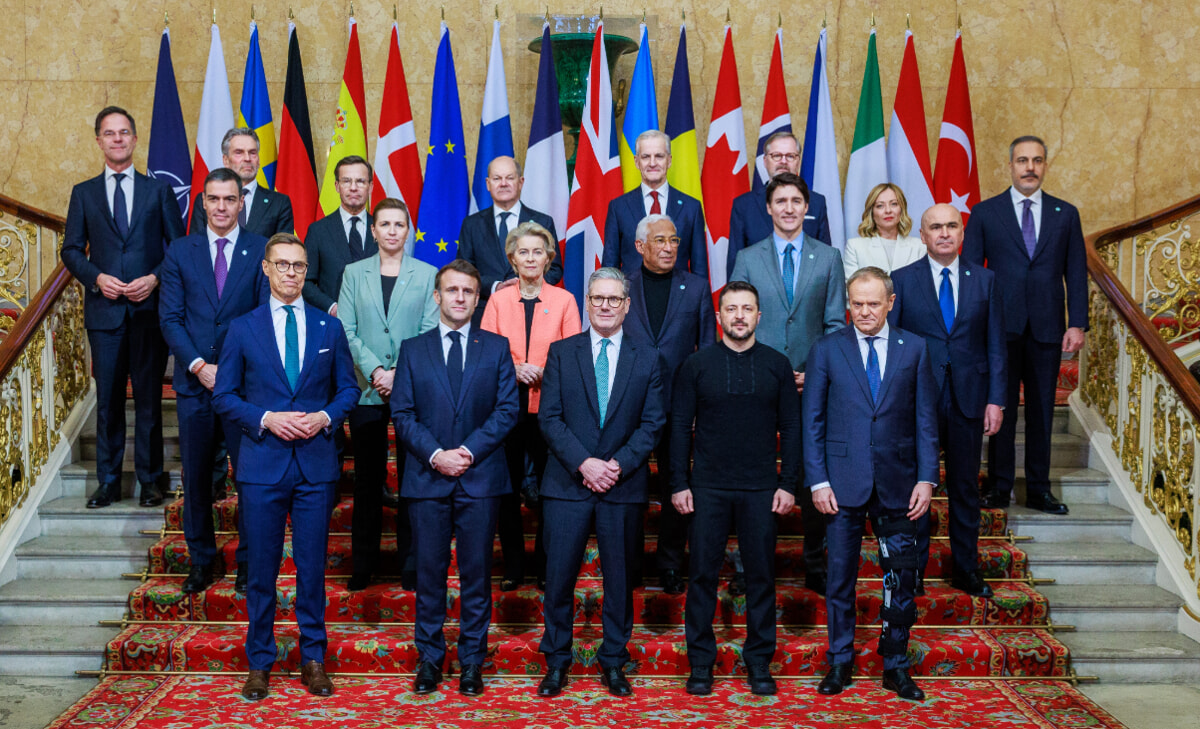
The joint maneuvers – unofficially over 25 nations would have joined the coalition – will have to demonstrate the “operational readiness” of the armies and the ability to act once hostilities have ceased. Italy, according to what has been made known by government sources, will not participate, consistently with the line maintained so far by Giorgia Meloni: support for Ukraine especially on the negotiating level, but no Italian soldiers on Ukrainian territory.
The force that should enter Ukraine after the war
To understand what the “Willing” will practice doing, we need to start from the Multinational Force for Ukraine, the Mnf-U. It is not a NATO force and it is not even a UN blue helmet mission. It is a military structure created within the coalition led mainly by the United Kingdom and France to provide Ukraine with security guarantees after a possible ceasefire.
The plan is already much more advanced than a simple political declaration. The force has been declared “Ready to Operate”, i.e. organizationally ready to come into operation. Its operational headquarters is in Paris and since 24 July command has passed to British General Tom Bateman, supported by a French deputy commander. London claims that over 25 nations are participating in the project, although a list of contingents has not been published nor has it been clarified how many soldiers each country would be willing to deploy.
The condition is basic: this force should not enter Ukraine while the current war is underway. The Coalition documents provide for its deployment, at Kiev’s request, only after a “credible cessation of hostilities”.
The tests begin in Poland
A first piece of the exercise has already been defined. Poland will host the first Coalition military maneuvers. Donald Tusk’s government has announced that British and French forces will take part, along with Polish soldiers and other allied units.
And we also know what one of the main exercises will be. Polish Deputy Defense Minister Paweł Bejda announced the arrival of around 1,500 British and French soldiers starting in September. He defined them as “logistical-transport” exercises, aimed in particular at preparing the rapid transfer of troops.
Put more simply: the armies will test the route that could one day bring men and equipment from Western Europe towards the Ukrainian border and, if political order arrives, into Ukraine. It means organizing rail and road convoys, transporting heavy vehicles, fuel and equipment, coordinating armies that speak different languages and use different systems, setting up communications and common commands and ensuring the protection of columns during movements.
Poland, in this scheme, would inevitably become one of the great logistical hubs of the future mission. Warsaw has also announced the preparation of infrastructures that allow a more stable presence on its territory of allied forces in addition to the US forces already present.
What would European soldiers do in Ukraine
The Mnf-U would have two tasks that the British define as “regeneration and reassurance”. The first is to continually replenish Ukrainian military capacity: train soldiers, provide equipment, organize supplies, and help Kiev maintain an army strong enough to deter a second Russian attack.
The second concerns the actual Western military presence. The plans include land, air and sea capabilities. London also spoke of patrols in the skies and seas intended to create the conditions for the recovery of civil aviation, investments and the Ukrainian economy.
This does not necessarily mean deploying thousands of European soldiers in the trenches of Donbass. On the contrary, the logic of the mission would be to operate mainly in the rear, in training centers, in logistics hubs, in bases and in the protection of air and maritime space.
And it is exactly this device that the autumn exercises will have to begin to put to the test.
Because Italy said no
Italy continues to be part of the Coalition of the Willing and Giorgia Meloni also participated in the last meeting. Rome also continues to support Kiev militarily and financially. But the government has long drawn a red line on the presence of Italian soldiers. After Macron’s announcement, government sources specified that Italy will not participate in the exercises, explicitly recalling the “no to Italian soldiers” in Ukraine.
The decision is significant because these maneuvers are not intended as a NATO exercise to defend an Alliance country. They serve specifically to prepare the force that may be called upon to operate on Ukrainian territory. Participating in it would therefore mean entering directly into the military preparation of that future mission.
The problem: what happens if Russia attacks again?
It is also why these exercises have political importance far greater than the number of soldiers involved. The ultimate goal of the MNF-U is to create deterrence. After a hypothetical agreement, Moscow should know that a new attack on Ukraine could mean hitting not only Ukrainian soldiers, but also British, French or other European countries.
And this is where the risk of the project lies. The multinational force would not automatically be a NATO mission. A possible Russian attack against European soldiers located on Ukrainian territory would therefore not automatically equate to the activation of Article 5 of the Atlantic Alliance. The answer would depend on the security guarantees agreed with Kiev and the decisions of individual governments.
But this very possibility should represent the deterrent: forcing the Kremlin to consider that a new offensive could turn into a direct clash with some European armies.
The maneuvers of October and November therefore serve to answer a very concrete question: if a ceasefire were signed tomorrow, how quickly would Europe really be able to transform the promises made to Ukraine into soldiers, planes, ships and vehicles deployed on the ground?