

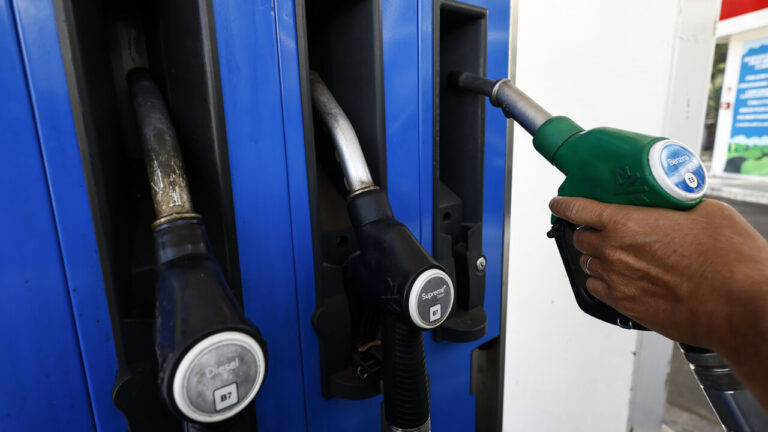
Petrol returns above the threshold of two euros per liter and reaches levels that have not been seen in Italy for almost three years. According to the latest data from the fuel price observatory of the Ministry of Business and Made in Italy, on Thursday 20 August the average price of green in self-service mode on the national road network rose to 2.002 euros per litre. Diesel is even more expensive, reaching 2.116 euros per litre.
To find petrol above the two euro mark, you have to go back to September 2023. According to the weekly statistics collected by the Ministry of the Environment and Energy Security, in the week between 18 and 24 September of that year, green petrol had reached an average of 2.001 euros per litre.
We are still far, at least for the moment, from the peaks recorded in the spring of 2022, in the weeks immediately following the Russian invasion of Ukraine. In March of that year, petrol had reached and exceeded 2.2 euros per litre, prompting the Draghi government to intervene with a temporary cut in excise duties.
How much does it cost to get petrol today
The increase becomes even more evident for those traveling on the motorway, especially in the days of the summer counter-exodus. According to Mimit, on the motorway network the average price in self-service mode reached 2.077 euros per liter for petrol and 2.186 euros for diesel.
Translated on a full tank of a car with a 50 liter tank, it means spending around 100 euros for petrol on the ordinary network and almost 104 euros on the motorway. For a full tank of diesel the price rises to around 106 and 109 euros respectively.
The increase in fuel prices also risks having consequences that go beyond the cost borne directly by motorists. In a country in which a significant portion of goods are transported by road, the increase in diesel prices can in fact be passed on to logistics costs and, at least in part, to the final prices of the products.
Codacons: “Cut excise duties on petrol too”
Codacons is asking for immediate intervention from the executive. “With petrol exceeding the psychological threshold of 2 euros per liter throughout Italy, the government no longer has any excuses and must intervene immediately with a further cut in excise duties also extended to petrol”, claims the consumers’ association.
According to Codacons calculations, in the month of July alone Italians would have spent 782 million euros more on petrol and diesel compared to the same month in 2025. If prices were to remain at current levels, the increased spending on supplies in the July-August two-month period could reach 1.8 billion euros compared to the same period last year.
The association therefore asks the government not only to extend the cut in excise duties on diesel beyond August 25, but to also extend the measure to petrol, recalling that there are over 17 million petrol-powered cars in circulation in Italy.
“In the absence of measures, the summer counter-exodus will turn into a massacre for families’ wallets”, warns Codacons, which urges a new provision from the executive in the next few hours.
The issue of excise duties and European rules
However, any intervention on excise duties must also take into account European legislation. Member States can reduce taxation on fuel as long as they continue to respect the minimum rates established by the European Directive on the taxation of energy products. To go below those thresholds, a derogation is required, proposed by the European Commission and subsequently approved by the Council.
The issue does not only concern Italy. The Commission confirmed that it had received a request for a derogation from Slovenia and that it was ready to examine it promptly. Brussels has also adopted a decision relating to Spain, which will now have to be examined by the Council.
With pump prices back at autumn 2023 levels and the counter-exodus upon us, the pressure on the Italian government is therefore destined to increase. The point now is to understand whether the executive will choose to limit itself to extending the interventions already adopted on diesel or whether it will decide to extend the tax discount to petrol as well.