

A plane trip costs exactly what the market deems appropriate at a given second. Very soon, however, it could cost exactly as much as you are willing to shell out just before closing the browser tab. It is the subtle but decisive boundary towards which commercial aviation is moving, driven by the entry of artificial intelligence into control systems. yield management (profit maximization).
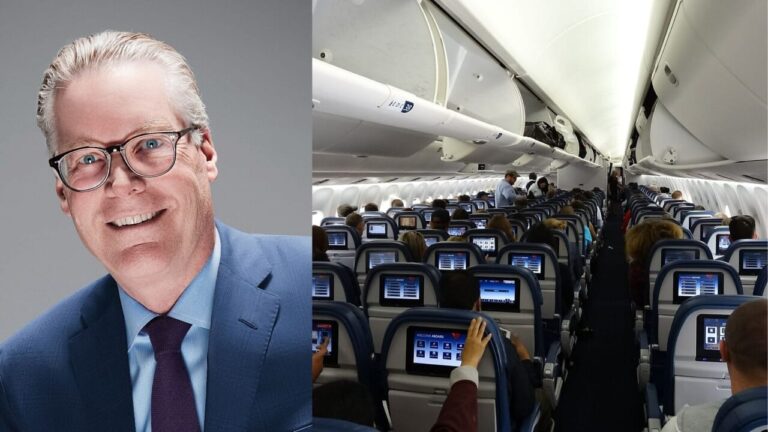
Delta Air Lines is charting the course, as he recalls Falcovbs. The CEO of the US company, Ed Bastian, in recent months has presented to investors a scenario in which the adoption of advanced predictive systems could increase the company’s profits by up to 50%. The engine of this transformation has a precise name: Fetcherr, an Israeli startup specialized in dynamic pricing algorithms for the transport sector.
The “super analyst” of the ticket office
In fact, Fetcherr processes thousands of variables simultaneously: local and global demand levels, competitor rates, weather conditions, seasonality and even macroeconomic fluctuations. The stated objective is to recalculate prices in real time, flight by flight, passenger by passenger. Earning much more.
If in July 2025 the technology covered approximately 3% of the fares managed by Delta, the company’s roadmap envisaged extending it to at least 20% of the routes by the end of the year. Delta president Glen Hauenstein described the platform as a digital “super analyst” capable of working non-stop, ensuring responsiveness impossible for any human team.
However, the transition from the classic revenue management model – based on the balance between available seats and general demand – to a customized system raises crucial questions about transparency and commercial fairness.
The personal data node
To the investors’ audience, Delta managers outlined a future based onoffer management: a model in which the fare and seat availability come together in a package tailored to the individual. A vision that immediately put the spotlight back on the US regulators.
Last summer, senators Mark Warner, Ruben Gallego and Richard Blumenthal sent a formal letter to the company’s top management to ask for clarification on the use of user data in pricing. Delta’s response was clear: the company ensured that it did not use identified personal information or individual histories to calculate the cost of individual tickets, specifying that the algorithms work exclusively on aggregate market macro-data.
Transparency on the algorithm
The issue, however, did not end there. On August 12, 2026, American MP Frank Pallone extended the scope of the investigation, writing to Delta and seven other large airlines to demand full transparency on algorithmic pricing logic. Complicating the picture is a historic regulatory void: in the United States, air transport remains largely excluded from the direct supervision of the Federal Trade Commission (FTC) regarding commercial practices and competition, leaving consumer protection “in a gray area”.
To understand where the airline sector risks arriving, just look at what is already happening in on-call road transport. Delta is in fact applying to flights a mechanism that has been widely tested by platforms such as Uber and Lyft: the price is not the same for everyone.
Two months ago, an investigation conducted by ConsumerReports found that for the same ride, requested at the same time by different users, there was a median price difference of 42.4%. The analysis also highlighted how 12.4% of the “discounts” shown on the screen were actually calculated starting from artificially inflated basic rates. An emblematic situation had already emerged in March 2026 during a hearing of the Oversight Committee of the House of Representatives. Here the case was documented of two users who, to complete the exact same journey at the same time, were offered quotes of 76 and 23 dollars respectively.
The latest generation algorithms do not limit themselves to measuring street-by-street traffic or weather conditions: they analyze the propensity to spend. They estimate the so-called “price reserve”, i.e. the maximum value that a user is willing to pay before giving up on the purchase or looking for an alternative.
Extract margin always and in any case
The introduction of these technologies occurs in an economic context marked by growing pressure on the purchasing power of families. In the same week in which Walmart leaders explained to investors how the increase in fuel prices above $4 a gallon forces consumers to make draconian choices between mobility and shopping carts, the transportation giants celebrate as a strategic innovation a system designed to push the profit margin up to the maximum limit tolerated by the customer.
And the challenge of the coming years will not only concern the legitimacy of the use of personal data, but the very definition of market transparency: when the price of an essential service such as mobility varies opaquely from one screen to another, the line between business efficiency and economic discrimination becomes increasingly difficult to draw.