

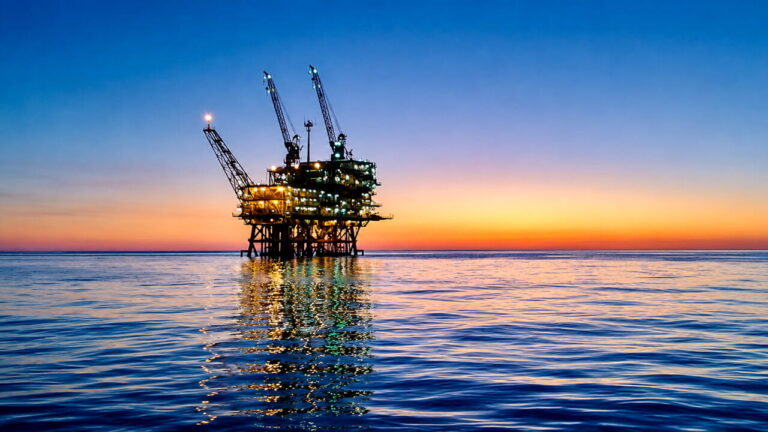
In times of expensive fuel, the thought is on how to spend less on petrol and diesel: partly because we all move, partly because we know well how the price of a full tank is immediately passed on to retail outlets of any type of consumption, in particular on food. The famous courgette, which must be transported from the field to the supermarket, and that transport costs money. But beyond the general considerations of a geopolitical nature, quite a few observers have underlined that one of the keys to pressing for cost containment could be that of increasing national production.
Italy is not and will never be Saudi Arabia or, to stay in Europe, Norway. But it can in any case count on a certain production of oil and gas which it does not exploit as it could, and which forces it to purchase abroad what it would have in a non-negligible quantity in its own subsoil. The Val d’Agri field, in Basilicata, is, so to speak, the most important non-offshore plant in Europe.
The weight of untapped resources
A choice, the reasons for which are many and which we will discuss, which condemns us to give up savings that can be quantified at around twenty cents per liter of fuel. Not all the municipalities of the Belpaese can in fact count on the choice made by the mayor of Valle Castellana (Teramo), a remote mountain village between Marche and Abruzzo twenty kilometers away from the most important population centres: to overcome the supply difficulties of its inhabitants, he “took over” the only small petrol station in the area and began to manage it directly as an administration, managing to “sell” petrol and diesel at 10/20 cents less than the other merchants in the province. For the rest of the country, that savings is only in the dream book.
“Currently our crude oil production stands at around 4.5 million tonnes per year – explains Davide Tabarelli, president of Nomisma Energia, the most authoritative Italian research and consultancy company specialized in energy and environmental markets – cwhich is less than 10% of total national demand, about 50 million tons of oil. The crude oil we process is therefore 90% imported.”
National deposits: a potential held back by protests
A figure that is not surprising, that of 90 percent, if we observe the difficulties experienced by our country (as by the other European partners) from the Hormuz crisis onwards. “This national production – continues Tabarelli – could immediately grow at least double. By forcing the plants a little, it could even reach 10 million per year if Basilicata, plus Sicily, plus a little Abruzzi or even Piedmont were regions that, instead of promoting referendums like that of the 2016 drills, implemented actions to stimulate the production and cultivation of mineral resources”.
It may seem strange, but fossil resources, which are mineral resources and ultimately natural resources, must be cultivated: “Cultivating mineral resources means starting explorations, having engineers, preparing university courses, something which unfortunately has died in Italy. These are all things that are easy to say and more difficult to do”.
From Basilicata to the historic collapse of Italian gas
The case of Basilicata is a bit of a lesson. Tabarelli explains: “Both Val d’Agri and the nearby Tempa Rossa are poorly developed, compared to the commitments that the Basilicata Region itself had made. Only that site could be doubled. Then in Basilicata there are certainly other deposits already identified which, however, should be better evaluated and invested in”. Then let’s not forget about gas, for which more or less the same reasoning applies.
“Once upon a time, when you looked for oil and found gas it was considered bad luck, because you didn’t know what to do with it, now the world has changed a bit”. Unfortunately, gas production in Italy has dramatically collapsed, and even in this case we could have it available. In 2025 we produced 3.3 billion cubic meters, as in 1953. Let’s take into account that in 1994 we had reached 21 billion cubic meters. And to say that the rest of the requirement, what we don’t produce even if we could produce part of it, we import from abroad at very high prices, today close to a maximum (for 3 years) of 70 euro megawatt hours.
Seven billion left underground and the Norway model
“Even in the case of gas, our production could be higher, by at least 7/10 billion cubic meters per year. Doing the right calculations – adds Tabarelli – every year we leave something like 7 billion euros underground. Jokingly, but not too much, I say that we would have to go to the prosecutor’s office to report this lack of income for national production. Which doesn’t solve your crises, but it does give you more internal GDP, more internal employment, more internal taxes, it gives you a bit of credit”.
The question that arises spontaneously for us consumers at this point is precisely this: if we could produce more oil and gas in Italy, would a full tank of petrol cost less? It is a question that is suggested for example by the case of Norway, the largest (Russia aside) European producer of crude oil (almost two million barrels a day, about twenty times more than Italy) where, however, fuel at the pump costs more or less the same as here. According to the findings of the last few days, 2.08 euros for a liter of petrol and about ten cents less for diesel.
How much would the price of petrol really drop?
So, how do you explain that the Norwegians produce oil as if they were an Arab state and pay full gas like the Italians? It is explained that Norway has decided not to transfer that economic advantage into the pockets of citizens but to have it flow into the “Government Pension Fund Global”the gigantic Norwegian sovereign fund, basically the Norwegian “Pants” with which social expenses and welfare are (also) financed. However, it is money that enters the state coffers, and this could happen in Italy.
The gas trap: why Italy has full reserves but bills continue to rise – by Cesare Treccarichi
“Let’s say – Tabarelli quantifies – that in any case, given the same fiscal variables, a doubling of national production could lead to a decrease in the price of fuel by around ten to twenty cents per litre”. And the rest that the State does not spend thanks to self-production goes to finance other general expenses. “It is an economic crime not to be able to use these resources,” observes Tabarelli.
The missed choices and the clash over energy
The last question: why does our country not decide to undertake a serious policy of exploiting all its extractive capabilities? “Let’s say that the difficulties come from the political front, both that of local administrators who are unable to oppose the individual committees that oppose extraction plants and refineries, and the national one, of environmentalists in general”.
The mockery of bills: we pay 9 billion for already old photovoltaic systems – by Cesare Treccarichi
They argue that fossil fuels are the past, that we must not invest, that they pollute, and that we need to focus exclusively on renewables: “It is clear that renewables are important, but for several years yet we will not be able to give up fossils. They will have to be increasingly cleaner and safer, but they remain indispensable – explains Tabarelli -. All this ideological environmentalism has infected the European and global left, and also hides a traditional hostility towards capitalism and businesses. All of which translates into a strategic weakening because then the fundamental things which are energy, industry, the ability to make technical innovation. Just make pizza, mandolin and sell a lot of spritzes in Venice. Meanwhile, China eats us alive.”
Dossier is the exclusive subscription investigative section of The Vermilion. If you want to support our journalistic work and subscribe, Click here.