

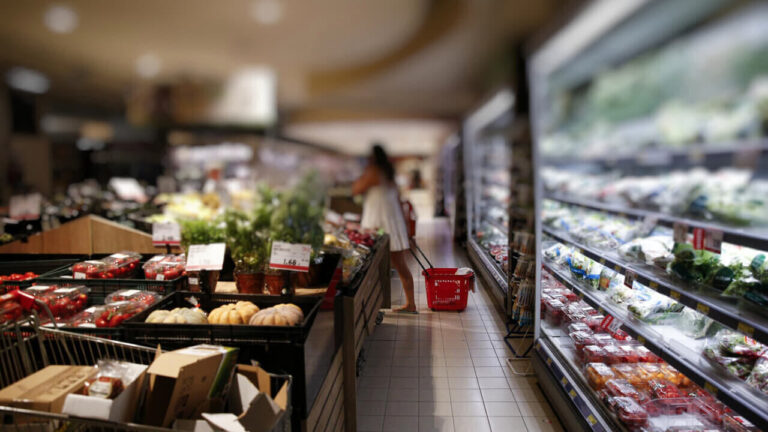
Between continuous increases and crazy prices, even shopping must be done following a strategy. Choosing the right supermarket and varying the purchasing channels depending on the type of products to buy can translate into a direct impact on consumers’ wallets. Orienting towards discount stores for consumer goods and home care, preferring the brand’s products for everyday shopping and reserving branded products exclusively for promotions or categories that you don’t want to give up allows you to obtain a significant economic benefit, especially in this period. A saving which, for a family of four, can even reach 3,790 euros.
The Altroconsumo investigation
The data emerges from the Altroconsumo survey: through monitoring carried out between 16 February and 13 March 2026, the association analyzed one and a half million prices in over 1,100 points of sale located in 67 Italian cities, examining four different types of baskets based on branded products, private label products, first prices and mixed spending.
When you can save
In the months of February and March 2026, large-scale retail price lists increased on average by 1% compared to the previous year, showing a slower pace of growth compared to the +2% recorded in 2025. However, the unknown factor remains the international tensions linked to the conflict in Iran, the potential effects of which on oil and energy costs were not yet visible at the time of the surveys.
In this scenario, moving carefully through the shelves allows a typical family of four to save up to 3,790 euros per year on a total expenditure estimated at 9,450 euros, cutting the budget by 40%. The economic advantage remains very significant also for couples, with a potential saving of up to 3,355 euros on an average expense of 8,360 euros, and for singles, who can keep up to 2,305 euros in their pockets compared to a standard annual outlay of 5,740 euros.
The ranking of supermarkets
Altroconsumo’s survey highlights profound differences depending on the supermarket chosen and the “type” of trolley. In the category of the cheapest products of all, the lead firmly belongs to Eurospin, which allows a cost reduction of close to 40% compared to the national average.
For traditional supermarkets, the comparison on the basis of the minimum price is increasingly complex, so much so that the first classic brand in the ranking, Ipercoop, records prices 17% higher than the leaders, while Carrefour Market closes the ranking with prices 35% higher. However, when the mixed shopping basket is analysed, which reflects the real habit of combining brands and first prices, the convenience varies significantly based on the structure chosen.
Among the discounters, leadership is shared by Eurospin and In’s Discount, which guarantee savings of 16% compared to the least competitive chain in the sector, Todis, followed on the podium by Lidl and Aldi. In traditional channels, the best result is that of Dok, which debuts at the top, overtaking Coop, Famila Superstore and Famila, even if in this case the maximum saving compared to a mixed cart is significantly reduced, stopping at 245 euros.
The company’s branded products
For consumers who focus on private label products, Spazio Conad is in first place, offering a spending reduction of up to 3,305 euros and leading the least convenient brand in the category, Eurospar, by 19%. In this segment we can also see the strong recovery of Esselunga, compared to a loss of competitiveness of Carrefour compared to the previous year.
Finally, the market for branded products is much more homogeneous, where the gap between the various large-scale retail companies does not exceed 7% and sees the top of the ranking occupied with equal merit by Ipercoop and Spazio Conad, closely followed by Famila and Esselunga, with a maximum saving of around 420 euros. The differences across the territory As highlighted in the study, convenience is not uniform along the peninsula and the survey also maps the competitiveness of individual physical stores for the purchase of brand.
The sales points
At a national level, the Mega store in Treviso stands out, followed by two Coop stores in Lucca and the Iperal in Cinisello Balsamo, just outside Milan. The Rossetto brand loses its historic primacy but places four stores in the top ten between Veneto and Lombardy. Among the top ten stores, several Tuscan novelties also stand out between Pistoia, Arezzo, Florence, Pisa and Prato, belonging to Coop, Ipercoop and Esselunga. In the Centre-South, convenience is led by the Spazio Conad in Cavallino, in the province of Lecce, followed by the sales point of the same brand in Taranto and the Ipercoop in Foggia, while the last positions in the ranking of the individual sales points are occupied by two Carrefour Markets in Bologna and Genoa and a Despar in Cagliari.
Geographical differences
The geography of savings absolutely rewards the North-East and Tuscany, where the cheapest cities in Italy such as Pistoia, Lucca, Florence and Prato are concentrated, characterized by an average annual expenditure of around 6,900 euros, followed by Mantua and other Venetian centres. On the opposite front, cities such as Genoa, Sassari, Aosta and Teramo see annual costs exceed the threshold of 7,700 euros. Milan confirms itself as the urban area in which the choice of store has the greatest influence on the budget, with a gap between the most expensive store and the cheapest one which allows you to save up to 1,390 euros per year, equal to 18% of the overall expenditure. Differences exceeding 1,100 euros are also recorded in Bologna, Treviso, Reggio Emilia and Venice. The situation changes in the South, where less competition and a smaller presence of sales outlets reduce the gap to a few tens of euros per year in centers such as Potenza, Reggio Calabria, Cosenza, Caserta and Catanzaro.
The gap between the different areas of the country is not limited to nominal prices, but affects the real impact of spending on family incomes. If families in Veneto and Trentino-Alto Adige spend on average 13% less than those in Lazio and Valle d’Aosta, the economic effort on the total budget shows even more evident disparities. In Calabria and Campania, spending on food absorbs as much as 19% of family income, a share that stands at 18% in Sicily, Molise and Puglia and 17% in Basilicata, a region which however shows signs of improvement alongside Sicily among the most convenient areas in the South. In the northern regions the impact is decidedly lighter thanks to higher average incomes and greater commercial competitiveness, with spending accounting for 12% in Emilia-Romagna and Veneto, 11% in Lombardy and just 10% in Trentino-Alto Adige. This difference of nine percentage points translates into a burden on the domestic budget which, for Campania and Calabrian families, is 90% higher than that sustained in Trentino.
An evolving context
The scenario described by Altroconsumo fits into a context in which large-scale retail trade is changing its skin and the “supermarketisation” process of discounters is underway, which maintain a clear advantage over cheaper products. Some traditional chains are trying to control this segment with dedicated lines, such as Esselunga Smart, designed to compete with the offer of discounters: a phenomenon that is still too limited to significantly impact the ranking of the cheapest products. For now, therefore, the first price remains firmly in the hands of the discounters.
In parallel, a second field of competition is that of the private label, which has ceased to be a simple economic option to become a central and high-margin strategic lever for large-scale retail companies. The consumer is thus forced to navigate a complex “jungle”, in which saving does not depend only on the banal criterion of the cheapest shop, but above all on the ability to strategically plan and compose one’s shopping cart.