

The oil market has a new problem just as petrol and diesel continue to rise in price in Italy. Saudi Arabia has communicated to some European customers the cancellation of crude oil cargoes scheduled for the second half of September, after the damage to the strategic East-West oil pipeline and the suspension of loading operations in the port of Yanbu, on the Red Sea. In the same hours, a new stop arrived from Libya: the closure of the Hamada-Zawiya oil pipeline stopped activities at three oil sites.
Saudi Arabia cancels part of the cargoes destined for Europe
The main problem concerns Saudi Arabia. According to industry sources cited by ReutersRiyadh has informed some European customers that part of the crude oil cargoes scheduled to depart at the end of September will be cancelled. It is not yet known how many there are or for how long the cargoes will remain suspended from the port of Yanbu. Saudi Aramco did not comment.
The interruption was caused by the damage to the East-West, the large oil pipeline that crosses Saudi territory and allows oil to be transported from the eastern fields to the Red Sea, avoiding the Strait of Hormuz. Precisely this infrastructure in recent months had allowed Riyadh to limit the effects of the severe navigation difficulties in the Persian Gulf. The duration of the stop remains uncertain.
The most evident case in Europe concerns the Polish Orlen, which receives around 40% of its crude oil from Saudi Aramco and which, according to Reutershas already moved into the spot market by purchasing North Sea oil and seeking additional supplies from the United States, Kazakhstan, Algeria and Guyana.
Problems also in Libya: the Hamada-Zawiya oil pipeline closed
Added to the Saudi crisis is the Libyan one. The National Oil Corporation announced the suspension of operations after members of the Petroleum Facilities Guard closed a valve on the Hamada-Zawiya pipeline. Activities in the Hamada and Tahara fields and in a pumping station were stopped. The NOC warned it could declare “force majeure” blocking exports if the problem continues or affects other plants.
The protest concerns the request of the Petroleum Facilities Guard to move from being dependent on the Ministry of Defense to the administrative and financial management of the national oil company. The same security force also announced partial production cuts for a week at other sites, threatening a complete blockade in the absence of a solution.
Libya is today Italy’s main oil supplier: in 2025, our country imported around 11.5 million tonnes of Libyan crude oil, almost a quarter of all Italian imports.
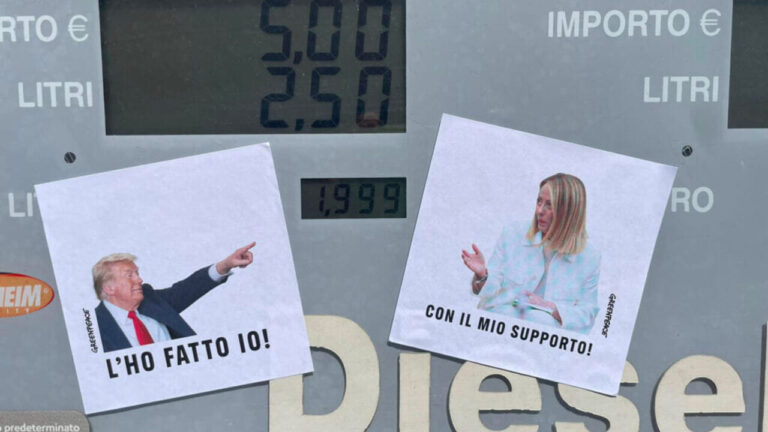
Meloni’s next move on excise duties
Oil prices are flying upwards, close to highs as they haven’t happened in months, around 110 dollars a barrel. The picture is different compared to the one before the current Middle Eastern crisis: in recent weeks Brent had already exceeded 100 dollars, while before the escalation it was moving around 72-73 dollars. Now the risk associated with the Strait of Hormuz is compounded by the problem of the main alternative Saudi route towards the Red Sea. On the European physical market the tension is even greater: Reuters reports dated Brent at around 122 dollars a barrel.
According to data from the Ministry of Business and Made in Italy, on the national road network self-service petrol costs on average 2.120 euros per litre, 1.3 cents more than the previous day, while self-service diesel reached 2.231 euros, with a daily increase of 1.5 cents.
On the motorway the averages are even higher: 2.212 euros per liter for petrol and 2.313 euros for diesel. Five days earlier, on 10 September, petrol and diesel on the ordinary network were at 2.077 and 2.184 euros respectively: this means that in less than a week they increased by more than four cents per litre.
Fuels towards 2.5 euros per litre, the “invisible” cost of closed refineries: this is how Italy got into trouble
And it is precisely to avoid this immediate leap that the Meloni government is preparing to intervene again. The current discount expires at midnight on Thursday 17 September. According to qualified sources, the orientation is to proceed with a new one-week extension of the 17 cents per liter cut.
The dossier will be on the table in the next few hours. The Council of Ministers is convened for Wednesday 16 September at 4.30 pm, although at present it seems unlikely that the broader package of selective measures against the high fuel prices on which the government has been working for weeks will already be launched.
The previous extension, approved on September 10, was valid for seven days and cost around 85 million euros. According to the quantifications of the Research Services of the Chamber and Senate, the excise duty cuts adopted from 19 March to 10 September had already entailed a cost of 2 billion and 74.5 million euros. Adding the last week, the documented cost of excise duty interventions alone therefore exceeds 2.15 billion.