

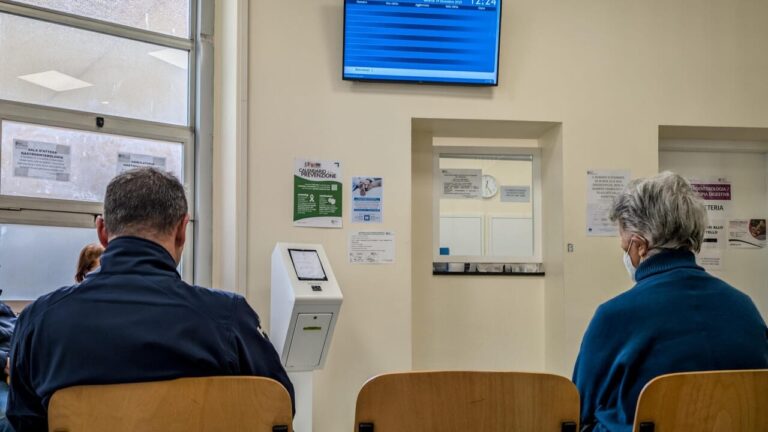
From 21 September you will pay more for some visits and tests carried out with the National Health Service. The price list used to remunerate the services provided by hospitals and accredited private structures has changed: the amounts of 448 specialist outpatient services and 222 items of prosthetic assistance have been adjusted. The average modified rate increase is approximately 5.8%.
| Performance | Old tariff | New tariff |
| First specialist visit (many branches) | €25.00 | €26.00 |
| First eye visit | €25.80 | €26.80 |
| Dermatological/allergological | €25.40 | €26.40 |
| Otolaryngology | €26.20 | €27.20 |
| Cardiology with ECG | €33.60 | €38.00 |
| Fine needle aspiration of the breast | €31.25 | €36.50 |
| ECG | €11.60 | €12.05 |
| Venous sampling | €3.80 | €4.30 |
Behind the increase is the appeal presented by private healthcare facilities against the previous tariff decided by the Ministry of Health. A legal battle won before the Lazio Regional Administrative Court which forced the State to redo the calculations. And the result will have a cost not only for the National Health Service, but also for citizens who are not exempt from the copay.
Overall, the revision is worth 210.7 million euros more every year for public finances, 183.1 million for outpatient specialists and 27.6 million for prosthetic assistance. A further amount will be reflected in the copays: according to ministerial estimates reported by Altroconsumo, for non-exempt patients the bill could increase by around 27 million euros per year.
Because the TAR rejected the old tariff
To understand how we got here, we need to go back to the decree of the Ministry of Health of 25 November 2024. The provision established how much the Health Service would recognize to public and private facilities accredited for thousands of visits, analyzes and tests. Laboratories, clinics and private affiliated facilities contested those amounts, claiming that in many cases they were too low compared to the costs actually incurred. The matter ended up before the Lazio Regional Administrative Court.
With the ruling of 22 September 2025, the administrative judges agreed with the appellants on a fundamental point. They did not simply establish that “private individuals should be paid more”, but found the way in which the ministry had arrived at determining those figures to be insufficient. According to the TAR, a sufficiently complete and updated investigation had not been carried out to define the tariffs: the data used were not fully representative of the costs of the production factors and an adequate critical evaluation of the regional tariffs had not been carried out.
The old system was not canceled immediately, because a sudden stop would have risked paralyzing the provision of services. The ministry therefore had time to carry out a new cost survey and prepare another price list.
How much visits and tests increase
The new decree comes into force on 21 September 2026 with increases that concern 448 items of outpatient specialisation. Among the most significant examples is the first cardiological visit with electrocardiogram, the fee for which goes from 33.60 to 38 euros. The fine needle aspiration of the breast rises from 31.25 to 36.50 euros. The electrocardiogram goes from 11.60 to 12.05 euros, while the venous blood sampling increases from 3.80 to 4.30 euros.
However, many of the most common tests remain unchanged, such as blood count, blood sugar, cholesterol, triglycerides, creatinine and Tsh. The price of the specialist check-up visit does not change either, which remains at 17.90 euros.
For those who won’t change anything
However, there is an important element to clarify. Raising the fee does not automatically mean the patient has to pay that same amount. The tariff indicates how much a service is worth for the purposes of the remuneration recognized by the Health Service. The ticket, on the other hand, is the amount that is asked of the citizen as a share in the expense.
Those entitled to the exemption will therefore continue not to pay according to the established rules. For the others, the limits established by the Regions also come into play.
In much of Italy the ordinary ticket is in fact subject to a maximum limit of 36.15 euros per prescription. For this reason, for example, a cardiological visit whose fee rises from 33.60 to 38 euros will not necessarily entail the payment of 38 euros: where the ceiling of 36.15 euros applies, the cost increase actually incurred by the citizen would be 2.55 euros.
The same thing can happen when there are multiple tests on the prescription: the individual fees are added, but once the expected limit is reached the patient’s expense does not continue to increase.