

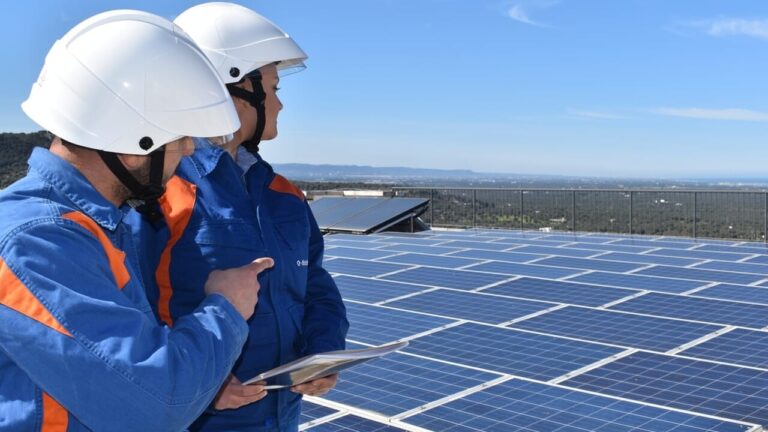
It may happen that the sun is shining, the panels are working perfectly and yet the photovoltaic system is turned off or forced to reduce production. Not due to a fault, but because at that moment the electricity grid cannot manage all the available energy. It is a phenomenon that is causing discussion in Germanywhere some companies have denounced a paradox: when the manager orders the panels to be turned off to avoid grid congestion, the electricity that would have been consumed directly within the company, without ever reaching the public grid, is also eliminated.
A similar situation can also occur in Italy. In our country there is the Ri.Ge.Di. procedure, an acronym for Reduction of Distributed Generation. Terna can activate it when, especially on days characterized by low consumption and strong production from renewable sources, the excess energy risks jeopardizing the security of the electricity system. It happened last May 2, 2026 when E-Distribution announced the activation of Ri.Ge.Di. in 18 Italian regions. The plants affected were subjected to a “temporary disconnection command from the grid”, intended to be revoked once the needs indicated by Terna ceased.
The system concerns photovoltaic and wind systems connected in medium voltage with a power equal to or greater than 100 kW. And it’s becoming more and more sophisticated. The new rules in fact provide for the use of the central plant controller, the Cci, equipped with the PF2 function, which allows the distributor to remotely limit the power produced. For older systems, the reduction can also be achieved by progressively turning off the inverters, until production is eliminated.
The paradox of self-consumption
This is where the problem emerges. The command does not necessarily intervene only on the electricity that the plant would like to feed into the public grid: it can directly reduce the production of the panels. Consequently, a company that, during those hours, could have used the energy produced on its roof on site may find itself not producing it at all and, paradoxically, having to draw electricity from the grid. It is essentially the same problem reported by German companies. The concrete result depends on the configuration of the system, the presence of batteries and the possibility of operating separate from the grid, but in a normal grid-connected system, switching off the inverters can also mean losing self-consumption.
However, the phenomenon does not only concern large plants. Something similar can happen in homes, but for a different reason. When many panels produce at the same time in an area and consumption is low, the grid voltage can rise excessively. The Cei 0-21 standard requires that the system automatically disconnects when the voltage reaches certain limits: one of these corresponds to 110% of the nominal voltage, calculated on an average of ten minutes.
Arera called the problem “growing.” Between October 2024 and July 2025, the Authority had already opened 15 proceedings relating to complaints for the disconnection of photovoltaic systems, typically with a power of up to 6 kW. In some cases the problem was solved only by physically intervening on the network, moving users or building new lines. From 2026, owners of small plants can also request verification of the number of weekly detachments.
It is one of the paradoxes of the energy transition: installing more and more panels is not enough if networks, cabins, storage and control systems do not grow at the same speed.