

Another major Italian industry could soon fall into foreign hands. For over 50 years Massimo Zanetti has cultivated the Italian cult of coffee by bringing Segafredo, acquired in 1973, to counters and shelves all over the world. Then in 2024 the Italian fund QuattroR entered the corporate capital of Massimo Zanetti Beverage Group which controls a portfolio with over 40 brands to relaunch its business, damaged by the debt position reached in recent years. So the investment banks Lazard and Intesa Sanpaolo-Imi were mandated to probe the market in search of investors. And now, according to what was also anticipated by the Corriere, the offers have arrived.
How is Segafredo
QuattroR is chaired by Flavio Valeri and has Francesco Conte as CEO. The fund had entered the holding company that leads Segafredo, acquiring a controlling share of the group. A stake that has expanded in recent years to now account for 65 percent of the company, compared to 35 percent for Zanetti.
The fund’s 2025-2028 business plan aimed to achieve a gross operating margin of 110 million, with revenues of 1.5 billion euros. In fact, 2025 closed with 1.3 billion euros in revenues, of which 90 percent came from abroad, clearly above (+27 percent) the results of 2024 (1.05 billion) and still above those of 2023 (1.1 billion). Data that demonstrates the positivity of the work done by the holding’s CEO, Pierluigi Tosato, and confirmed by the gross operating margin in the first six months of 2026, which reached 60 million (+48 percent), and by the corresponding turnover, already at 693 million euros.
Thanks to the intervention of the QuattroR fund, Segafredo is even more attractive to potential buyers. On the table would be the fund’s controlling stake in the beverage group with an enterprise value that could reach up to 1.2 billion euros. But according to analysts, investors could also aim to buy the entire package.
The two industrial investors: what they produce
Among the parties interested in Segafredo there would be two industrial companies that are growing in the coffee and beverage sector in general. One is a historic company and is European. The other has only existed for a few years but is already an important player in the United States.
Segafredo’s business attracted the attention of the Czech Kofola group, led by the Greek business family Samaras. The company’s iconic product, Kofola, is the European version of Coca-Cola. Already at the end of the 19th century, the Opava pharmacist Gustav Hell had produced a juice based on the liquid extract of cola seeds.
The desire to create its own carbonated drink, in the communist Czechoslovak Republic, to counteract American Coca-Cola convinces the government to found the United Pharmaceutical Factory. The winning formula debuted in 1959 and quickly conquered all citizens.
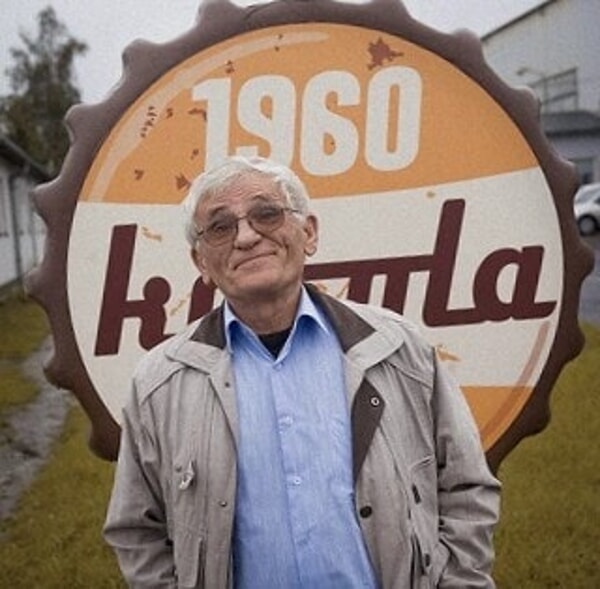
Kofola’s dominance lasted just thirty years: when the market opened in 1989, the company went into crisis. Following several changes of ownership, the Samaras family acquired control of the group and expanded its business by entering the sector of juices, energy drinks, lemonades and finally beers. Segafredo would introduce Kofola to the world of coffee and at the same time allow it to access countries where it is not present. All to be integrated into the Czech holding company which closed 2025 with a (preliminary) turnover of 435 million euros.
The scent of coffee would also have conquered the Ford family’s Arkansas Westrock Coffee Company, but not the automotive dynasty. The US company was born in 2009, during Scott Ford’s sabbatical in Rwanda following his experience at the helm of Alltel, a wireless service provider. Starting from the production of coffee in the African country, in 2020 Westrock managed to acquire S&D Coffee & Tea, one of the most important coffee and tea producers in the United States, for 405 million dollars.
The Arkansas group’s business is closer to that of Segafredo and could combine the power of the Italian brand with the logistics that Westrock could guarantee thanks to its supplies to restaurants and convenience stores. The turnover of the US holding is not of secondary importance: in 2025 net sales amounted to 1.2 billion dollars, an increase of 39.8 percent compared to the previous year.
The three investment funds: who they are
There are three funds courting QuattroR and Massimo Zanetti. Bc Partners usually carries out operations in Italy. In 2018 it acquired the leading horeca company from 21investimenti (hotellerie-restaurant-cafè) Forno d’Asolo. After six years, the fund has surrendered FdA to Sammontana and Frozen investments, an investment company of Investindustrial VIII. Since 2016, Bc Partners has owned the Cigierre restaurant chains, i.e. brands such as Old Wild West and Wiener Haus. But the hands of British private equity are also extended to Fedrigoni (equal control with Bain Capital) and Dental pro.
Selling croissants and ice creams earning a billion euros: Sammontana’s recipe – by Manlio Pistolesi
Finally, in line for Massimo Zanetti Beverage Group there would be One Rock Capital, among the shareholders of Primo Brands water, and Advent, which has invested in Avio, Nexi and Irca.
The fate of Italian companies
Italy continues to attract foreign appetites. From 2022 to today, two thousand Italian companies have been acquired by foreign investors, industrial groups or private equity funds. Operations with a value of 107 billion euros.
In 2025, we read in the Kpmg M&A report for Italy, cross-border, i.e. cross-border operations of Italian or foreign companies, represents 46 percent for a total of 32 billion euros of closed deals. However, this figure is lower than the 83 percent of the total in 2024 and equal to 66 billion.
As for the former nine months by 2026, operations by foreign investors in our country are already 274, with a value of 10 billion euros. While Italian entrepreneurs have concluded 139 transactions abroad worth 22 billion euros. Our managers are therefore very active, but at the moment no offers for Segafredo have emerged from the internal market.
Dossier is the exclusive subscription investigative section of The Vermilion. If you would like to support our journalistic work and subscribe, Click here.