Today a Council of Ministers is expected to launch a decree with a package of rules to help the road transport and agriculture sectors. A step forward that led the Calabrian and Sicilian protesters to remove the blockades of the last few days, which instead remain in Campania and Puglia. The truck protest, however, continues to slow down deliveries in the southern regions – in Campania, Puglia, Calabria and Sicily -, hitting fruit and vegetables and refrigerated counters first.
What happens in supermarkets
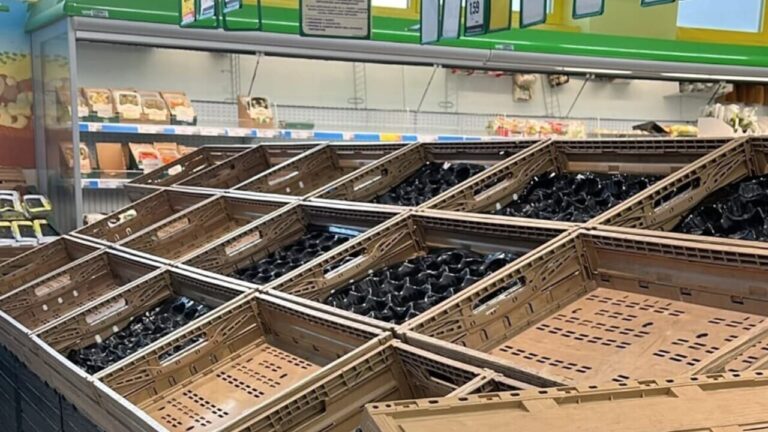
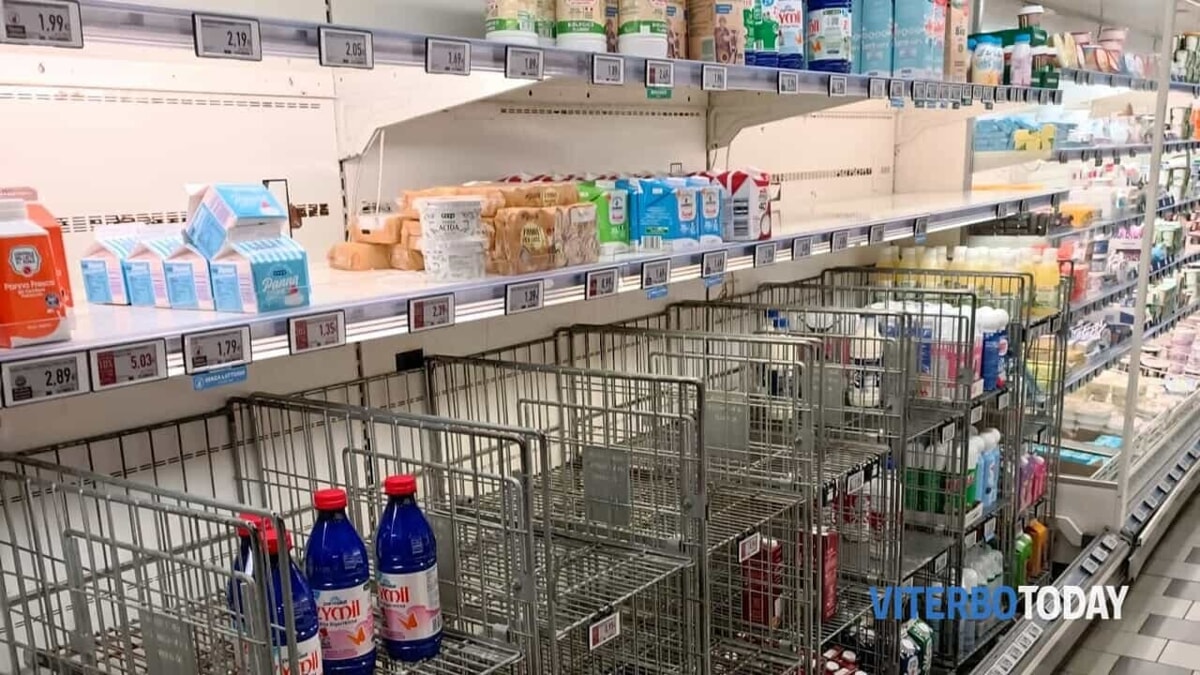
In Campania and Calabria there are the most complicated situations. The food distribution centers in Naples and Cosenza are full of goods, stuck there because the trucks don’t leave. And in some cases there are perishable products that risk going bad or perishing. In supermarkets in Naples, Confesercenti Campania spoke of shelves only half stocked. In various stores in the city and the province, however, the emptying was completed by the rush to stock up, so much so that from many quarters, including trade associations, there was an explicit invitation not to stock up on products.
In Naples, Caserta and Salerno we are working on stocks: those in shops and those that families are starting to accumulate in their pantries. Eggs are difficult to find, meat is scarce, refrigerators show entire compartments empty and, in some supermarkets, even the vegetable counters are empty of goods.
We buy more than we need, for fear that in the next few hours there may be nothing left. It is mostly pasta that ends up in families’ stocks. Yet, there are no particular supply problems for long-life products and canned foodstuffs. The shelves are stocked thanks to warehouse stocks, but the fear that the blockade could continue pushes people to buy today what they might need in a week’s time. The situation varies from one supermarket to another, but the fresh produce departments are lacking everywhere. Things are better in small distribution, where direct relationships with local producers make it possible to at least partially offset the obstacles to supplies.
Even in Termoli, in the province of Campobasso, the supermarket shelves are partly emptied due to the lack of supply of food, especially fruit, vegetables but also bagged products. The situation is slightly better in small food businesses whose suppliers, among others, are mostly local farmers so the owners are managing to obtain fruit and vegetables and other types of products.
The photograph of the empty shelf
There is a rush to buy, which in some cases becomes a real assault on supermarkets. An impulsive behavior in which people buy large quantities of basic necessities (such as food, fuel or medicine) out of fear of an imminent shortage or crisis, hoarding products to “keep themselves safe” at the expense of others.
“The stopped truck empties the warehouse, it’s true, but the shelf empties the photograph of the empty shelf”, says Vincenzo Barretta, psychiatrist and scientific director of the Noesis Center in Naples, who as an expert thus reads the scenes that have been arriving for days from supermarkets in the South, caused by the stoppage of hauliers against the high price of diesel. “It may seem like a play on words – continues the expert – but in reality an image forwarded in the condominium chat is enough for thousands of people to decide at the same time to buy for three weeks, and at that point the feared shortage becomes real and the emergency becomes exasperated”.
Panic buying: 4 causes
“In scientific literature the phenomenon has a name, panic buying, and has been studied especially during health emergencies. A review published in 2020 in the International Journal of Environmental Research and Public Health by researchers from the Nanyang Technological University of Singapore traces it back to four families of causes: the perception of threat and scarcity, the fear of the unknown, the need to reduce anxiety by regaining control of the situation, the influence of one’s social network. In recent days we have seen them all acting together, in the same streets”, explained the professor Finger.
The main problem, according to the expert, is the third factor: “Stocking stocks is a way to regain control, but it is a control that is paid for with everyone else’s anxiety. Whoever fills the cart beyond what is necessary calms down for a few hours, whoever arrives later finds the empty space, photographs it and puts it back into circulation. This is why it is an issue that concerns the emotional and behavioral health of a community even before logistics”, argued Vincenzo Barretta.
Like in a pandemic
The queues at supermarkets during the pandemic come to mind. As Barretta explains, “for many, March 2020 in the pandemic seemed archived, but the gesture learned then remained available: at the first image of an empty refrigerated counter, it is repeated without going through the verification of the facts. We live in an immaterial environment, made up of chats, groups and notifications, which has times incomparable with those of goods, and panic is built exactly in that gap”.
The return to normality in stores will however be gradual. For the expert, the most lasting effect will not be measured on the shelves: “The shelves will be full again within a few days. The behavior remains longer: at the next dispute we will find a population that has seen the supermarket empty twice in six years, and who will react even more quickly”.