

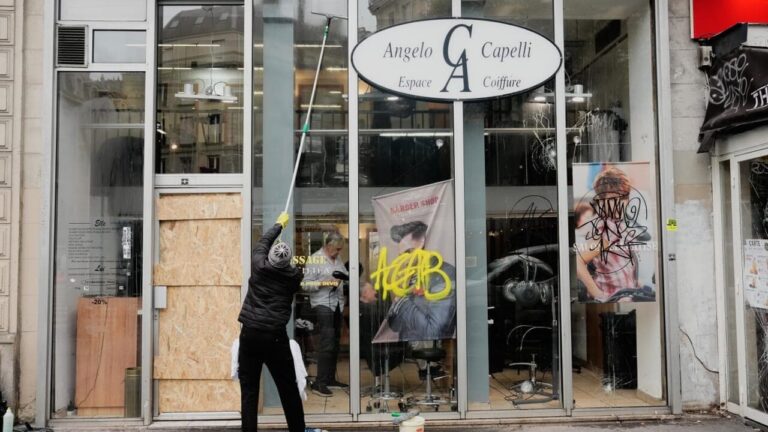
Not only in Italy. France is also experiencing a new day of national mobilization today, Saturday 24 October. Thousands of people are preparing to take to the streets against the high cost of living, low wages, school difficulties and the worsening of public services. Students, unions and yellow vests are demonstrating again a week after the protests of October 17, when 550 thousand people according to the Ministry of the Interior, 800 thousand according to the organizers, took part in demonstrations throughout the country. The difference is that this time the French government fears a new explosion of violence. 70 thousand police and gendarmes were mobilised, ten thousand more than the previous Saturday. In several cities the prefectures have banned demonstrations or imposed alternative routes. Night curfews have also come into force in some areas.
At the origin of the protests there is a malaise that crosses different generations and social categories. The first mobilizations started in September by high school students, who are demanding more teachers, less crowded classes, renovated school buildings and a radical revision of Parcoursup, the digital system that regulates access to higher education.
The demands of the students have been joined by those of the trade unions, who ask for increases in wages and pensions, greater investments in health and public education and more progressive taxation.
On the eve of the demonstrations, Emmanuel Macron received representatives of student organizations at the Elysée. The president has recognised, according to reports from his entourage, the need for a profound review of Parcoursup. The students welcomed the openness to dialogue, but reiterated their intention to continue the mobilization. A new confrontation with Prime Minister Sébastien Lecornu is expected on Monday.
The return of the yellow vests
The yellow vests, the movement that had shaken France since 2018, are also mobilizing again. The common thread is purchasing power: the prices of fuel, food, energy and rent, together with the difficulty of making it to the end of the month. However, it is not a single movement, with a single political or trade union leadership. The protests bring together organizations and groups with different demands, united above all by the protest of economic and social conditions.
Paris under lockdown, demonstrations banned
The most delicate situation is that of the capital. Between 60 thousand and 120 thousand people are expected in Paris, according to the authorities’ preliminary estimates. The prefecture prohibited the route initially agreed between Piazza della Bastille and Piazza della Nation, authorizing a peripheral route between Porte d’Italie and Porte de Vincennes.
The precedent that worries the authorities dates back to October 17th. During that day, alongside numerous peaceful marches, violent groups clashed with the police, attacking shops and public buildings. According to data released by the authorities, around 3,000 businesses had been damaged, set on fire or looted. In Limoges the town hall had also been burned. Two men aged 34 and 66 were arrested for the fire.
Particular attention is also paid to Orléans, where the Rassemblement national congress takes place. A demonstration promoted by dozens of organizations is planned against the rally of Marine Le Pen’s party.