

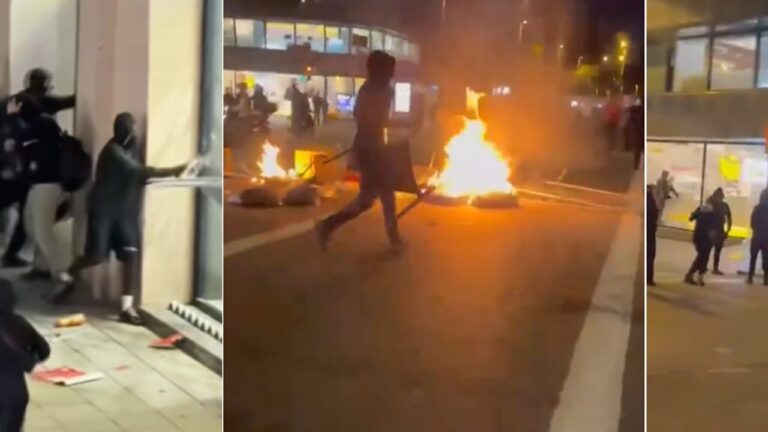
Devastation, fires and looted shops in the heart of Barcelona. On Saturday 24 October, hundreds of young people, many of them dressed in black and hooded, transformed a protest called on social networks into an evening of violence. The clashes were concentrated around the central Plaça de Catalunya and in the shopping streets, where groups of participants smashed windows, stole goods and set fire to street furniture. According to the updated budget published by the Spanish press, the Mossos d’Esquadra arrested 128 people, including 72 minors. 33 fires were recorded and 23 businesses vandalized or looted.
The demonstration, which was attended by around 500-600 people, was organized through TikTok, WhatsApp and Telegram, using slogans such as Instituts Indignats and Against the system. The mobilization was based on the protests of French students, but according to initial reports some groups had planned to storm the shops from the beginning.
Groups of young people encaputxats provoquen aldarulls the saquegen shops of the center of Barcelona. Hi has more than a hundred of detinguts, a 25% of the given menors. https://t.co/QmnzDFPUTj
— RTVE Notícies (@rtvenoticities) October 24, 2026
On Saturday afternoon the protest began around 5pm. A banner had appeared in the square with the words “Contra el sistema, instis en lluita”, against the system, schools in struggle. Within a short time the situation degenerated. In the images spread on social media, hooded youths are seen breaking windows and taking away products. In some businesses, including the El Corte Inglés department store, the shutters were lowered while customers were still inside. The protesters also built barricades, set fire to bins and threw stones at the police, who intervened with charges to disperse them.
From student protest to looting: how the mobilization was born
According to an investigation by the Catalan public service 3Cat, published on Sunday 25 October, the mobilization had been in preparation since at least 20 October. Posters with the words “Blocus Barcelona” had appeared on TikTok, a reference to the blockades of French schools, the scene of student protests against the high cost of living and in defense of public education in recent weeks. The messages were all in Spanish and were spread by anonymous accounts, often with few followers.
They contained information on the place and time of the demonstration, but also advice on clothing and behavior in front of the police. Many carried a QR code that allowed you to join WhatsApp groups directly. From here the mobilization spread to Telegram and Instagram, involving hundreds of users.
As the days passed, the discussion within the groups changed. The school claims fell into the background and videos began to circulate indicating the shops to be attacked. According to 3Cat, some content spread on TikTok indicated possible targets, especially luxury commercial establishments in the center of Barcelona.
The police did not expect violence of this scale
The Mossos d’Esquadra knew about the calls spread on social media, but they had foreseen a demonstration with around 300 participants and limited incidents. The violence of the attacks would therefore have surprised the police. The Catalan police are now examining the profiles of those arrested and collaborating with other European authorities, including French and Italian ones, to verify any links between the different mobilisations.