

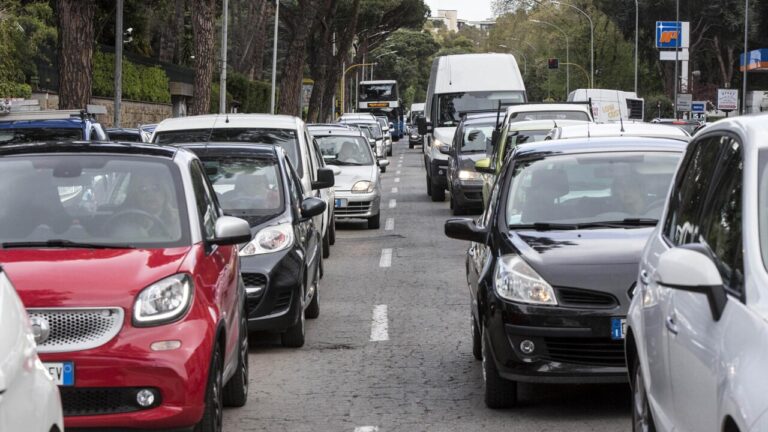
The car tax is about to disappear for millions of Italian motorists. And the government aims to further broaden the range of beneficiaries. The economic package for 2027 could include an extension of the exemption to families with at least four children who own cars up to 133 kW, compared to the general limit of 80 kW introduced in September. A measure designed especially for those who need larger cars to travel with the whole family.
But there is an issue still to be resolved: the abolition of the stamp duty costs the State approximately 2.36 billion euros per year. And while the resources for 2027 have been identified, the structural coverage remains to be found for the following years. Highlighting the benefits, but also the problems of the operation, is the Parliamentary Budget Office (PBO), which on 27 October published a study on the impact of the measure.
Who will no longer pay car tax from 2027
The exemption is provided for by the legislative decree of 17 September 2026 and concerns, for the moment, only payments with ordinary deadlines between 1 January and 31 December 2027. The beneficiaries will be natural persons who own a regularly insured car, powered by petrol or diesel, even with hybrid or dual fuel systems, with a power not exceeding 80 kW, equivalent to approximately 109 horsepower. There are no income or ISEE limits. The exemption concerns only one vehicle per taxpayer: those who own multiple eligible cars will not pay the tax on the less powerful one. The benefit can also be recognized for motorcycles and mopeds, according to the conditions established by the decree, when the taxpayer does not own a car that is covered by the benefit.
The extension for large families: what changes
The government is considering expanding the benefit to large families. The most advanced proposal is the one already presented to the Chamber by Marco Osnato and Maddalena Morgante, of Fratelli d’Italia, which provided for a contribution to cancel the tax bills for families with at least four children, one of whom is a minor, owners of approved cars with six to nine seats and with a power not exceeding 160 kW. The hypothesized mechanism, however, is not an immediate exemption: it provides for a reimbursement of the tax paid up to a maximum of 490.20 euros for a single car, for an estimated cost of 42.3 million in 2027. The amendment had been set aside during the examination of the decree, but could be recovered in the Budget law which will enter the council of ministers tomorrow, even if reparameterized to 133 kW.
The tax burden weighs six times more on poor families
The cancellation of the tax could have significant effects on family budgets. According to the Parliamentary Budget Office, 73% of households owning at least one vehicle will benefit from the exemption. And the advantage will be proportionately greater for families with less economic resources. The reason is simple: the tax is a tax that mainly depends on the power of the car, not on the income of the owner or its commercial value.
For this reason, an old car can continue to pay a tax of a similar amount to that of a new model of the same power. And a family with a low income may have to pay a sum that is not very different from that paid by a decidedly wealthier family. According to the PBO’s simulations, the stamp duty affects the spending of less well-off families up to six times more than that of richer families. Its elimination therefore has a redistributive effect: saving in euros may be similar, but it weighs much more on the budget of those with fewer resources. And the savings will offset half the expensive fuel costs
According to estimates, the high cost of petrol and diesel resulted in an increase equivalent to 1.2% of family spending. The elimination of the tax alone would produce a potential benefit of 0.4%. Adding the effects of the reductions in excise duties on fuel introduced during the year, the overall advantage would rise to 0.6%. However, the situation varies from family to family. Those who use the car little could obtain savings from not paying the tax that are greater than the higher costs incurred for fuel. However, those who travel many kilometers would continue to bear a significant part of the price increases.
The 2.36 billion bill and the missing coverage
The main problem is financial. The decree estimates an overall loss of revenue for the state coffers of 2.362 billion euros in 2027, of which approximately 2.294 billion will be transferred from the state to the regions and autonomous provinces to compensate for the missing revenue. To finance the intervention, the government used various resources, including 1.46 billion from the economies of the National Recovery and Resilience Plan and further appropriations recovered from state funds. However, these are largely availability items that can only be used once. Consequently, making the exemption structural means finding new resources every year to compensate for the lost revenue. It is one of the main critical issues reported by the Parliamentary Budget Office: it is not enough to cancel a tax to eliminate the cost that that tax financed. In the absence of permanent coverage, you will have to choose whether to reduce other expenses, increase other income or find additional resources.