

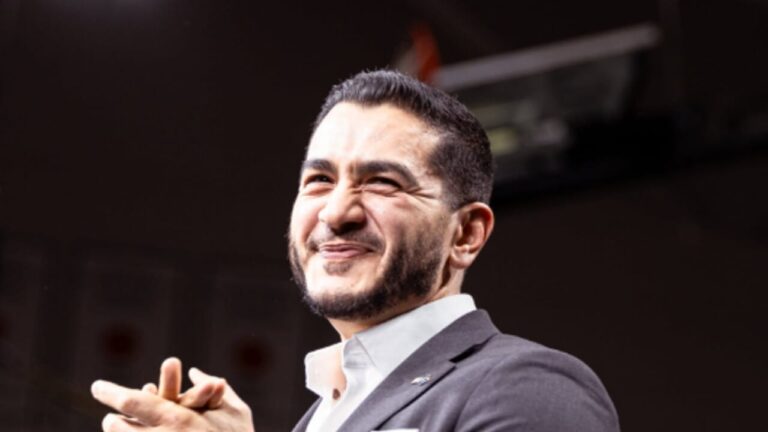
For the first time in history, a Muslim citizen becomes a United States senator. The lead goes to Democrat Abdul El-Sayed, who won the race in Michigan by beating Republican Mike Rogers. Abdul El-Sayed is another piece of the “blue wave” that swept over President Donald Trump.
No Muslim was ever elected to the United States Senate before El-Sayed. In the Chamber, however, there have been various deputies of Islamic faith since 2006, such as Keith Ellison, André Carson, Ilhan Omar and Rashida Tlaib.
Michigan! If you’re in line to vote—stay in line! Your vote is your voice. We need to hear you! https://t.co/4yrS3wTOOu
— Dr. Abdul El-Sayed (@AbdulElSayed) November 4, 2026
Who is Abdul El-Sayed
Abdul El-Sayed is 42 years old. Doctor, public health expert, Muslim of Egyptian origins, he is the face of the progressive wing of the Democratic Party.
He served as director of the Detroit Health Department, where he focused on public health and inequities in access to care. Before running for the Senate he had already tried politics, participating in the Democratic primaries for the governor of Michigan in 2018, without success.
His policy proposal focuses on universal healthcare, reducing the cost of living, access to housing, and combating the influence of big donors in American politics. Positions that place him in the progressive area of the party, close to the battles of Senator Bernie Sanders.
His being Muslim influenced the electoral campaign and was the target of Republican attacks. President Trump called him an extremist and, on election day, accused him of hating Jews, blacks and whites, urging voters to vote for Rogers. El-Sayed has rejected the attacks, arguing that his name and religious faith have nothing to do with the economic problems of Michiganders.
In his first post-vote statements, El-Sayed launched a direct jab at his opponent: “The people have chosen hope and rejected the message of hate.”
“MICHIGAN, WE DID IT!”
Abdul El-Sayed celebrates his projected US Senate victory in Michigan, telling supporters he is “so proud and honored” to stand before them as senator-elect.
El-Sayed, who repeatedly used the phrase “inshallah,” meaning “God willing,” throughout the campaign, reflects on his victory.
“Instead of trying to unite us to address the petrol and food price crises, our adversaries decided to divide us – he said -. At first they focused on my name and my faith, as if to say: ‘it’s a little different’. When that didn’t work, they tried to make me look guilty for my association. And when that didn’t work either, they threw themselves headlong into one of the ugliest campaigns we’ve seen in our lives. They could just as well have focused on my name and on my faith, but we all know that these are not the reasons why you can’t afford gas, go shopping or go to the doctor.”
Tune in to Fox News Channel now for live midterm election coverage. https://t.co/T1AlfixOkv
— Fox News (@FoxNews) November 4, 2026