

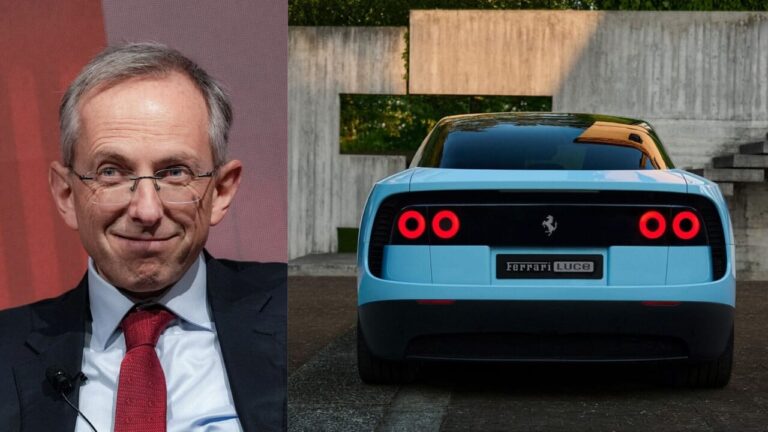
If in F1 the arguments between Leclerc and Hamilton hold sway, in the real world the Ferrari ‘factory’ pushes at a dizzying pace. The Maranello company, in fact, closes the accounts for the third quarter of 2026 with a net profit that rose to 431 million euros (+13% on an annual basis) and an overall profit of 1.3 billion. At the same time as the publication of the financial results, CEO Benedetto Vigna confirmed that Maranello’s overall order book covers the entire production until 2028.
And in this portfolio the Ferrari Luce stands out, the company’s first 100% electric model, whose orders have already saturated production capacity until the end of 2027. Those who want it now will have to wait over a year. The stock on Piazza Affari reacted by reaching 375 euros (+4.5%), at the highest levels in over a year. A financial figure that belies the perplexities of analysts and the discontent expressed by purists at the time of the presentation. And, for the umpteenth time, it has been demonstrated that no one has a crystal ball.
From stock market devaluations to full houses
Upon its debut, the Ferrari Luce sparked widespread skepticism. Experts in numerous specialized publications had criticized the farewell to the traditional lines of the Cavallino and the absence of the V8 or V12 combustion engine, defining the design signed by Jony Ive and Marc Newson (ex Apple, through the LoveFrom studio) too distant from the historical identity of Maranello.
In the first hours following the presentation, Ferrari shares had suffered declines on the stock market, driven by fears that electric vehicles could dilute the appeal of the brand. But booking numbers have reversed the narrative. With a list price of around 500 thousand euros, the Luce was sold out. And the first signs were immediate: on the Chinese market, where the group recorded sales declines in previous quarters, the initial batch assigned sold out within a few weeks.
The reasons for commercial success
Despite the cultural resistance of traditional collectors, several key factors explain the high demand recorded for the Prancing Horse’s tech jewel. First, Ferrari has disrupted the demographics of the target customer. The Luce was designed not for historic Ferrari fans tied to the roar of the 12-cylinder, but for a new generation of the ultra-rich (High-Net-Worth Individuals under 40, often founders of unicorns in fintech). This target requires the daily usability of a zero-emission car combined with the technological status signed by iconic consumer electronics designers.
Secondly, the car convinces with its driving dynamics. The first road tests conducted by the international press have highlighted how the ultra-low center of gravity architecture and the active suspensions managed by proprietary software manage to hide the weight of almost 2.2 tonnes, offering cornering agility comparable to Maranello’s endothermic supercars.
A gateway for new buyers
Finally, the good old allocation and scarcity mechanism plays a decisive role. In the Ferrari business model, access to special series or limited-run internal combustion models requires an established purchasing history.
The Luce functioned both as a gateway to the brand for new buyers and as a strategic vehicle for existing collectors intent on maintaining a priority position on waiting lists for future combustion and hybrid models. Maranello confirmed that production continues according to plan in the dedicated e-Building plant, “with no impact on the operating margins of the traditional range”.