
Healthcare and education, Giorgia Meloni on Trump’s path: what she risks now
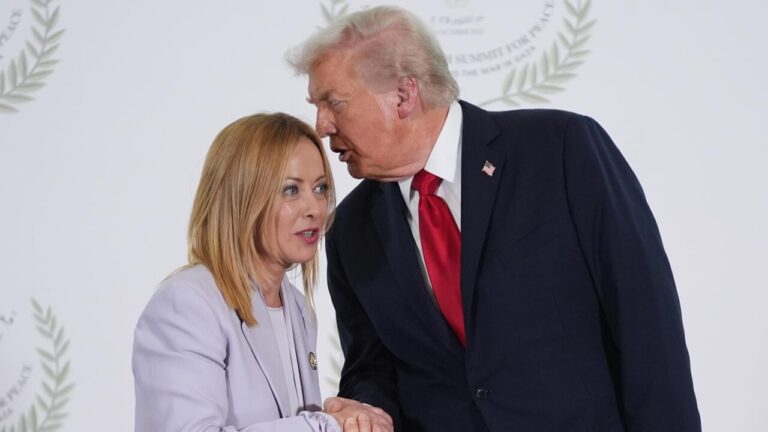
What suggestions can the mid-term vote in the United States give us on the next elections in Italy? We are not interested in the numerical result, since the electoral systems are not comparable. What is interesting is the birth of a new flag capable of bringing together those who do not think like Donald Trump and the lobby that supports him. A majority of citizens who identify with the motto of James Talarico (photo below), the Democrat who conquered Texas and who by Christian background is certainly not a communist atheist: “The only minority that is destroying America – these are Talarico’s words during the election campaign – are the billionaires”.
Health and private schools: Italy follows the United States
The central topics of the democratic tide that took the United States Congress away from President Trump’s control are in fact mainly three: high cost of living, healthcare and education. Issues that billionaires around the world, including Italy, face privately. And this is precisely the point of contact: the awareness that there may be a non-billionaire, non-millionaire, essentially poor or modest West that the politicians and governments in office (whether Trump in the USA, Macron in France or Giorgia Meloni in Italy) have stopped serving.
Curiously, these are the same issues that have mobilized tens of thousands of young people in Italy too and that await a response: let’s forget about the thugs who smashed shop windows and attacked the police, let’s deal with those who peacefully exercise their constitutional right to protest. And he demands to be listened to.
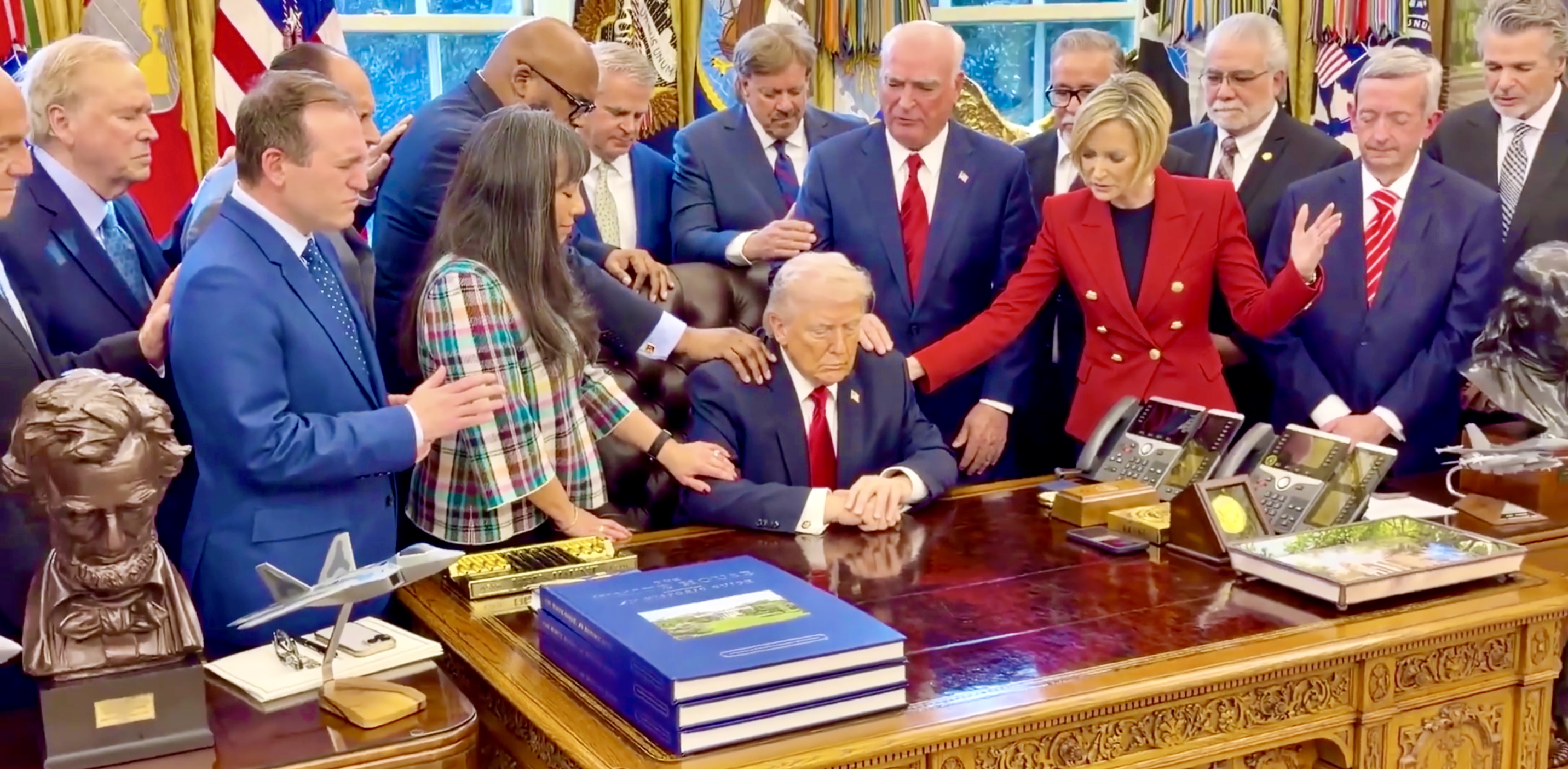
Yet the Meloni government’s budget bill hits precisely the sectors for which American voters punished Donald Trump (in the photo below praying with his staff): healthcare and education, first of all, in addition to the purchasing power of salaries increasingly eroded by inflation. Obviously it is not all the responsibility of the ministers in office. But now Giorgia Meloni is in Palazzo Chigi and blaming previous governments might not work (just as it didn’t work with Trump). Here’s why.
Thousands of teachers gone: Meloni sinks the Meloni decree
A decree, wanted by Giorgia Meloni and Giuseppe Valditara, Minister of Education (which until 1999 was called “Public Education”), requires school administrators and directors to reorganize Italian schools, in order to respect a presence of foreign students per class of up to a maximum of 30 percent. The decree therefore provides for strengthening the teaching of the Italian language to non-Italian students and their parents. An enhancement that is mandatory from October 1, 2026, with the entry into force of the decree.
Almost at the same time – that is, just a month later – the same government, with the current draft financial law for 2027 to be discussed in Parliament, reduces the management costs of public schools with a cut of 4,925 teachers and 2,049 administrative, technical and auxiliary employees (ATA): almost 7 thousand fewer employees which, with the cuts already foreseen by the previous economic measure, rise to 14 thousand.
Because we pay for private school students
These are largely temporary and support teachers, precisely the professional figures indispensable to meet the obligations of the Meloni-Valditara decree. The government justifies the heavy reduction as an adjustment to the demographic crisis, which has constantly reduced the number of children born from 2015 onwards. However, the ministry did not foresee the reorganization of classes through new forms of teaching, multi-classes and school networks, already tested in Italy thanks to the dedication of teachers and managers. The Education Minister only accused his Economy colleague, Giancarlo Giorgetti, of keeping him in the dark about the cuts.
How to isolate the Maranza: the solution and the protest – by Fabrizio Gatti
The other provision envisaged by the new budget law is the extension of the incentive of 1,500 euros (up to an ISEE of 30 thousand euros) for each private school student: a bonus that must be added to the others approved by the regions, up to a maximum of approximately 7 thousand euros per pupil, paid with the taxes of all citizens (even those who use public schools). The government thus pushes Italian families from some municipalities or neighborhoods with multi-ethnic schools to transfer their children to monocultural private schools (white and often Catholic), increasing the percentage of foreign students per class in public schools (which Meloni and Valditara always wanted to reduce).
Obviously they are not all children of billionaires: but no one in the government will be able to deny that public schools are being weakened, without affecting the privileges of private schools. Even though the Constitution clearly establishes that private schools and educational institutions can be established: but “without burdens to the State”.
The confrontation between public and private: this is how health explodes
The confrontation between public and private is even more exasperated when health is at stake. The 2027 draft budget law assigns 2.4 billion more to public healthcare, out of the approximately 149 billion allocated in 2026. However, to these must be added 42.4 billion spent out of pocket on private healthcare by families, to avoid the paralysis of waiting lists, and another 7 billion spent on private health insurance (Gimbe Foundation data). Yet over 6 million Italians are without a family doctor, 10 percent of the population. Even in the (presumed) rich Lombardy, where the mixed healthcare system (public plus private agreement) is considered a model by the Region, governed since 1995 always by centre-right councils.
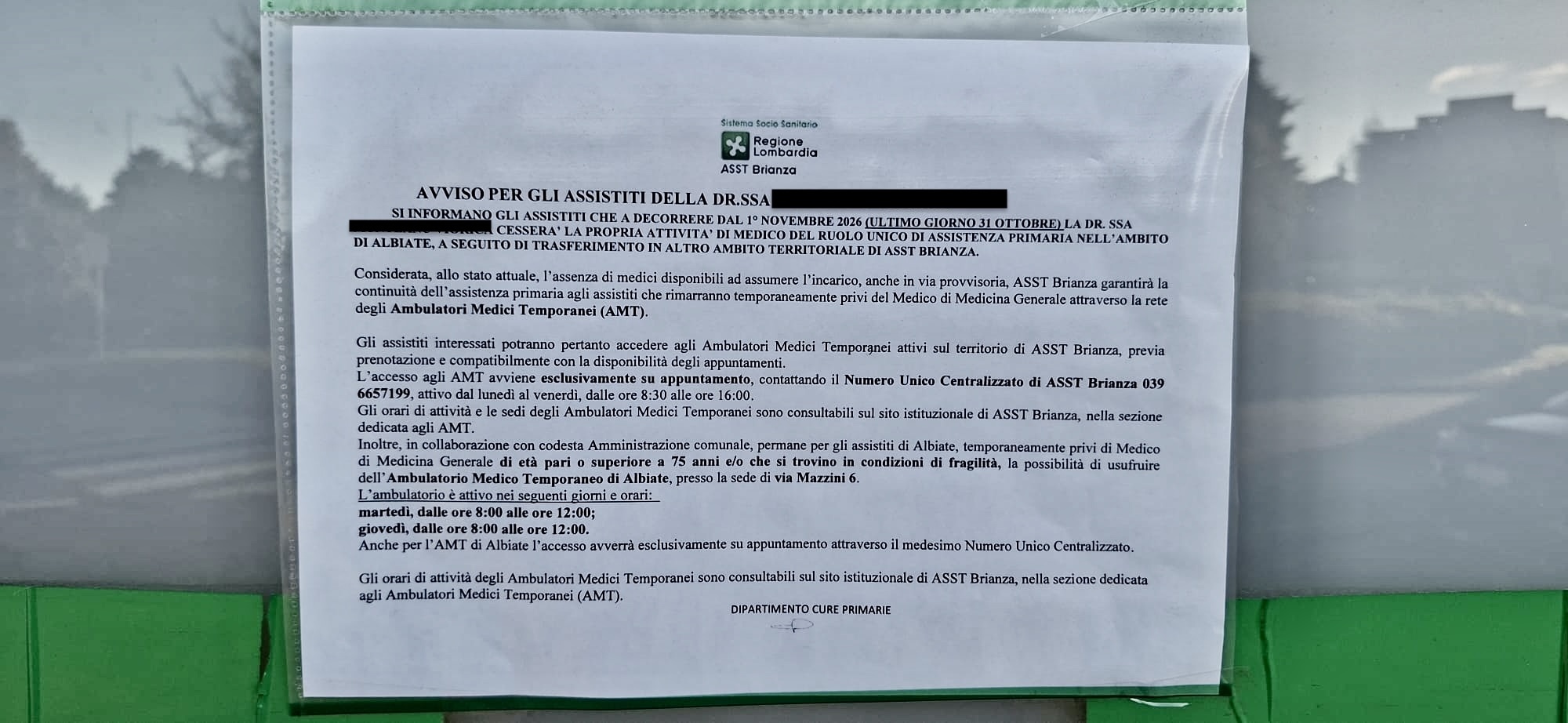
Albiate, 6,695 inhabitants in the province of Monza and Brianza, 28.5% over 60 years of age, is the last industrial municipality in Lombardy to have lost all its family doctors. From November 1, 2026, for periodic recipes, we will go to the community house in another country. For visits, to the emergency room. For frail people or people over 75, at the temporary medical clinic open for a few hours twice a week, which is very reminiscent of the emergency dispensaries in the poorest countries in the world. And in any case only by appointment: hoping that viruses and ailments will do the same. Goodbye preventive medicine, no ordinary treatments, end of continuity of care (photo above).
“Who can afford it”: the new rich Italian minority
Neither the centre-right Region nor the current government in office since 22 October 2022 have managed to reverse the national trend, starting with the training of new doctors. Four years of Giorgia Meloni: there was plenty of time to do it. Instead, the new admission rules to medical schools, which force most freshmen to enroll in universities far from home, have even increased the costs of food and accommodation for families. So only those who can afford it enroll in medicine. A circumstance that favors real estate speculation with the student rental market, as our Daniele Tempera explains in this Dossier.
Impossible rents: what’s behind the price explosion in university cities – by Daniele Tempera
It is therefore the triumph of private healthcare. Always for those who can afford it: the latter qualifies which increasingly identifies a rich social minority, even if not billionaires. Against an increasingly poorer rest of Italy. A reduced copy of what happened with the rejection of Donald Trump. Giorgia Meloni’s main advantage – compared to her former American friend, who nevertheless remains the president of the United States of America – is that the fantastic four of the Italian “large cramp” (Schlein, Conte, Bonelli, Fratoianni) are not yet ready. And who knows if they ever will be.
Read Fabrizio Gatti’s editorials and investigations on The Vermilion