

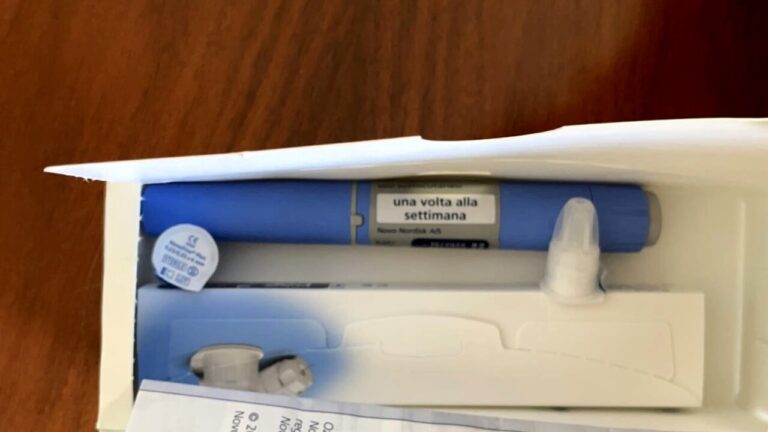
For many it is a “magic shot” because it promises to help you lose weight without having to face the sacrifices of a traditional diet. But the drugs that have become famous around the world for their ability to fight obesity could have a much more serious consequence than previously thought: vision loss, in some cases permanent. The alarm was raised by the Food and Drug Administration (Fda), the American drug agency, which imposed new safety warnings for all medicines in the GLP-1 family, including the very popular Ozempic, Wegovy and Mounjaro.
The risk concerns an eye disease that is as rare as it is dangerous: non-arteritic anterior ischemic optic neuropathy, known by the acronym Naion. It occurs when the blood supply to the front of the optic nerve is reduced, damaging the fibers that transmit images from the eye to the brain. The consequence can be a sudden loss of vision, usually painless and initially limited to one eye. In the most serious cases the damage is irreversible.
The complication remains extremely rare and the American agency speaks of a possible increase in risk, but the results of the investigations were considered sufficiently worrying to justify an intervention on the entire category of Glp-1 drugs. The decision, announced on November 9, 2026, affects medicines used by millions of people for type 2 diabetes and weight management. These are GLP-1 receptor agonists, substances that imitate the action of a hormone produced by the intestine, helping to regulate blood sugar and reduce appetite.
Among the affected products are Ozempic, Wegovy and Rybelsus, all based on semaglutide, but also Saxenda, Victoza, Trulicity, Mounjaro and Zepbound. The latter two contain tirzepatide, a molecule that acts on two hormone receptors, GIP and GLP-1. The warning also applies to other medicines from the same family, some of which are taken by mouth rather than by injection.
What convinced the FDA was above all a vast analysis of clinical data: 126 randomized studies involving a total of 134,253 patients. Of these, 78,217 had received a GLP-1 drug, while the other 56,036 had been treated with placebo or other medicines to control blood sugar.
An increased risk of 68 percent
The researchers identified 15 probable cases of ischemic optic neuropathy: ten among those taking GLP-1 and five in the comparison group. Comparing the cases to the overall duration of treatments, the incidence was equal to 6.4 cases per 100 thousand person-years – a statistical unit that takes into account the number of patients and the time during which they were observed – among users of the drugs, compared to 3.8 cases in the control group. Translated into simpler terms, the rate recorded among patients treated with GLP-1 was approximately 68 percent higher. But the data must be interpreted carefully: in absolute terms the difference observed corresponds to just 2.6 cases every 100 thousand years of treatment. It is therefore a very rare event, although the consequences for those affected can be extremely serious.
Today, we are informing patients and health care providers of a potential increased risk of non-arteritic anterior ischemic optic neuropathy (NAION) associated with use of GLP-1 RA medications. NAION is a rare condition that can result in acute, painless, decreased vision in one eye, including permanent vision loss. Symptoms of NAION include sudden, painless vision loss in one eye that patients may notice upon waking: visual defects such as blind spots, distortion of colors, blurriness, or tunnel vision. Patients should contact their health care professional right away if they have any of these symptoms. https://t.co/qeTuSSQUzS
— US FDA (@FDA) November 9, 2026
The American agency sought further confirmation by also analyzing the medical records of diabetic patients treated between 2019 and 2024. The comparison with other categories of drugs showed different results: the risk of optic neuropathy was significantly higher compared to patients taking DPP-4 inhibitors, but not compared to those treated with SGLT-2 inhibitors. The FDA also examined reports of adverse effects received after the drugs were marketed and data from animal studies. The latter, however, have not allowed us to identify a biological mechanism capable of explaining how GLP-1 drugs can increase the risk of damaging the optic nerve.
Then there is another element to consider. Many people who take these medicines suffer from pathologies that in themselves represent risk factors for Naion. These include diabetes, hypertension, sleep apnea, kidney disease and anemia. Smoking can also contribute to increasing the danger. The issue, however, is not new for European health authorities. Already in June 2025, the European Medicines Agency (EMA) concluded that ischemic optic neuropathy represents a very rare side effect of semaglutide, the active ingredient in Ozempic, Wegovy and Rybelsus. According to the European evaluation, the complication can affect up to one person in every 10 thousand treated.
The warning symptoms
For those who take these drugs, it is therefore a good idea to keep an eye on any warning symptoms, the first signs of possible damage to your eyesight. According to the FDA, the most characteristic symptom is a sudden, painless loss of vision in one eye, often noticed upon waking. Blind areas in the field of vision, so-called tunnel vision, blurry images, difficulty distinguishing colors or a reduction in sharpness in the central part of the vision may also appear. Anyone experiencing any of these conditions should contact a doctor immediately for an urgent eye evaluation.
The speed of investigations is particularly important because Naion can cause permanent damage and, after an episode in one eye, the risk of the disease affecting the other also increases. The American agency invites doctors to consider suspending treatment when ischemic optic neuropathy is suspected, unless the benefits of therapy clearly outweigh the risks. For drugs containing semaglutide, the European indications instead provide for the interruption of treatment when the diagnosis is confirmed.