

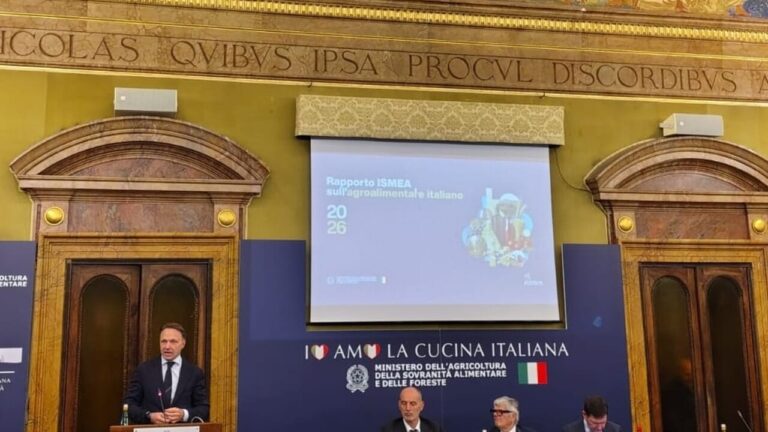
Almost 89 billion euros in added value, around one and a half million employed and 72.5 billion in exports. These are just some of the numbers with which the Ismea Report on Italian agri-food 2026, presented today, Thursday 12 November in Rome, illustrates the weight of agriculture in the national economy. In 2025, added value grew by 1.2% net of price changes, against +0.5% for the entire economy. Both the primary sector, which includes agriculture, forestry and fishing (+0.8%), but also the food, beverage and tobacco industry (+1.5%) grew.
“A result obtained also thanks to the tenacity of our entrepreneurs who were able to face a very complex moment by reacting and obtaining important results” underlined the president of Ismea Livio Proietti during the presentation of the report.
How much the supply chain weighs, from the fields to the table
Of the almost 89 billion in added value, 47.1 come from the primary sector and 41.5 from industry. Together they represent 4.4% of the added value of the Italian economy. The weight rises to around 8% according to the Ismea estimate which includes distribution and catering, and reaches around 15% if transport, logistics and intermediation linked to the supply chain are also considered. And the sector is also important from the point of view of work: there are around one million employed in agriculture and half a million in the food industry.
In the European comparison, Italy confirms itself in first place for added value of agriculture alone, with 43.1 billion euros and 16.9% of the Union total, ahead of Spain, France and Germany. The Italian food industry is third, behind Germany and France. On the domestic market, in 2025 families spent around 305 billion euros on food consumption, of which 205 billion at home and 100 billion outside. And consumption, despite inflation, is also increasing: spending increased by 3.2% in euros and by 0.3% net of price changes during 2025.
Crops more exposed to the climate and prices that change along the supply chain
However, among the critical factors there is climate change which is making itself felt and is also becoming a problem for our agriculture. Between 2016 and 2025 the volume of Italian vegetable production fell by 5%. For Ismea, the increasingly frequent adverse climatic conditions have contributed to this trend. Data from the last year shows how much results can vary from one crop to another. In 2025, olive oil production rose by 30.5% after a weak year, while fruit production fell by 5.2%, with particularly marked drops for pears and hazelnuts. The goal? Make crops less vulnerable. A method that also means giving more continuity to supplies for those who transform and sell the products.
Another critical issue concerns how much of the final price reaches those who produce. The report finds that agricultural prices fluctuate more than those charged by distribution and that increases and reductions are transmitted along the supply chain at different times. A problem especially for agricultural companies, which are numerous and have more limited negotiating power. In this case, the report suggests, the way forward is to aggregate supply. In concrete terms, cooperatives and producer organizations can help companies plan deliveries together and negotiate prices and sales conditions collectively. Thus creating the economy of scale that could also help small producers who currently constitute an important part of our agri-food supply chain grow.
Exports are growing, but the American market is slowing down
However, there is a favorable wind regarding trade. Agri-food exports reached a record of 72.5 billion euros in 2025, 5% more than in 2024. Today they represent around 11% of Italian sales of goods abroad, compared to 9% in 2016. Germany, France and the United States together absorb over 36% of the sector’s exports. Precisely in the United States, however, sales fell by 4.5%, to 7.5 billion, in a year marked by the introduction of duties and uncertainty about tariffs.
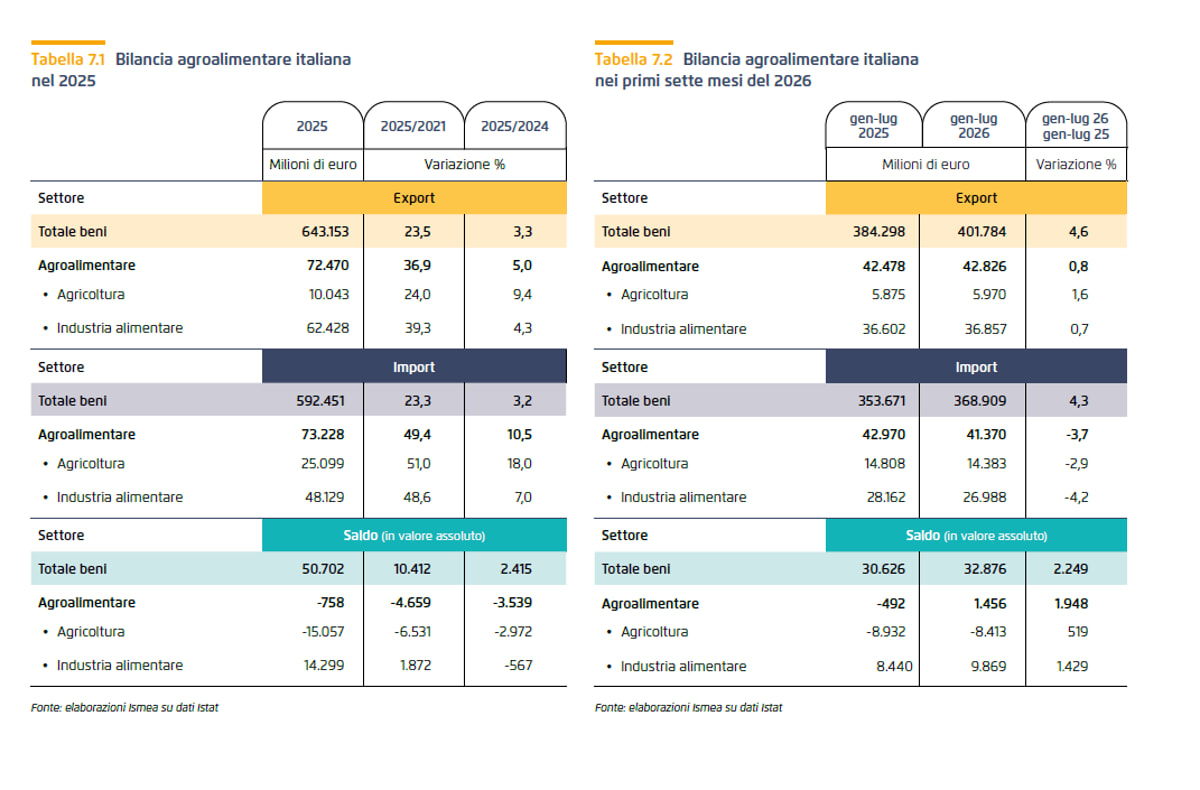
In the first seven months of 2026, the growth of agri-food exports stopped at 0.8% on an annual basis, showing signs of slowing down. The challenge for companies is to consolidate sales in the markets where they are already present and find other commercial outlets, so as to reduce the impact that a slowdown in a single country can have on revenues.
And the sector is looking at the new intercontinental markets, especially Australia and India, while prudence is expressed in the development of Mercosur, the free trade agreement signed between the European Union and the countries of the South American bloc, but also openness: “Within Mercosur, there is a very interesting export market, Brazil, which we are monitoring to understand how much we will be able to implement the trade balance. There we are at around 3.8 billion in imports and 1.8 billion in exports, so it is a scale that it must certainly be put back into balance and the possibility for many sectors, such as wine, but also others, must certainly be monitored” underlined Sergio Marchi, Ismea general director.
From the Pnrr to investments in companies
The sector is also driven by financing. In 2025, agricultural investments rose to 13.1 billion euros, 5.1% more than the previous year. On the Pnrr front, Ismea has admitted 221 programs for financing through supply chain contracts, with approximately 3.9 billion in concessions and 6.3 billion in planned investments. The programs involve 3,430 subjects and 53.7% of the benefits are allocated to the South.
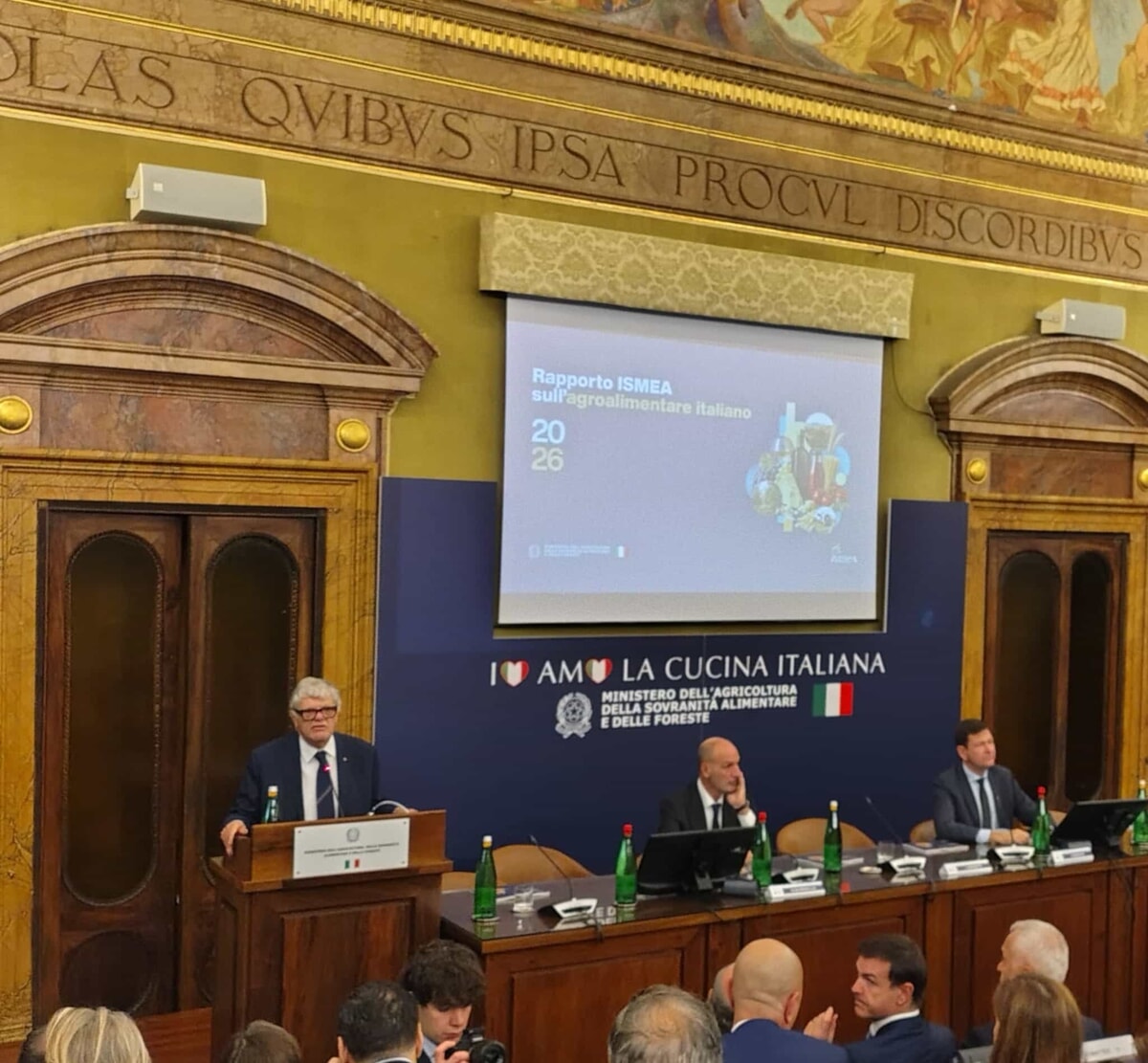
“With the achievement of all the targets set by the Pnrr by 30 June, Ismea has completed a fundamental phase in the implementation of the Supply Chain Contracts, making the entire allocation of assigned resources available to the production system. The results give a measure of the scope of the intervention: 221 supply chain contracts, over 3,400 subjects involved, 3.9 billion euros of concessions granted, including non-repayable grants and subsidized loans, which have activated 6.3 billion in investments, with a leverage effect of 1.61. Particularly significant is the result achieved in the South, to which 53.7% of the subsidies are allocated, well above the minimum quota of 40% envisaged by the Pnrr” observed the president of Ismea Livio Proietti.
For companies, the next step is to implement projects, from interventions to use energy more efficiently to the modernization of production plants. Ismea expects the volume of investments related to supply chain contracts to peak in 2027.
Lollobrigida: “The agri-food supply chain in the era of hybrid warfare is a strategic element”
And Francesco Lollobrigida, who spoke during the conference, also defines himself as proud of the path achieved: “Today the agri-food supply chain, in the era of hybrid warfare, is an important sector of national security. If we don’t have certain supply chains the system enters into crisis. It’s a discussion that obviously needs to be done at a European level: I noticed distrust when four years ago we talked about food sovereignty, now everyone realizes the importance of controlling strategic resources” observed the Minister of Agriculture which underlined how the Italian sector has managed to deal with cyber attacks and destabilizations better than others.
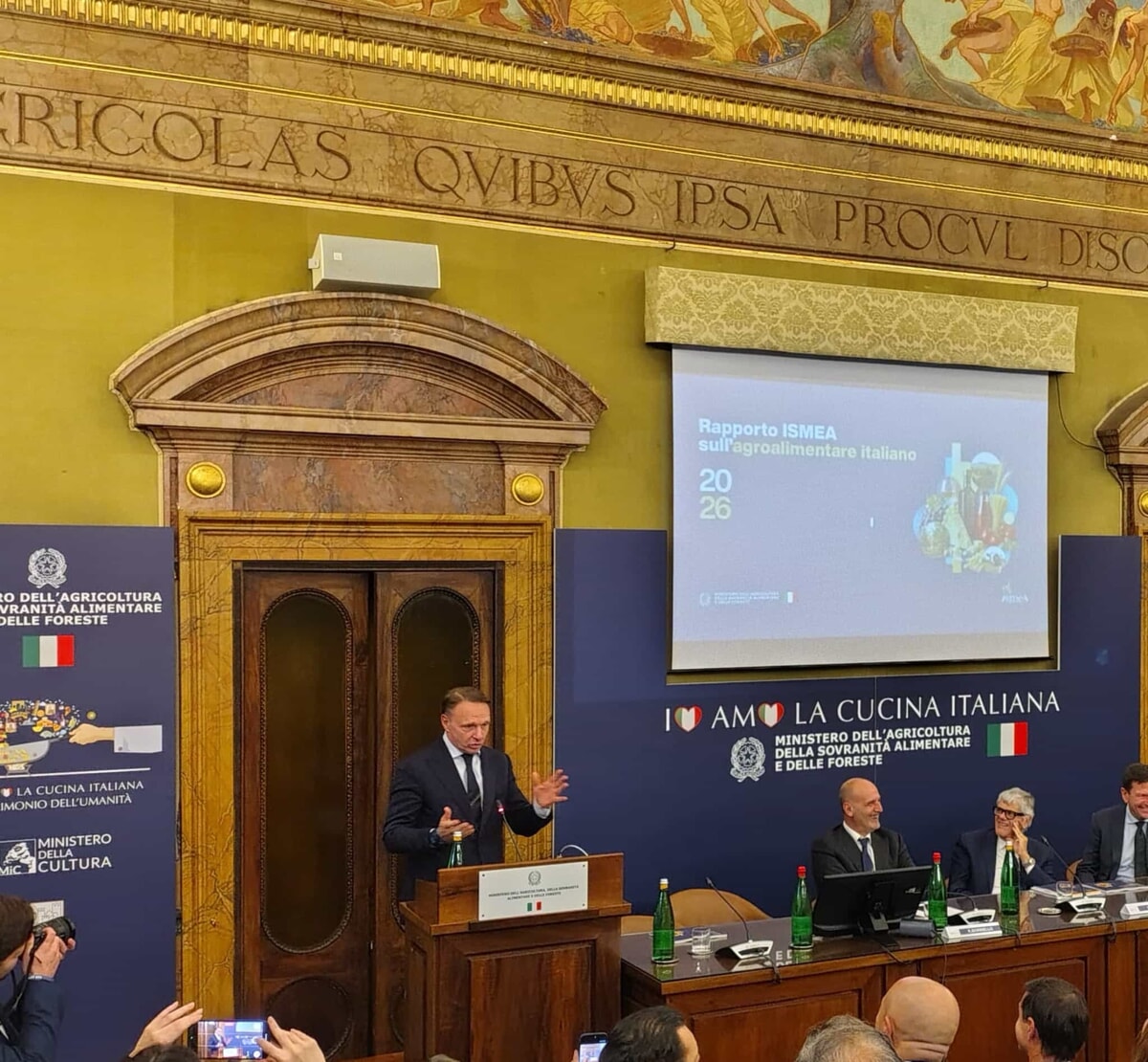
“In a complex geopolitical climate like never before in the history of this century – underlined the minister – we have managed to keep the agricultural world in favorable conditions compared to the rest and also to the rest of Europe in many areas, and it is significant that the weight of the agricultural economy grows within an economic system such as the national one and that it corresponds to almost triple in terms of growth of the agricultural gross domestic product within a national growth figure” concluded the minister.