

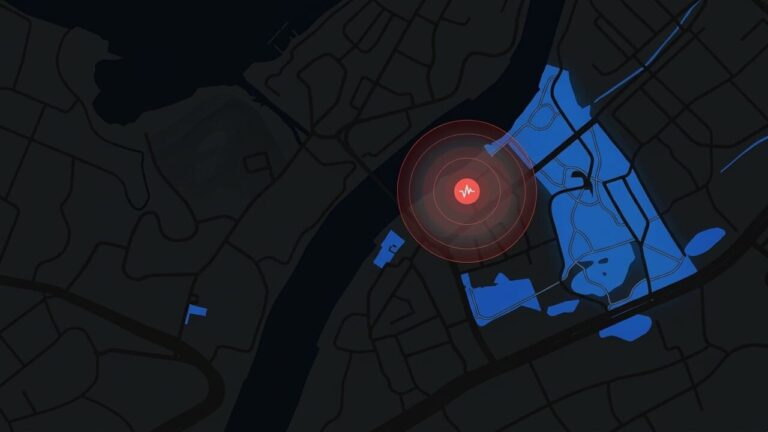
A few seconds’ warning when an earthquake strikes can give people vital time to take shelter and protect themselves and their loved ones. To make these large-scale early warnings possible, Google built the Android Earthquake Alert System, the largest mobile-based earthquake detection network in the world.
Since launching in 2021, over a billion alerts have been sent to help people stay safe before the shaking even begins. From today the Android earthquake alert system is also active in Italy.
If an earthquake occurs in an area where alerts are active, Android users may receive one of three types of alerts:
- Caution Alert: A simple warning for estimated small tremors, to inform people that an earthquake has been detected nearby.
- Prepare Alert: A detailed warning for stronger tremors, warning you to prepare to take action.
- Take Action Alert: A full-screen alert for moderate to strong shaking, providing immediate guidance on how to get to safety.
Google also announced an update to the “Be Prepared” alert. In the coming months, a map will be visible showing the area affected by the earthquake, the estimated magnitude of the earthquake, the actions to be taken and a button to receive updates as they become available.
How it works
• Detection via accelerometer. Every Android smartphone integrates an accelerometer (the same sensor that rotates the screen). When the phone is stationary, for example resting on a table or charging, this sensor is sensitive enough to perceive the vibrations of P waves (primary waves), the first to propagate during an earthquake, faster but generally less destructive.
• Sending the signal to the servers. If your device detects a vibration consistent with a seismic wave, it automatically sends an anonymous signal to Google’s tracking servers along with your approximate location.
• Cross analysis and confirmation. The servers process the data in real time: if hundreds or thousands of phones in the same area send simultaneous signals, the algorithm confirms that an earthquake is underway, calculates the epicenter and estimates its magnitude.
• Race against time. Since internet signals travel almost at the speed of light, while S waves (secondary waves, slower but responsible for the greatest damage) propagate in the earth’s crust at a few kilometers per second, the notification manages to reach users in the surrounding areas before the actual shaking begins.
Requirements and differences with IT-Alert
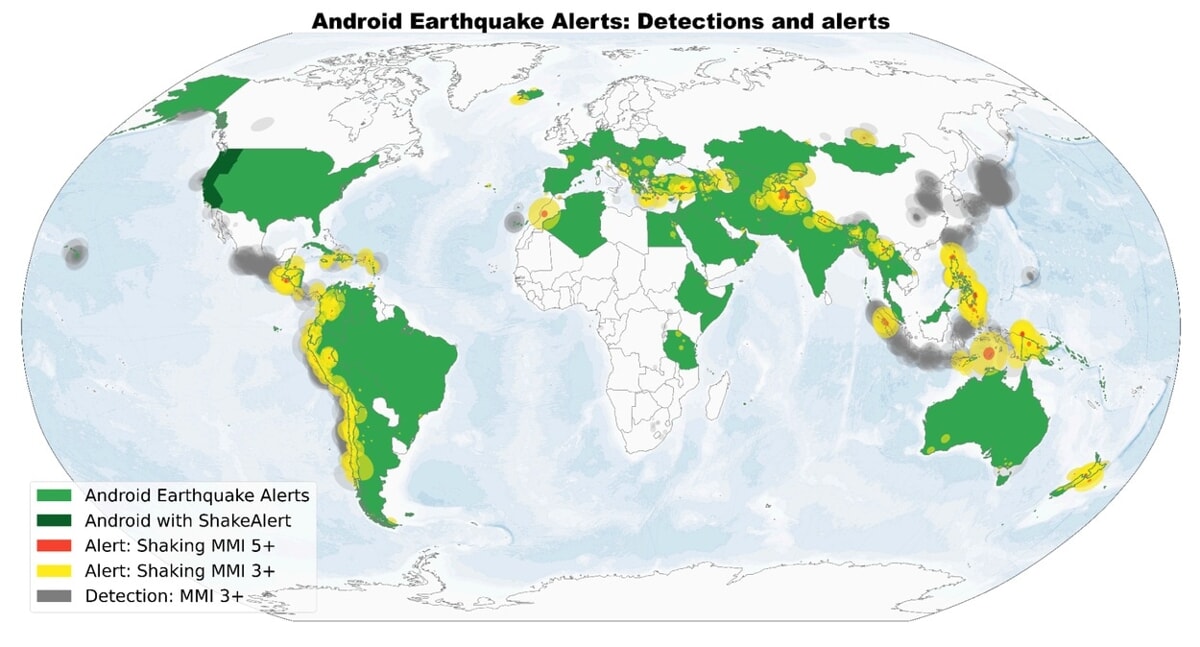
• Activation on the device. To work, the service requires geolocation services and a data or Wi-Fi connection to be active on your Android phone. However, you can manage or deactivate the function from your phone settings by searching for “Earthquake alerts” in the Security and emergency section.
• Complementarity with IT-Alert. Unlike IT-Alert (the institutional Civil Protection system that uses cell broadcast technology without the need for the internet for public emergency alerts), Google’s system is a private network based on crowdsourcing phone sensors and specifically designed to gain precious seconds during the seismic event.
How to check or activate the setting step by step on your Android smartphone
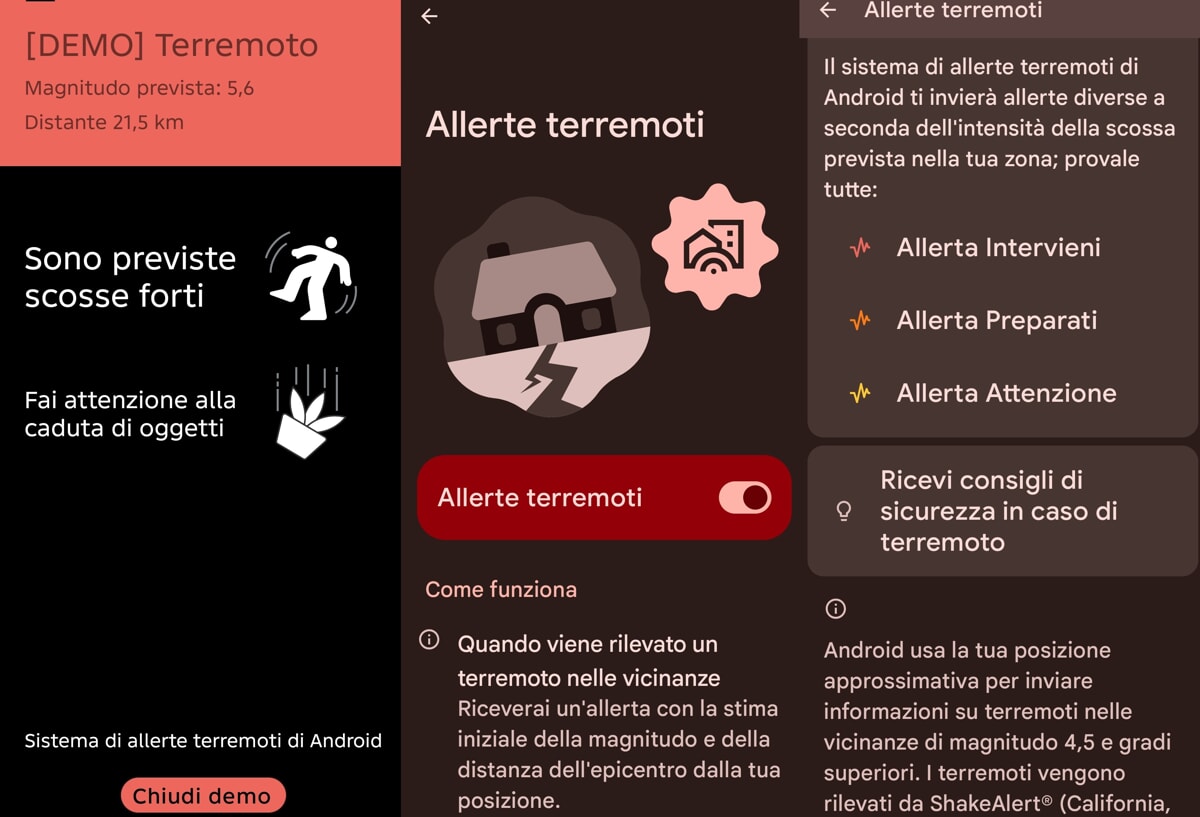
To check or activate earthquake alerts on your Android smartphone, simply access the security section in the system settings. The feature is generally enabled by default on devices with updated Google services.
Step by step procedure
- Open your smartphone’s Settings app (the gear icon).
- Scroll down and tap Security & Emergency (on some models, like Samsung, the item is called Security & Emergency, while on others it may be under Location > Earthquake Alerts).
- Select Earthquake Alerts.
- Check that the switch next to Earthquake Alerts is turned on (toggled to the right).
- (Optional) On the same screen, you can tap View a demo to preview what the on-screen alert will look and sound like in the event of a strong shock.
If you still don’t find the item in the menu, check that you have updated Google Play Services via the Google Play Store, as activation is gradually distributed on the server side.
Xiaomi 18 Pro Series: powerful smartphones with dual displays and 200 MP Leica cameras