

For over forty years she worked as a maid in the same house, without ever receiving a salary, without holidays and without a single day of rest. Seven days a week, even during holidays, often until after midnight. When he tried to learn to read and write, someone allegedly disappeared his books and asked the school to stop classes. But the most dramatic detail of her story concerns a daughter who she claims was taken from her a few days after birth. Instead of the little girl, she says, her employers would have given her a stuffed animal.
It is the story of a 62-year-old woman freed from domestic slavery in Sao Paulo, Brazil. The case was reconstructed by journalist Leonardo Sakamoto in the Brazilian newspaper Uol, based on investigations conducted by labor inspectors and federal authorities.
On November 10, a team made up of labor inspectors, magistrates from the labor prosecutor’s office and the federal prosecutor’s office, public defenders and federal police officers intervened in the house where the woman lived and worked. The checks led to a dispute regarding a working situation in conditions similar to slavery. The woman said she had lived with that family since she was a child. Over the decades it would be passed from one generation to another of the same employers. In all this time he would never receive real pay. The family believed that food, accommodation and payment of some personal expenses were sufficient to compensate for his work.
There was no distinction between working time and free time. According to his testimony, the days could continue until late at night. Opportunities to go out, meet friends or see family were very rare. Furthermore, he could not manage the money independently and when he reached retirement age, his personal documents were kept in the custody of his family who retained part of the allowance.
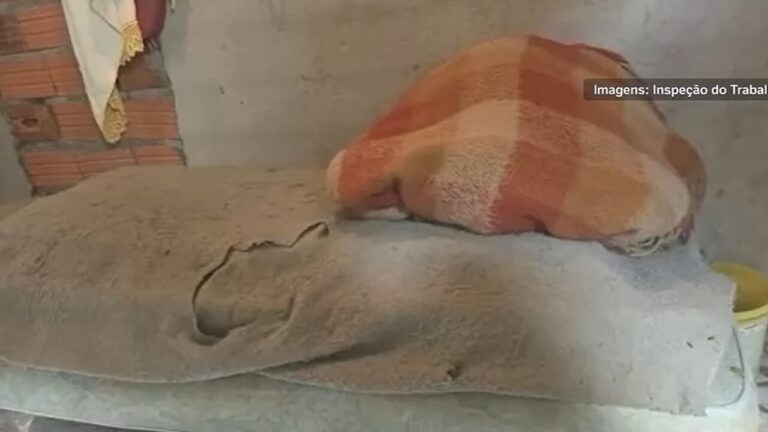
Housing conditions were also degrading. The room intended for the maid had been transformed into a sort of warehouse, cluttered with objects and difficult to use as a bedroom. During the investigations, stories of threats, humiliation and attacks also emerged. The woman never learned to read and write. She had tried to attend a literacy course, but, according to her story, someone made her notebooks and books disappear and asked the school to exclude her from the lessons. She thus reached the age of 62 without being able to read a document or manage the simplest procedures independently.
The inspectors calculated that, adding the salaries never paid, the holidays, the thirteenth salary and the other rights accrued, the accumulated debt towards the woman exceeds two million reais, several hundred thousand euros. The family was formally informed of the disputed sums but, according to the authorities, did not make any payments or take measures to regularize the situation.
After being removed from the home, the sixty-two-year-old was transferred to a safe place, subjected to medical checks and entrusted to social assistance services. The authorities are evaluating the necessary initiatives to obtain compensation for damages and ascertain responsibility.
And it would not be an isolated case: since 1995 the Brazilian authorities have freed over 70 thousand people subjected to forms of exploitation attributable to contemporary slavery. In the same days, again in the state of Sao Paulo, another maid was freed after 35 years of working in conditions similar to slavery. In September, the story of a 90-year-old woman who remained in the service of the same family in Belo Horizonte for 75 years emerged.