
Between 2010 and 2025, house prices in the European Union rose on average by 61%, but Italy goes against the trend and registers a surprising -2%. The data comes from the ‘Housing in Europe’ report published yesterday by Eurostat. The largest increases were observed in Hungary (+291%), Estonia (+245%) and Lithuania (+206%). As far as our country is concerned, it must be said that according to Istat data, prices have more recently started to grow again (+4.0% on average in 2025, +5.1% in the first quarter of 2026), but if we look at the last fifteen years the budget for home owners is quite meager.
How much rents have increased
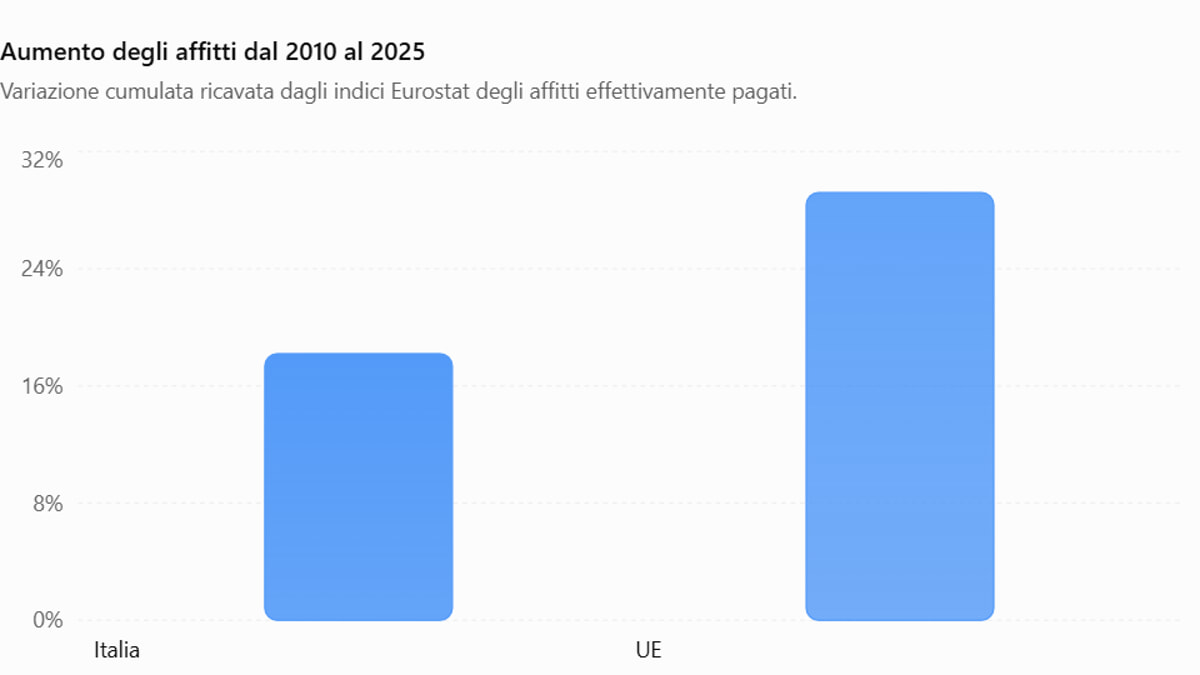
The Eurostat report also illustrates the rental situation. The average increase in EU countries in the period considered (2010-2025) was 29%. Greece is the only country that has seen rents drop (-8%), while Estonia, Lithuania, Hungary and Ireland have seen the most significant increases. Based on the Eurostat series on actual rents, we calculated for Italy a nominal increase of around 18.2% between 2010 and 2025. The percentage is lower than the EU average, but it should also be noted that around half of this increase was concentrated between 2022 and 2025.
Inflation changes everything
Then there is another fact that must be considered. And it is that of inflation. In the same period, in the EU consumer prices increased by 43%, while in Italy on the basis of Istat surveys we calculated a percentage of 33.6%.
The result is clear: although on the rise, over the last 15 years in Italy the cost of rent has risen less than inflation, while real house prices have fallen much more markedly than the nominal 2% depicted by the statistics. On the contrary, in the EU the nominal house price index rose by +61% against an inflation of +43%, so on average real house prices increased.
Where Europeans live. In Italy 77.1% of residents own their own home
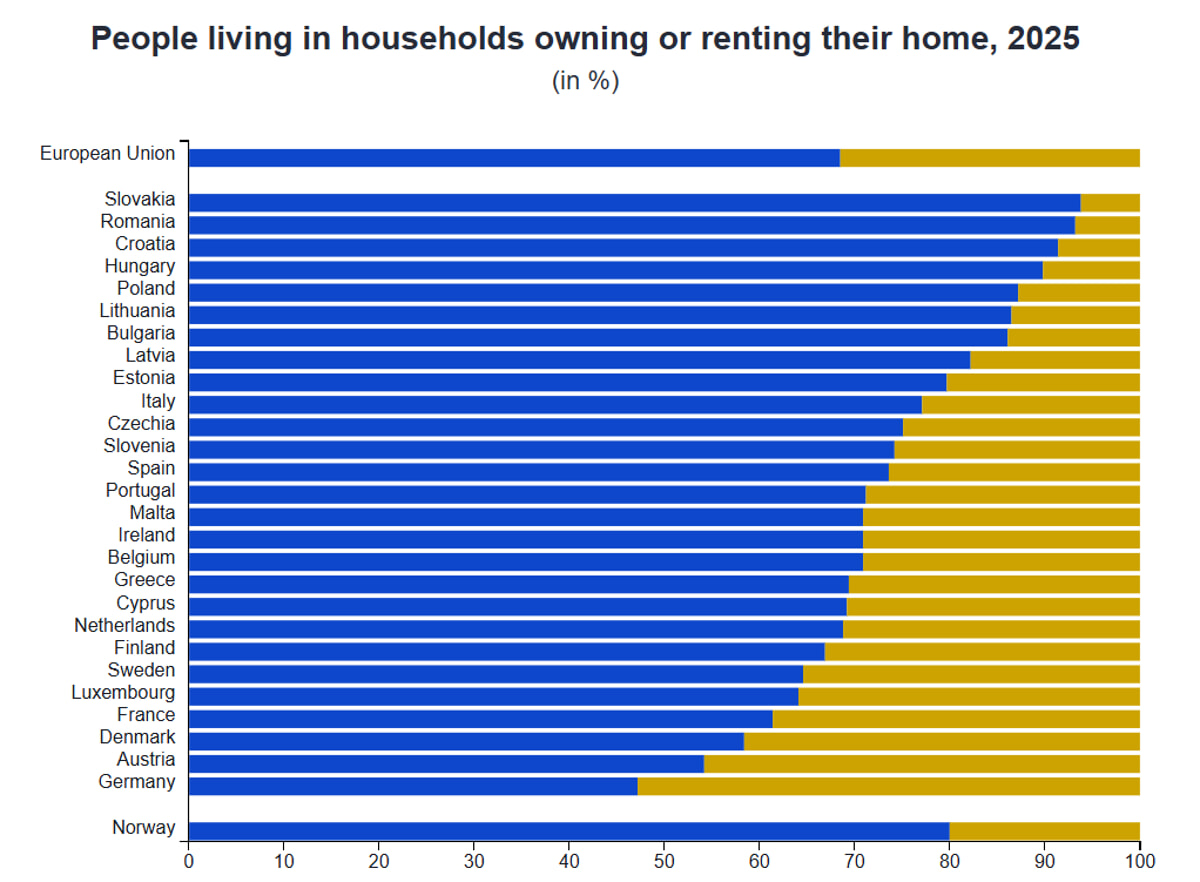
The Eurostat report provides other interesting statistics. 68% of the EU population lives in owned homes and 32% in rented homes (Germany is the only country where renters prevail, at 53%). Almost 52% live in a house, understood as an independent living unit, and 48% in an apartment. In Italy 77.1% of the population lives in an owned home, while the remaining 22.9 are rented.
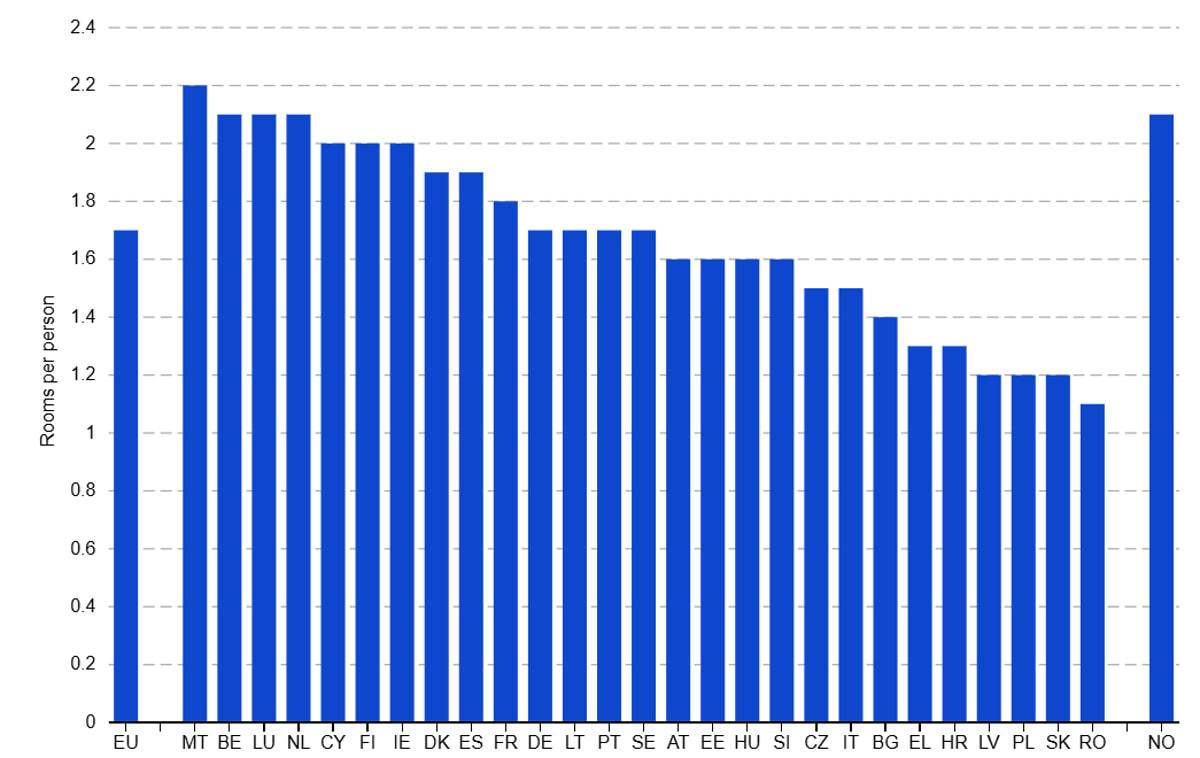
As for the size of homes, the average number of rooms in the EU is 1.7 rooms per person and 2.3 members per family unit. 17% live in overcrowded homes, 33% live in under-occupied homes and 9% cannot afford to heat their homes adequately. As regards the latter data, our country is placed in the average.
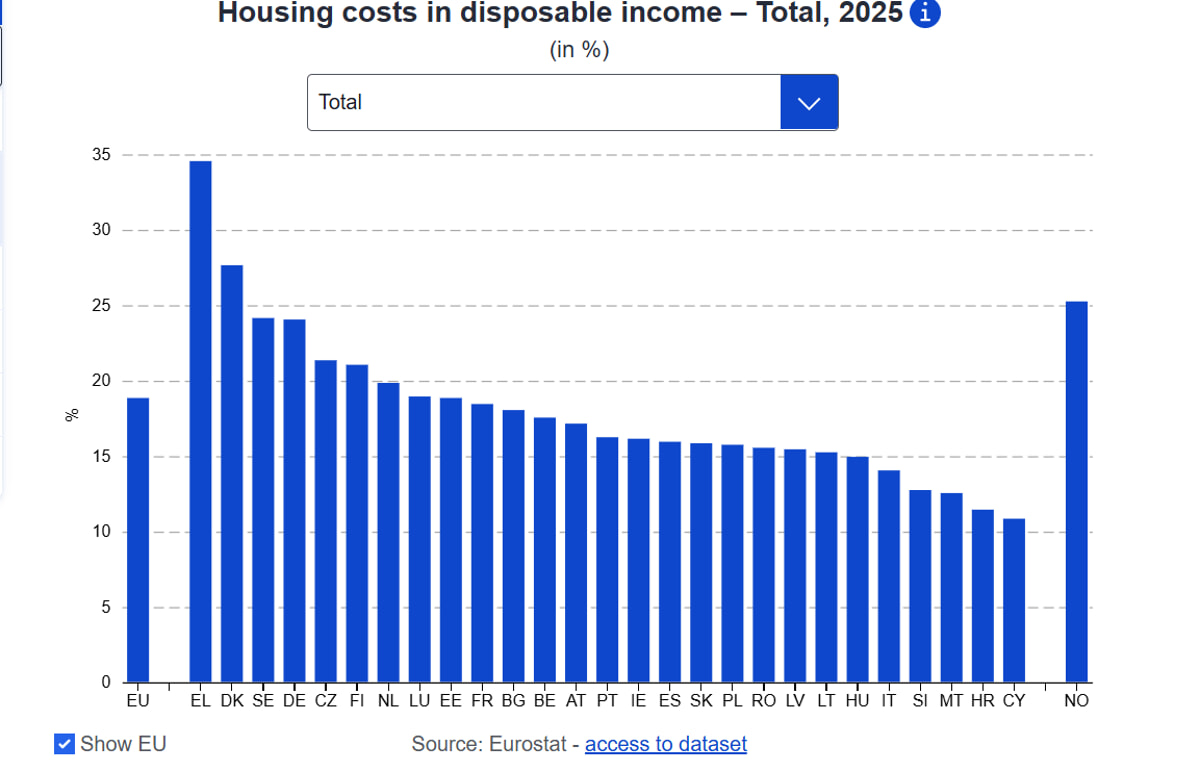
Finally, Eurostat highlights that in 2025, EU families spent on average 19% of their disposable income on housing. The highest shares were recorded in Greece (35%), Denmark (28%), Sweden and Germany (both 24%), while those living in Cyprus spent only 11%, compared to 14.1% of Italians.