
Emirates, the UAE national airline, is offering a salary package of up to 1.185 million dirhams per year (320 thousand dollars, approximately 291 thousand euros) to recruit commanders with direct experience on Airbus A380 and A350. The total amount effectively doubles the monetary portion credited to the current account: a precise choice designed to circumvent Dubai’s high cost of living and “drain” senior and experienced pilots from Western carriers.
The gap between cash and corporate welfare
According to the official parameters of the recruitment division, the liquid salary (take-home cash) reaches 575 thousand dirhams per year (155 thousand dollars), equivalent to approximately 48 thousand dirhams per month (13 thousand). The calculation assumes an average operation of 85 flight hours per month and the sum of basic salary and flight allowance. The absence of income taxes in the United Arab Emirates makes the entire amount net: for a European or North American commander, subject to marginal rates often exceeding 40-45%, that $155,000 net corresponds to a gross salary in excess of $260-280,000 in the home countries.
School and home
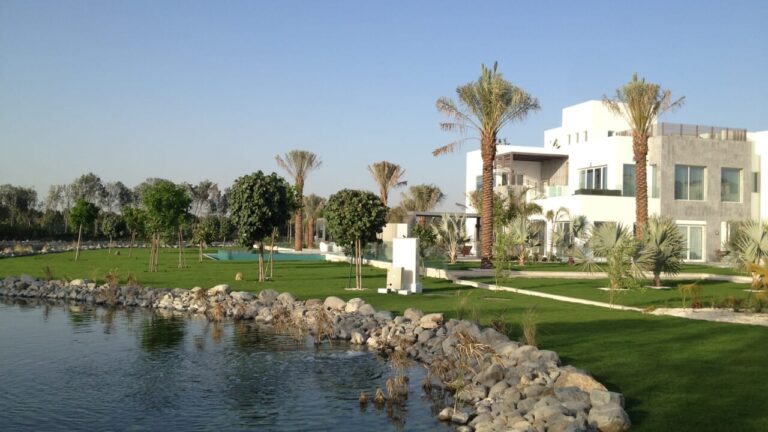
The remaining 610 thousand dirhams (165 thousand dollars) of the package do not pass through the paycheck, but directly cover the fixed family costs in Dubai. The main item concerns company housing with utilities included, a villa in a residential area valued at up to 225 thousand dirhams per year ($61,300), or an equivalent allowance for home buyers. This is followed by school contributions for up to three children aged between 4 and 19, which reach 52,250 dirhams per year for primary schools and 79,750 dirhams for secondary schools. The contract also integrates a company payment of 12% of the basic salary into the Provident Fund after six months of service, full health coverage, insurance against loss of license, 42 days of annual leave and confirmed Business Class flight tickets with an upgrade to First for the pilot and family members.
The global war for pilots and the Gulf challenge
The aggressiveness of the offer reflects the structural shortage of on-board personnel – not just pilots – that will affect commercial aviation in 2026. Estimates from the Boeing Pilot and Technician Outlook set the need for new commercial pilots at 674,000 over the next twenty years, with 63,000 units required in the Middle East alone given a local population base insufficient to cover demand.
At the same time, the wave of forced retirements reaches its peak in 2026: in the United States the deficit reaches 24 thousand pilots and the main American companies have drastically raised the salaries of wide-body commanders (reaching between 350 thousand and 700 thousand gross dollars per year), reducing the historical attractiveness of Gulf salaries. Added to this are the recurring geopolitical tensions in the Middle Eastern area and the increase in the cost of rent and private education in Dubai, factors that slow down family transfers from the West.
This is not an offer for everyone
To support an order book of 367 new aircraft and the hiring plan for over 1,500 pilots launched in the two-year period 2025-2026, Emirates is therefore focusing on “Direct Entry Captains”. The selection leaves no room for junior profiles: at least 7 thousand total flight hours are required (excluding piston aircraft and helicopters), 3 thousand hours as commander (Pic) on wide-body Airbus fly-by-wire (A330, A340, A350 or A380) and at least 150 hours flown in command in the last 12 months. By transforming the cost of relocation into a budget item entirely absorbed by the company, the Emirati carrier thus locks in the availability of expert commanders essential to keep intercontinental connections operational.