


The heat wave sweeping Europe is intensifying, as are scams targeting those who buy cooling systems. Posing as well-known brands, cybercriminals lure consumers with fake offers and “too good to be true” discounts on fans and air conditioners. Scams hide not only on fraudulent websites, but also in emails that appear to come from reputable brands.
Kaspersky urges consumers to be especially careful when purchasing coolers and shares some practical tips to avoid falling victim to these scams. In one of the cases identified, the scammers pass themselves off as a real existing brand that produces portable air conditioners. On the fake online store they use authentic product photographs and even post seemingly credible reviews to increase user trust. To get shoppers to act quickly, they promote limited-time discounts, tricking victims into entering personal and payment information. Once the payment is completed, however, the products are never delivered: in the meantime, the credit card data is stolen and can subsequently be used to commit fraud.
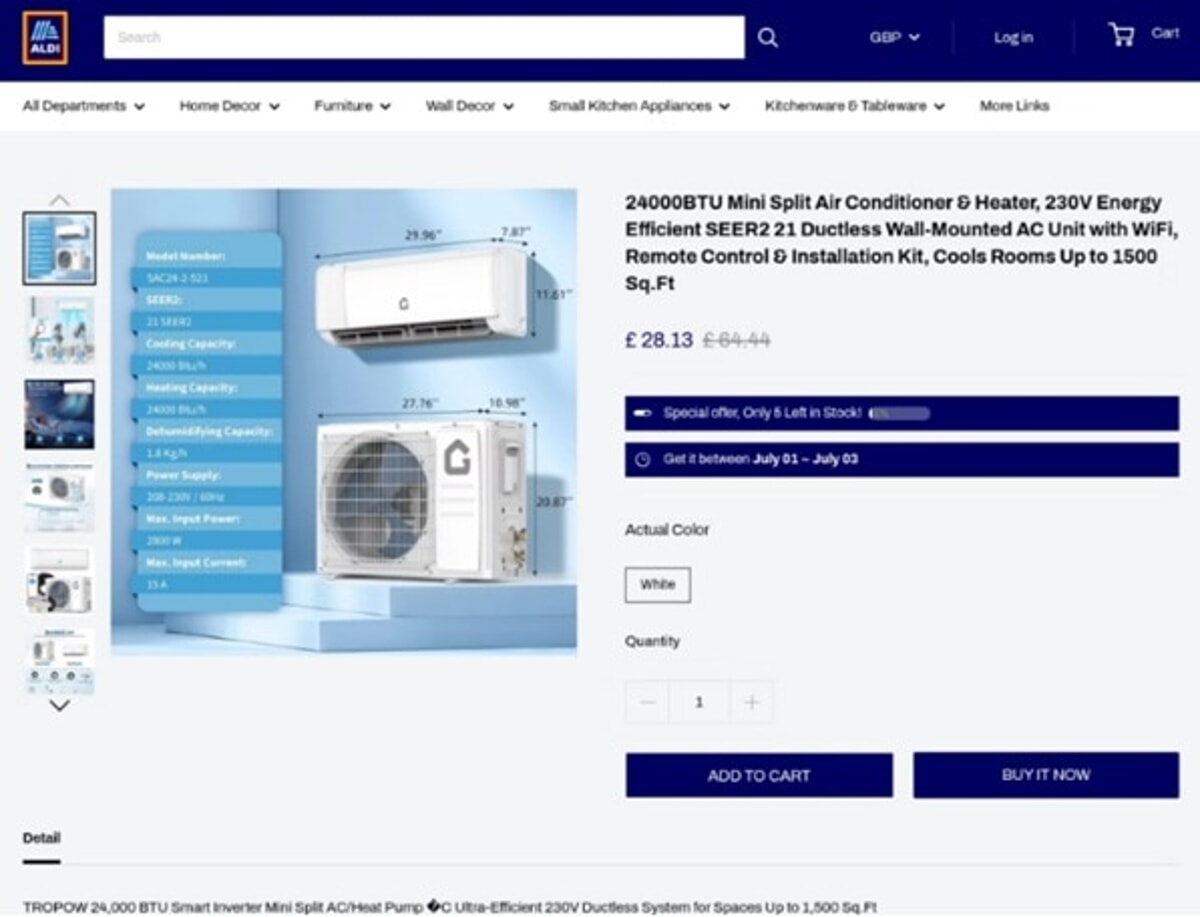
To convince users to provide money or credentials, scammers are also creating sites that imitate well-known retailers. These counterfeit pages faithfully reproduce the original store design and use real products as a basis. The mechanism is similar to the previous one: limited-time discounts are promoted, extremely limited availability is declared and even the exact number of users who are viewing the product at that moment or a countdown that limits the time available to complete the purchase is shown.

“Putting pressure on shoppers to act quickly is one of the most popular techniques used by scammers. When demand peaks, alerts indicating that there are only a few items left or that a discount is about to expire can easily push users to enter financial or personal information. To avoid falling victim to these scams, stay calm and double-check everything, especially the URL and website design. If you have any doubts about the authenticity of a site, search for it on a search engine to verify its legitimacy,” commented Olga Altukhova, Cybersecurity Expert at Kaspersky.
Kaspersky experts share some tips for recognizing a scam when shopping online:
- Be wary of particularly high discounts and offers with very close deadlines: they could be a sign that the offer is fake.
- Check the e-shop websites carefully before entering any information, checking for spelling errors, unusual characters or domains different from the official ones.
- Do not trust links or attachments received via email and always carefully verify the sender before opening any content.
- Compare the product description and photographs with those on the manufacturer’s official website. It is advisable to reach the official website directly from your browser and search for the product from there.
SharkNinja ChillPill: an original portable and wearable cooling system