

In the Middle East the situation becomes more critical day by day. In the last few hours, Iran has targeted US radar installations and air defense systems in the Gulf, with the Revolutionary Guards announcing that they had attacked and blocked two “non-compliant oil tankers” attempting to transit the Strait of Hormuz.
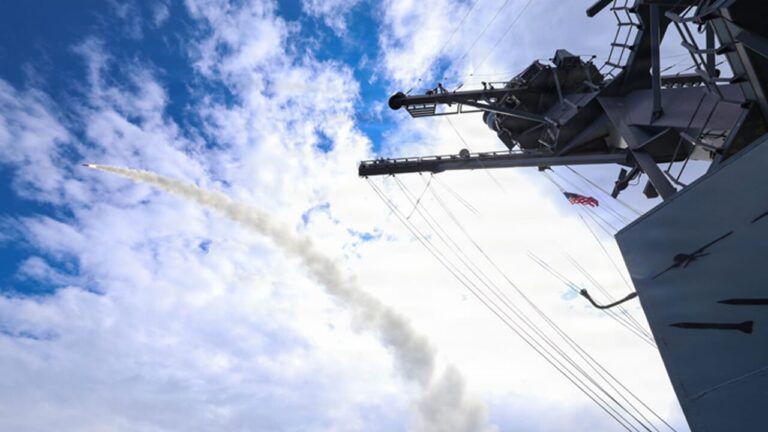
Not only that: an Amazon data center in Bahrain would also have been destroyed. On the other hand, the United States launched a new series of attacks during the night between 20 and 21 July to “further reduce Iranian military capabilities used to attack merchant traffic”.
Amazon data center in the crosshairs
Amazon’s data center was reportedly hit using cruise missiles. It would be the response “to the recent US attacks on civilian infrastructure in Darkhovin”.
Hitting data centers is in fact a further step in the conflict. We can imagine Amazon’s data centers as enormous digital factories. They host servers, data storage systems, network equipment and security infrastructures. They are not only used to manage the e-commerce site, but make up the global network of AWS, the world leader in Cloud Computing services. The installations are therefore considered high-value strategic objectives by intelligence and military forces.
Amazon obviously has many clusters of data centers that are physically separated from each other to prevent a single failure from shutting down the entire network. However, if an entire data center complex is canceled, the other data centers suddenly have to absorb all the backlog of work.
For obvious security reasons, Amazon does not publish the exact addresses of its servers, but the main infrastructure nodes (known as AWS Bahrain DC) are mainly located in the Hamala area.
Crossed threats
Actions on the field are accompanied by fiery declarations from leaders. US President Donald Trump warned that Iran would pay “heavily” for every American soldier killed, while Iranian President Masoud Pezeshkian said the conflict had now become “a full-scale war”.
Meanwhile, Tehran’s Yemeni allies – the Houthi rebels – have threatened a major escalation of the conflict, announcing the blockade of Saudi ports.
The alert to American citizens
In this context, the US State Department has issued a new advisory to US travellers. With a “global alert” warning, American citizens currently in the Middle East are advised to “exercise caution and increased vigilance” and prepare for the possibility of flight cancellations and travel disruptions. The Department also urges all Americans to reconsider any travel to the Middle East. It adds that “Iran and the groups that support it may target other US interests abroad or in locations associated with the United States and Americans around the world.”