


Stop arms to Ukraine, more aid from the state. The slogan is chanted by the hauliers who, together with the farmers, from Sicily to Campania, block the supplies of supermarkets “against expensive diesel”, but it also resonates in Piazza Duomo in Milan where the student protest was set on fire by casseurs and antagonists. Given the approach of a political debate that will ignite the electoral clash in a few months from now, it is better to clarify with data purified by propaganda. What effects would it have to stop sending weapons to Kiev? And how can that money be used to help Italians?
The question, let’s clarify from the start, is legitimate. Every euro allocated to an item of public spending, at least in principle, could be used differently. But there is a substantial difference between arguing that interrupting military supplies would reduce the cost of living. To understand why, we need to distinguish three things: the cost of aid to Ukraine, the economic impact of the war and the causes of inflation. They are related phenomena, but they do not coincide.
The high cost of living
In September 2026, Italian inflation reached 4.2 percent per year, further rising after the 3.3% increase in August. Prices are mainly driven by energy goods, which increased by 22.6% in twelve months. Fresh food recorded an increase of 5.5%, while the products purchased most frequently by families recorded an increase in price of 5.2%. Inflation affects unequally, making it even more burdensome for families with the lowest spending levels.
The result is a loss of purchasing power that accumulates over time, especially when salaries and pensions are unable to keep up, also because it is not just the price increases of recent months. In 2022, Italian inflation had already reached an average of 8.1%, mainly due to the energy shock caused by the Russian invasion of Ukraine.
Istat data documents an increase in the average food expenditure of families from 468 euros per month in 2020 to 552 euros in 2025. In September 2026 the food price increase compared to the same month in 2025 was 1.7%, with an increase of 5.5% for unprocessed food, such as fruit, vegetables and other fresh products. In practice, if a family had exactly maintained the value and composition of the food basket purchased in 2020, its cost today would be approximately 600-610 euros per month, instead of 468 euros.
The main causes determining the increases were identified by Istat in the post-Covid pandemic economic recovery (the peak of 2021) with increases that affected energy and raw materials even before the energy shock due to the Russian invasion of Ukraine (February 2022) which triggered the increase in the price of cereals and fertilizers – more than doubled in price between the beginning of 2021 and the end of 2022. Between the second half of 2021 and the first half of 2023, agricultural margins had remained essentially stable. Recovering profit margins became more important later when production costs started to fall. The new energy shocks triggered by the war in Iran instead contribute to the explosion in fuel prices in 2026, as we have already seen. The overall bill? 26.8 billion euros in increased spending, around a thousand euros per family per year on food alone.
Of course, it is clear that this phenomenon is directly linked to international conflicts, energy markets and inflation. While it does not depend on the weapons that Italy sends to Ukraine. But what order of magnitude are we talking about?
Weapons in Kiev: from missiles to armored vehicles, here’s how much they cost us
Italian military support is set to continue. In an interview with BBCon Sunday 18 October the Minister of Defense, Guido Crosetto, confirmed that a thirteenth aid package could be approved by the end of 2026. So far, Italy has sold armaments worth over 3 billion euros to Ukraine as declared by the Chief of Defense Staff, Luciano Portolano, in December 2025. But it is worth clarifying immediately. They are not “figures spent”, but rather the overall value of the supplies made in almost four years: the lists remain secret, but we have reconstructed which systems were sent, how much they are worth and what the hidden costs are for the taxpayer.
The most valuable piece of Italian supplies is the Franco-Italian anti-aircraft system designed to intercept enemy planes and missiles. A complete Samp/t battery, consisting of radar, command center and launchers, has an indicative value of approximately 500 million euros. They are particularly important systems for protecting Ukrainian cities and infrastructure from Russian attacks and Italy contributed to the supply of two batteries: one Italian and another in collaboration with France. But to work they need Aster 30 missiles, the cost of which can reach around two million euros per interceptor. And it is precisely these missiles that are at the center of the next supplies. In an official statement on July 14, France and Italy committed to accelerating deliveries of Aster 30 by October 2026.
Italy has not only provided defensive tools: a substantial part of the aid includes armaments intended for land combat. Among these there would be five PzH 2000 self-propelled guns – among the most advanced artillery systems available in the Italian Army, each having an indicative value of around 18 million euros – two M270 multiple rocket launchers, worth over five million each, and between twenty and thirty 155 millimeter howitzers, cannons designed in the Seventies but still usable in combat. The supplies of armored vehicles were more substantial – at least numerically – but many had been withdrawn from service waiting to be scrapped. To these must be added the supplies of Stinger anti-aircraft missiles, Milan and Panzerfaust anti-tank systems, machine guns, mortars and ammunition.
The hidden cost of this “donation” will arise when the Army has to replenish its supplies, but these are multi-year programs that include modernizations, replacements of obsolete materials and new military capabilities, partly planned before the conflict. But there are a couple of other aspects to consider.
Aid to Ukraine “weighs” 15 euros per month.
Italy also participates in European financial and military support programs for Ukraine. Limiting ourselves to 3 billion in direct supplies therefore means underestimating our country’s overall commitment. According to the Observatory on Italian military spending Mil€x, approximately 17 billion euros must be added to the value of the armaments sold directly by Rome, attributable to Italian participation in the European instruments of support for Ukraine. The total would therefore reach around 20 billion since the start of the war between grants, loans, guarantees and other financial mechanisms whose repayment is expected through the reparations owed by Russia to Ukraine.
So let’s try to transform the figures into something concrete. How much money would families get by stopping military aid? The entire “cost” of aid to Ukraine (including financial costs) weighs around 188 euros per year per family, 15 euros per month.
The war increased prices. Not weapons supplies
Allocating resources for a 15 euro bonus to families would not eliminate the causes of price increases while the prices of petrol, gas, electricity and food would continue to be determined by the respective markets. Claiming that the increase in the cost of living was caused by Western military aid is not supported by the data, while it is incontrovertible that the European energy crisis had already begun in 2021, before the invasion. According to the International Energy Agency, Russia had already started reducing gas supplies to Europe then, contributing to tensions in the markets.
And there is an even more recent fact that helps to understand the difference: the latest Italian inflationary flare-up has an origin that goes well beyond the Ukrainian front and looks to the decisions taken across the Atlantic. The new acceleration in energy prices in 2026, especially oil products, is due to the consequences of the conflict between the United States and Iran. Tensions in the Persian Gulf have had repercussions on energy prices and therefore on final prices. This shows that there is not a single conflict responsible for the high cost of living, nor a single budget decision capable of stopping it.
The war would continue, at least for the foreseeable future. Sanctions, supply problems and geopolitical risks would not necessarily disappear while the cost of living is affected by the structure of our production system.
Rearmament also produces economic growth
However, there is another issue, economically more relevant than military supplies to Kiev: the rearmament of Europe. Because if stopping aid to Ukraine would save relatively limited resources, the progressive increase in defense spending will tie up public budgets for tens of billions of euros every year. At the NATO summit in The Hague in June 2025, the allies committed to bringing defense and security spending to 5% of gross domestic product by 2035. The economic dimensions are enormous.
According to NATO data reworked by the Chamber’s Research Service, in 2026 Italy will allocate 48.31 billion euros to military defense, according to the Alliance’s classification, equal to 2.10% of GDP. In 2025 they were 47.18 billion. To reach 3.5%, approximately 80.5 billion would be needed per year, i.e. 32 billion more than in 2026, keeping nominal GDP unchanged. The consequence is that rearmament could affect future fiscal decisions: higher taxes, lower margins for other public expenditure or further indebtedness. Concrete possibilities that the government will have to deal with.
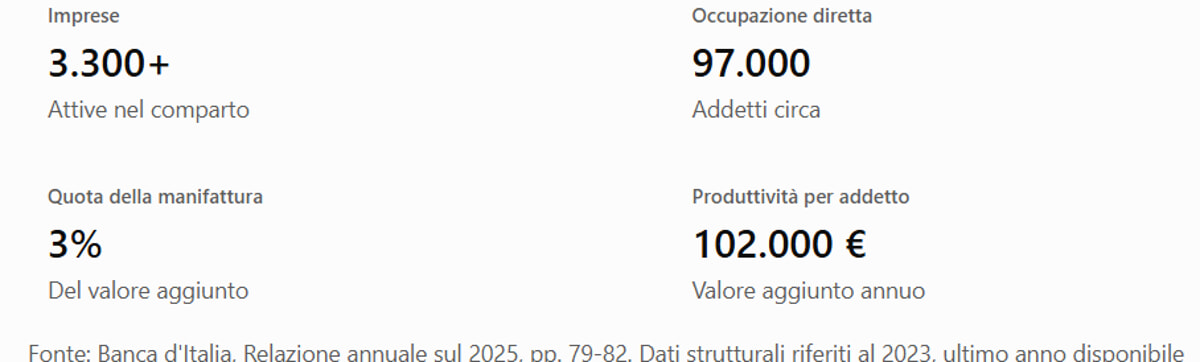
Viewing military spending solely as a loss to the economy would be equally wrong. Investments in defense fuel an important industrial chain, from shipbuilding to aerospace, from electronics to cybersecurity. In Italy, companies such as Leonardo and Fincantieri are the protagonists, together with a network of specialized companies, suppliers and research centers. When the State buys a system produced in Italy, it finances industrial activities, wages, research and employment. A part of the expenditure returns to the economy through taxes and contributions, while the technologies developed can also find application in civil sectors.
The International Monetary Fund, in an analysis published in April 2026, examined increases in military spending in 164 countries since the Second World War. The results show that the economic multiplier of defense spending is on average close to one: in general terms, an increase in public spending of one billion can generate an increase in economic product of similar size, even if the result varies greatly between countries and programs. The crucial difference is where the money goes.
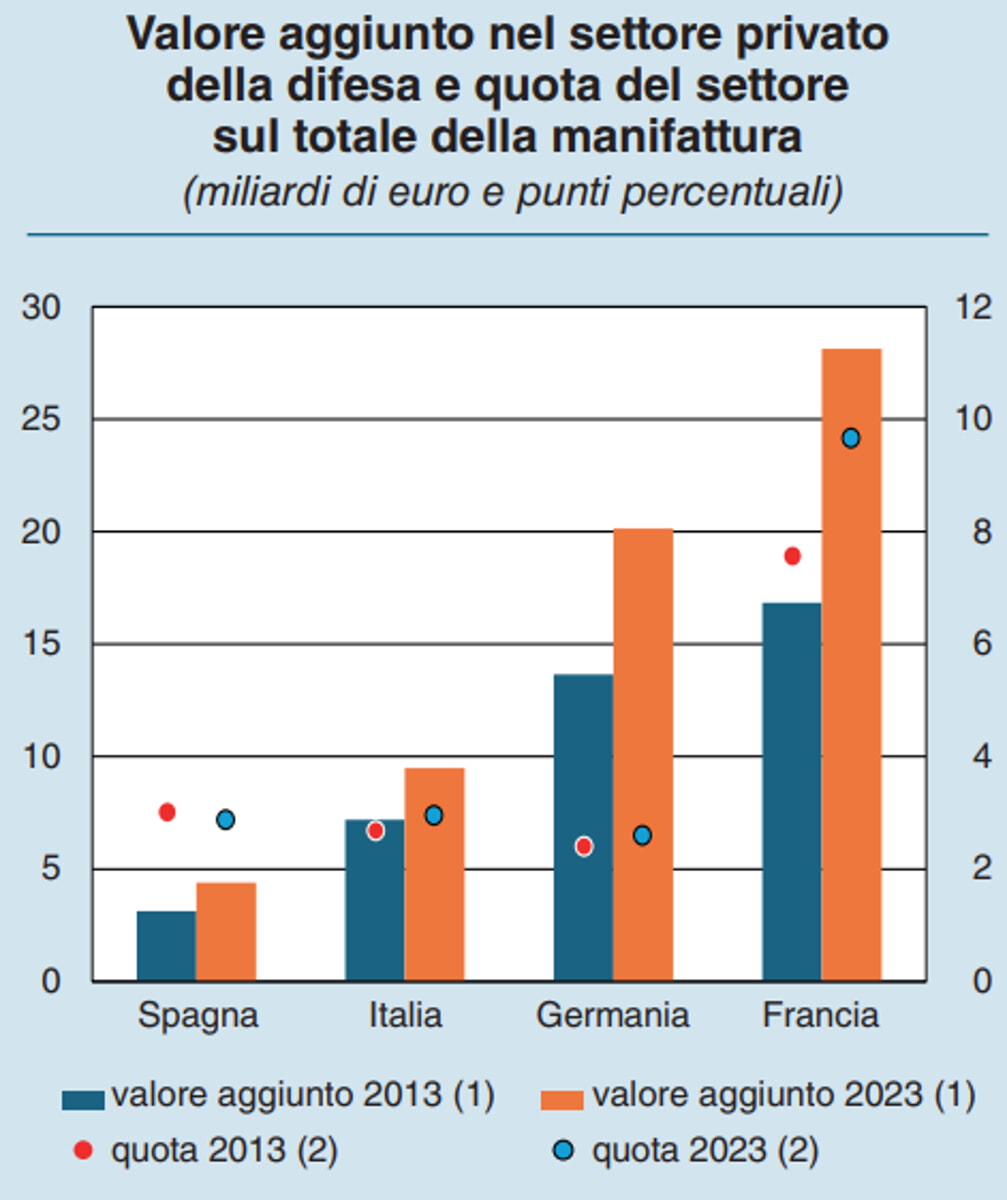
If a billion is used to purchase systems produced mainly abroad, a substantial part of the demand supports the industry of the supplier countries. If instead it finances national research, design and production, the effect on the Italian economy can be greater. In other words, it can support some production sectors. Without forgetting that investments in education, research and infrastructure can increase future productivity.
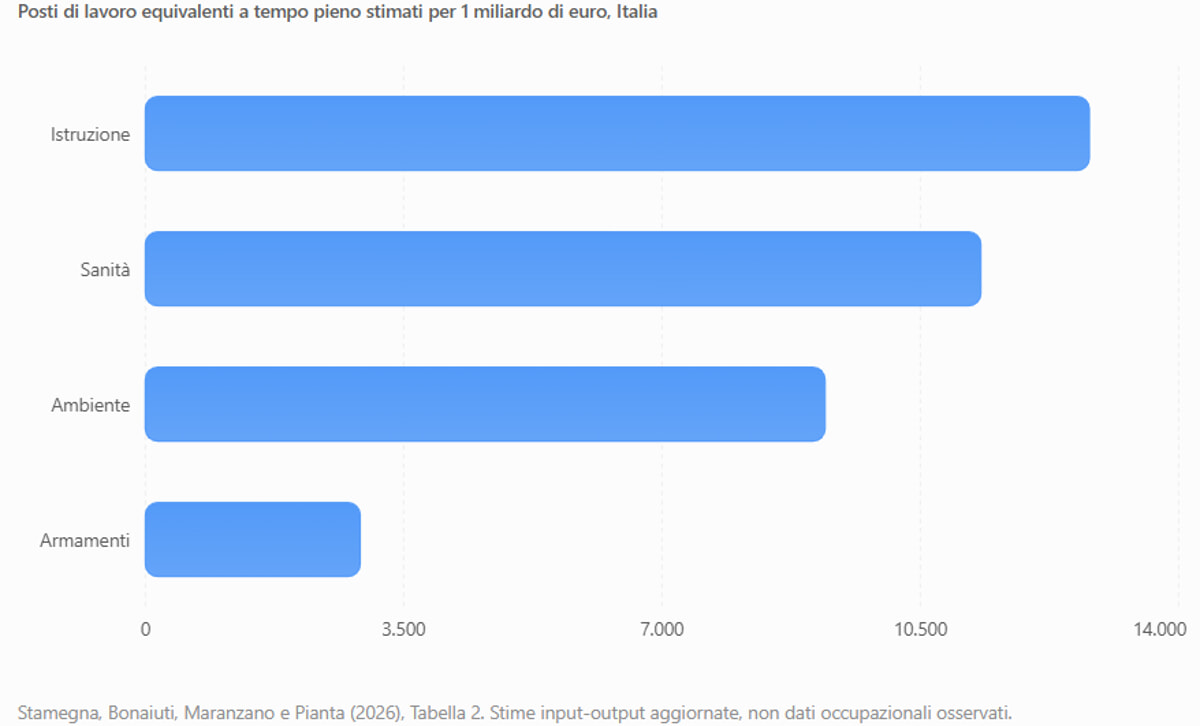
Those aimed at energy efficiency can also contribute to structurally reducing dependence on fossil fuel imports, one of the main sources of Italy’s economic vulnerability.
Dossier is the exclusive subscription investigative section of The Vermilion. If you would like to support our journalistic work and subscribe, Click here.