

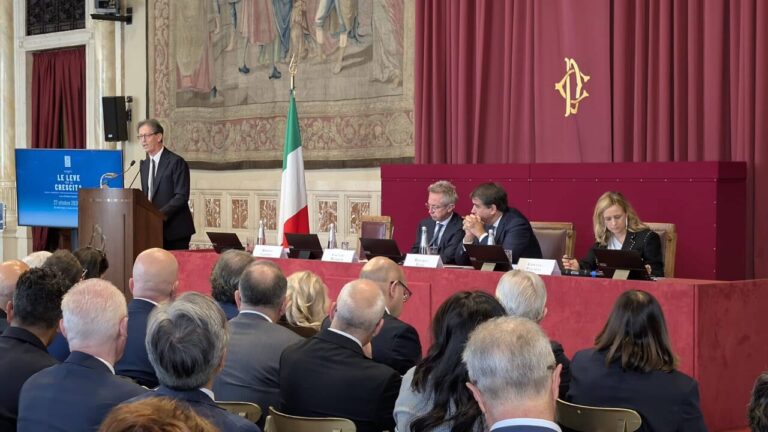
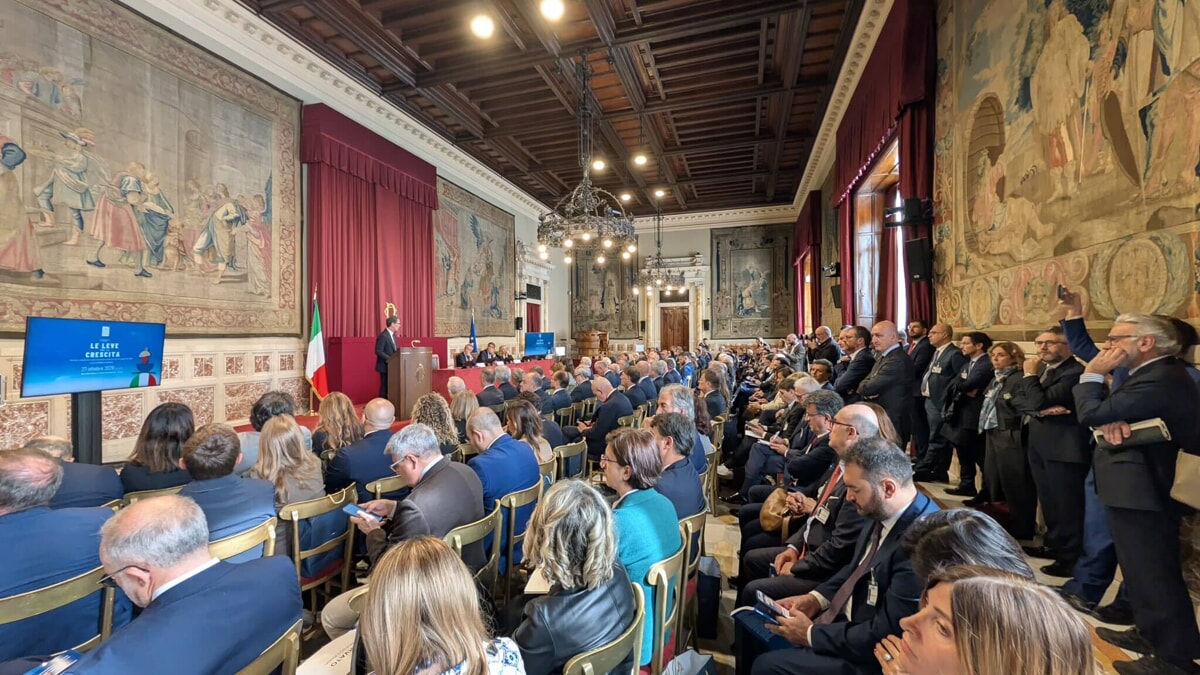
Transform the method tested with the National Recovery and Resilience Plan into a structural practice of administrative action, based on defined objectives, certain times and measurement of results. This is one of the main indications of the Report “The levers for growth. Cohesion, competitiveness and institutional modernization beyond the PNRR season”, promoted by ANCI and edited by Roberto Garofoli, illustrated today at the Chamber of Deputies in the presence of the Executive Vice President of the European Commission Raffaele Fitto, the Mayor of Rome Roberto Gualtieri and the President of ANCI and Mayor of Naples Gaetano Manfredi.
The document, the result of a year of work and the contribution of over one hundred experts and representatives of the institutions, identifies the priorities for Italy’s growth beyond the PNRR, with a focus on social cohesion, competitiveness, institutional modernization, territorial gaps, human capital and essential services. The Report highlights the results obtained thanks to the approach based on performance measurement and compliance with objectives. Compared to 2019, the average payment times of the central public administration dropped from 53 to 27 days. In civil justice, the duration of proceedings has been reduced by approximately half, while outstanding cases have decreased by 54%. The network of contracting stations was also rationalised, going from over 38 thousand to 3,823 qualified facilities, while the use of paper procedures fell from 45% in 2023 to 1% in 2025.
Progress which, the document underlines, requires continuity and structural interventions to translate into lasting growth. In terms of territorial gaps, between 2021 and 2024 the GDP of the South grew by 8.5%, compared to 5.8% in the Centre-North. However, the gap remains significant with southern GDP per capita standing at just over half that of the Centre-North. Added to this is the loss of human capital: in twenty years the South has lost half a million graduates, with an economic cost estimated at 116 billion euros, while since 2011 Italy has recorded the emigration of 630 thousand qualified young people, for an unrecovered educational value close to 160 billion euros.
“Today more than ever, growth must be an absolute priority, not only for economic reasons, but for the social well-being and democratic stability of the country. In a context marked by international crises, energy vulnerabilities and demographic decline, it is necessary to activate all available levers. Starting from social investment, valorising the energies of young people, women and territories that are not yet fully involved, especially in the South, and reducing gaps that hold back individual opportunities and national productive potential. Expanding participation in economic life is a choice of equity, but also a precise economic policy strategy. The quality of the institutions must be translated into concrete results through clear objectives, strategic priorities and greater coordination and implementation capacity. The PNRR has demonstrated that our institutional system knows how to mobilize when responsibilities and deadlines are well defined. The real challenge today is to make this capacity available to those who need it called to govern, regardless of political affiliation, analyzes and perspectives on crucial issues for the future of the country” declares Roberto Garofolieditor of the Report.
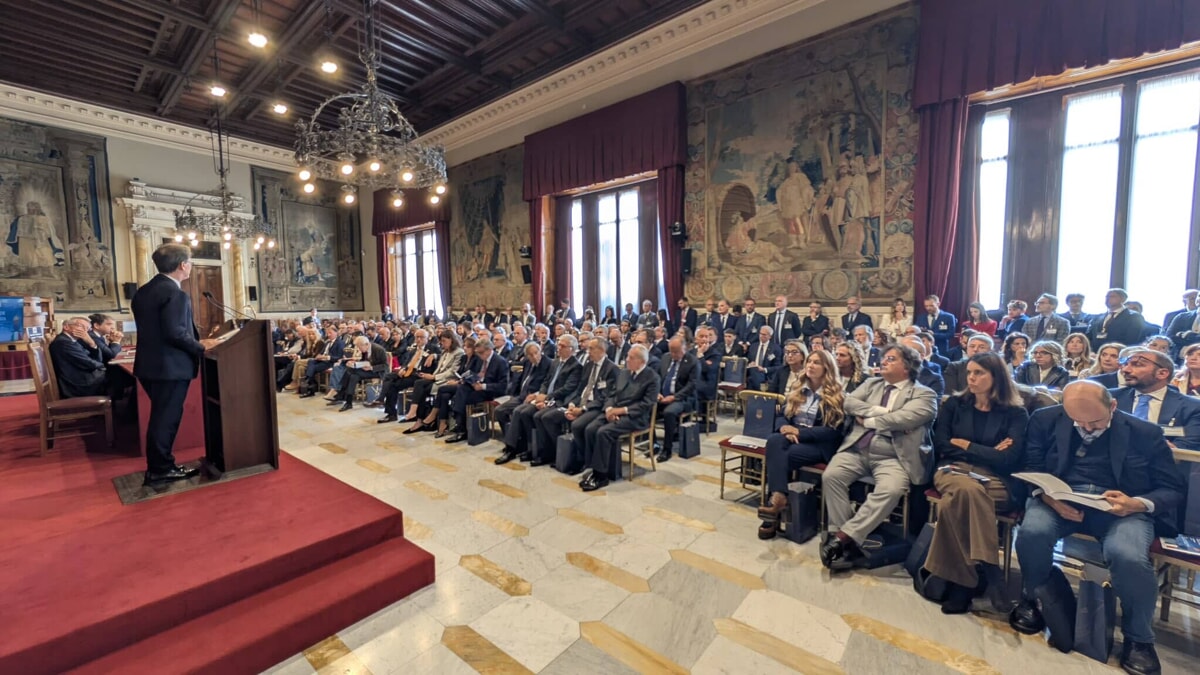
«The PNRR has demonstrated how simplification, flexibility and accountability are decisive for transforming resources into concrete results. Respect for deadlines and the link between reforms and investments have marked a change in method, which is fundamental for achieving objectives and giving continuity to results. This experience offers important indications for the future of European policies. In a profoundly changed context, we need more flexible tools capable of responding to new needs. The review of cohesion policies, with five priorities – water, housing, energy, competitiveness and defense – goes in this direction. The report edited by Roberto Garofoli contributes to identifying the priorities of public action, addressing the challenges of urban overpopulation, with needs related to housing and mobility, and the depopulation of internal areas. Guaranteeing the right to remain in their territories and offering opportunities to new generations is essential to reducing gaps and strengthening social and economic cohesion” declares Raffaele Fitto, Executive Vice President of the European Commission.
«The real challenge is to ensure that the capacity demonstrated with the PNRR becomes a permanent asset of our institutions. In recent years the Municipalities have faced an extraordinary commitment, also thanks to a strong motivation and empowerment which involved not only the mayors, but also the staff of the administrations, including the smaller ones. The relationship with the central state has also changed, with an institutional collaboration that has allowed us to work together towards clear objectives, beyond political differences. Today we must consolidate this experience, as also indicated in the Report edited by Roberto Garofoli, aiming for greater flexibility in planning, certain times and better integration of national and European resources. The challenge is to transform what we have learned into a stable method, capable of tackling together the difficulties of large urban areas and those of internal territories. Because the country’s growth depends on the ability to guarantee services, opportunities and concrete responses to all citizens” comment Gaetano Manfredi, ANCI President and Mayor of Naples.
Among the priorities identified are the strengthening of the Single SEZ through an industrial policy oriented towards stable employment, a national plan to encourage the return of talent, with measurable objectives, and the completion of high-speed railway infrastructures according to deadlines set for 2035.
The Report also recalls the need to intervene on essential services. In the water sector, losses reach 42% of the water released into the network. Over 1,300 municipal managements invest on average 29 euros per inhabitant, compared to 94 euros for industrial managers. The indications include the progressive industrialization of the service and the recovery of the 2 billion cubic meters of unused water in artificial basins.
In the digital transformation, given the achievement of cloud coverage which affects 96% of Municipalities, the challenge now concerns national coordination in the adoption of artificial intelligence and the continuous maintenance of systems. In the healthcare sector, the effective operation of Community Homes and Hospitals requires addressing the shortage of over 38 thousand nurses and social and healthcare workers and reorganizing general medicine, also in light of the expected retirement of 42% of general practitioners.