

In the famous fable “The Grasshopper and the Ant” by Aesop, taken up and reworked over the years by various authors, including through interpretations and illustrations, it tells of an ant that, during the summer, works hard to accumulate stocks of grain and provisions for the winter. The cicada, on the other hand, spends its time singing and enjoying the sun, without worrying about what awaits it. When the cold season arrives, however, it will be the ant that will prevail.
Pasta, rice, legumes: what keeps best
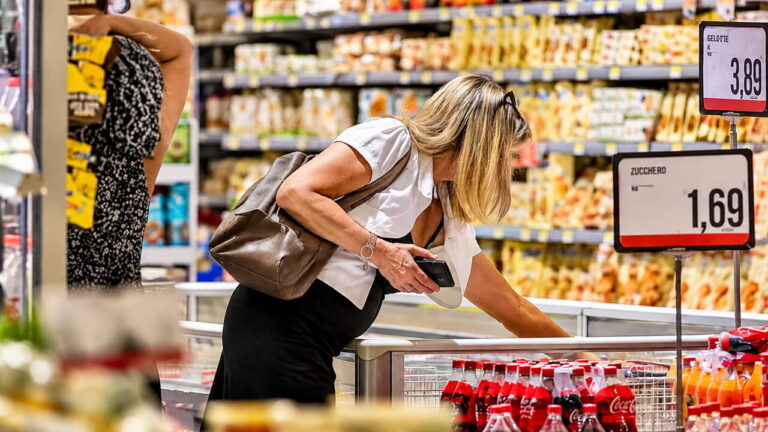
From ancient Greece to the present day, the ant continues to be a model for those who plan purchases and stockpile supplies. There are quite a few people who choose to stock up on foods in large quantities, especially during discounts and promotions. But what are the products that should be put in the pantry?
Among the most suitable are pasta, rice, flour and dried legumes. As suggests the Council for Agricultural Research and Analysis of the Agricultural Economy (Crea), these products can be stored at room temperature, as long as they are stored in clean, well-ventilated places protected from humidity. Oats, sugar and salt are also added to the list, but also water and drinks such as wine and beer.
Another category to consider is that of preserves: from tomato pulp and puree to fruit in syrup, up to tuna, corn and canned meat. These foods are also suitable for purchases in larger formats. According to the U.S. Department of Agriculture, high-acid canned goods, such as tomatoes and fruit, maintain optimal quality for up to 18 months. For those with low acidity, such as meat and fishas well as vegetables, the indicative storage times are even longer.
What to put in the pantry: pay attention to the dates
Among the products that it is preferable not to purchase in large quantities are all fresh and easily perishable foods, such as fresh milk, yogurt, fresh cheeses, meat and fish. The same goes for salads, leafy vegetables and baked products, which have particularly short storage times.
As Crea reminds us, even if kept in the refrigerator, these foods retain their characteristics unchanged only for a limited period. Furthermore, once the packages have been opened, it is important to consume them within a short time. A useful precaution to avoid food waste.

But on the consumption front there is some good news: in autumn 2026, food waste in Italy will fall below the threshold of 500 grams per capita per week. “Each Italian throws away 493.7 grams of food every week, with a decrease of 11.17 percent compared to the 555.8 grams recorded a year ago”. This was underlined by Andrea Segrè, scientific director of the “Waste Watcher International” Observatory, on the occasion of the presentation of the new report on food waste, created in collaboration with the Department of Agri-Food Sciences and Technologies (Distal) of the University of Bologna, based on a survey conducted by Ipsos Doxa.
Desire to cook: the passion for cooking is growing
Home cooking seems to be gaining more and more space in the habits of Italians, also due to the need to contain expenses. A phenomenon that recalls, at least in part, that told in the film “Julie & Julia” (2009), in which the passion for cooking becomes the starting point of a new personal adventure.
According to research by Teha on consumption outside the home, over 90 percent of those interviewed say they want to increase the time dedicated to preparing meals at home. But cooking more often also means better organizing the pantry and planning purchases, to avoid having to rush to the supermarket every time an ingredient is missing at home.
This is precisely the problem raised by a user on Reddit, a platform on which there is no shortage of discussions dedicated to a recurring question: which food products should be bought in large quantities? “I’m getting into home cooking, but I hate having to go shopping every time I miss something. Does anyone have any advice for me?”, she writes.
The question garnered numerous suggestions. “I buy basmati rice, bouillon cubes and polenta in large quantities. You could do the same,” suggests one participant. The advice of another, decidedly more obvious, is to “keep an eye on the offers of your trusted supermarket”.
Italians and the crisis: savings and less consumption
According to data from a Confesercenti-Ipsos survey, over nine out of ten Italians have reduced consumption or adopted saving strategies. It is not surprising, therefore, that some brands offer assortments and services designed for those who prefer convenience-sized packages and larger stocks.
In particular, some chains offer the possibility of booking large quantities of products, without order limits and with collection directly at the point of sale. Items available include pasta, tomato puree, canned tuna and legumes, extra virgin olive oil and mineral water.
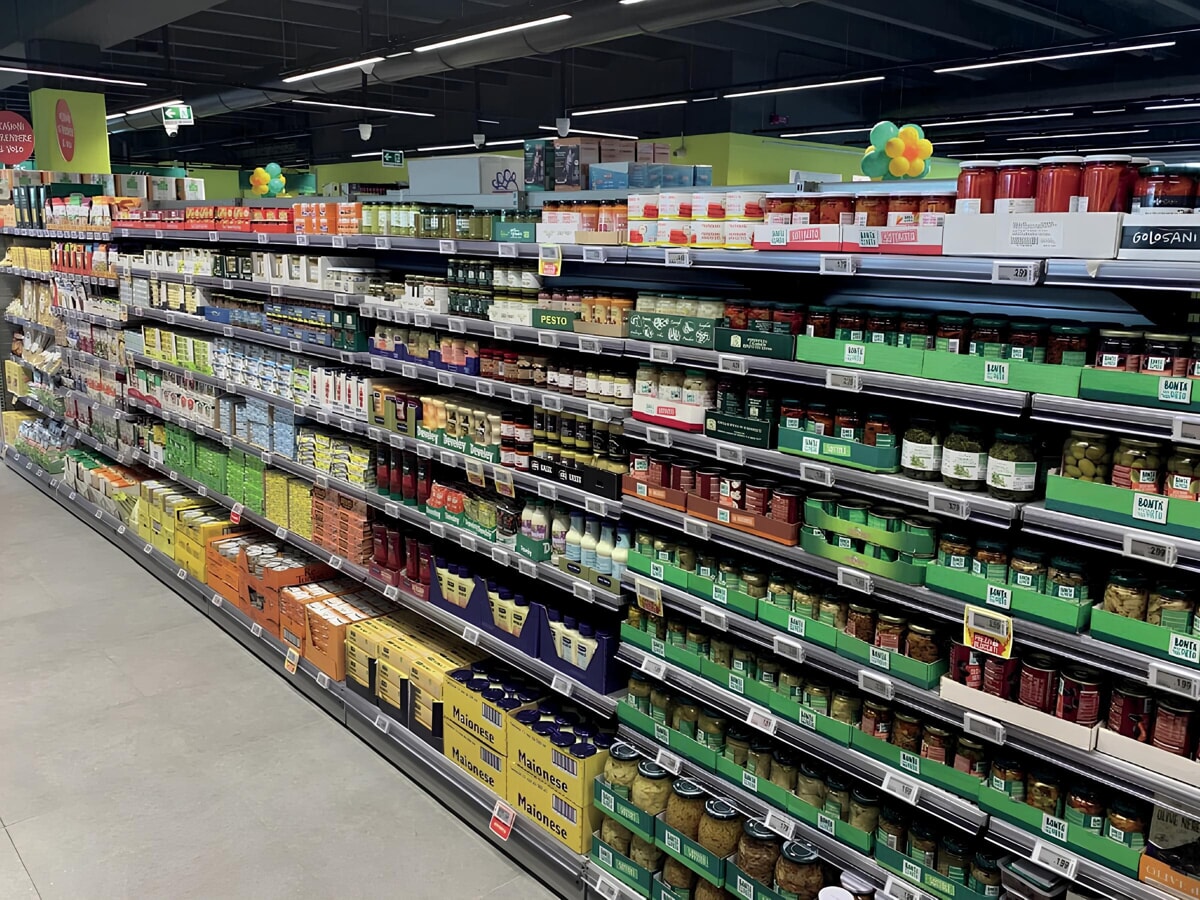
Even i discount offer solutions for accumulating supplies and saving, thanks to multipack offers that allow you to purchase multiple packs at an affordable price. The proposals include packs of 16 cans of tuna weighing 80 grams at 14.29 euros, packs of three cans of 400 grams each of tomato pulp at 1.99 euros and packs with two packs of coffee of 250 grams at 5.99 euros. The promotions also concern mineral water, sold in packs of 12 bottles for 2.80 euros, and washing machine detergent, available in three bottles of three liters each for 8.98 euros.
Three rules to respect in order not to waste
“Get two, pay one” or “get three, pay one”: many consumers have grown up with advertising slogans like these. Buying products in larger packages, in family or convenience formats, can help you save, because in this way the cost of packaging has less impact on the final price of the product.
But is buying in multipacks really convenient for everyone? According to oneinvestigation Ipsos reported in the “Position Paper Marca 2026” by Federdistribuzione, 47.3 percent of Italian families declare that they purchase larger quantities to build up a reserve. A strategy that can prove advantageous especially for large families.
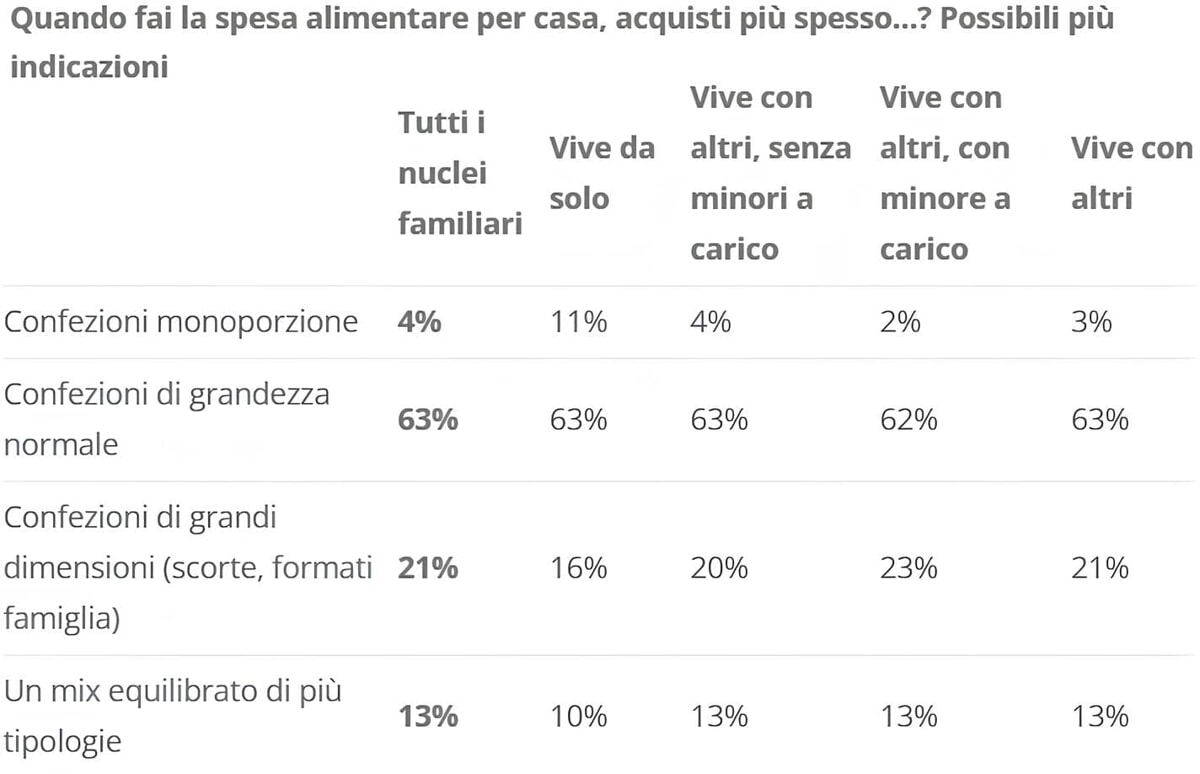
The convenience of purchasing in large quantities is less obvious for those who live alone or belong to a small family. According to Istat, in 2025 a family composed of one person spent 2,070 euros per month, approximately 29 percent less than a household of two people. Obviously it is an average, which includes the expenses of those with a salary of over 3 thousand euros and those who don’t make it to the end of the month. Single-member families represent 36.2 percent of the total, more than one in three families, according to the Annual report 2025 of the National Institute of Statistics.
These differences also emerge from purchasing habits: 11 percent of singles prefer single-portion packages, compared to 3 percent of the total. But before taking advantage of a promotion, it is always best to follow three rules: compare the price per kilo or per litre, evaluate your habits and check that the quantity proposed is really advantageous.
Dossier is the exclusive subscription investigative section of The Vermilion. If you want to support our journalistic work and subscribe, Click here.