

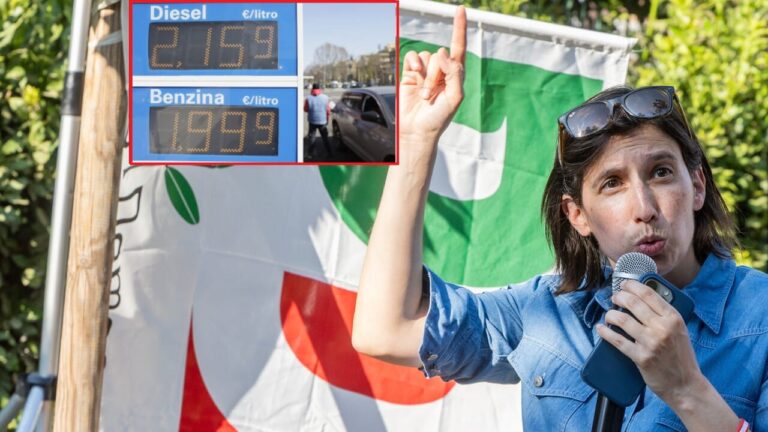
With petrol and diesel now both above the threshold of two euros per liter and the tax discount on diesel excise duties close to expiring, Elly Schlein asks the Meloni government to immediately introduce a national tax on the extra profits of energy companies, without waiting for a possible European agreement.
Schlein: “Meloni and Giorgetti move from words to deeds”
The attack from the Dem leader comes after the new European initiative also signed by the Minister of Economy Giancarlo Giorgetti. Germany, Italy, Austria, Poland, Portugal and Spain have in fact sent a letter to the Irish presidency of the EU asking to open a discussion on a common European framework for taxing the extra profits of oil companies. The issue should arrive on the table at the meeting of the Union’s financial ministers scheduled for mid-September in Dublin.
BREAKING: 17 cent discount extended until August 26: Giorgetti signs the decree on mobile excise duties
“Yesterday’s is the second letter that Giorgetti has signed together with other European ministers to tax the extra profits of energy companies”, underlines Schlein. “While waiting for the proposal to gather the necessary consensus at EU level, Meloni and Giorgetti should move from words to deeds, take the initiative and introduce this tax at a national level”.
It is actually the second attempt at a European level in the space of a few months. Already in April, Italy, Germany, Spain, Portugal and Austria had signed a first initiative asking the European Commission for a common response to the extra profits produced by the energy crisis. Poland was also added to the new letter.
“Fuel prices now exceed 2 euros per liter everywhere and the excise duty cut on diesel expires in two days. Buffer measures are no longer enough. It is necessary to immediately adopt support measures for the most fragile families and businesses and implement a real strategy to structurally reduce energy costs. A tax on extra energy profits can make an important contribution to financing these interventions”, says the secretary of the Democratic Party in a statement anticipated by Corriere della Sera.
The proposal of the six EU countries: how the new tax would work
In the letter sent to the Irish presidency, the six governments argue that the national measures adopted so far have failed to permanently reduce or stabilize prices for citizens and businesses and ask to discuss an “EU-wide framework for taxing extra profits”.
The document starts from the sharp increase in prices following the crisis in the Middle East and aims at the redistribution of the increased margins of oil companies. There is a precedent. In 2022, after the increase in energy prices following the Russian invasion of Ukraine, the EU introduced a temporary solidarity contribution for companies in the oil, natural gas, coal and refining sectors. The regulation provided for a minimum rate of 33% on the part of taxable profits exceeding the 2018-2021 average by 20%.
Italy then adopted its own extraordinary contribution for 2023 with a specific mechanism and a rate of 50%. The revenue was initially estimated at around 2.6 billion euros, while actual collections in 2023 reached 3.407 billion, according to data provided by the government to the Chamber.
“In four years, energy companies made 80 billion in profits”
“An accumulation of wealth paid for by Italians with high energy prices, favored by the policy of the Meloni government which has transformed Italy into a gas hub by giving up renewables. In four months the government has squandered 2.5 billion euros of public money to cut excise duties on fuel, giving it away to oil companies and taking it away from investments in public health. A shame” says Angelo Bonelli, Avs MP and co-spokesperson for Green Europe.
“But what is serious is that there is another tax, which is often forgotten, and it is the climate tax which, between heat waves and tornadoes, has caused economic damage of over 22 billion euros in 2026 to date. And the Italians will still pay it. Taxing extra profits is something that we have always supported as Avs, but we also need simplification on renewables and finally giving the go-ahead to a social bill for the middle class”.