

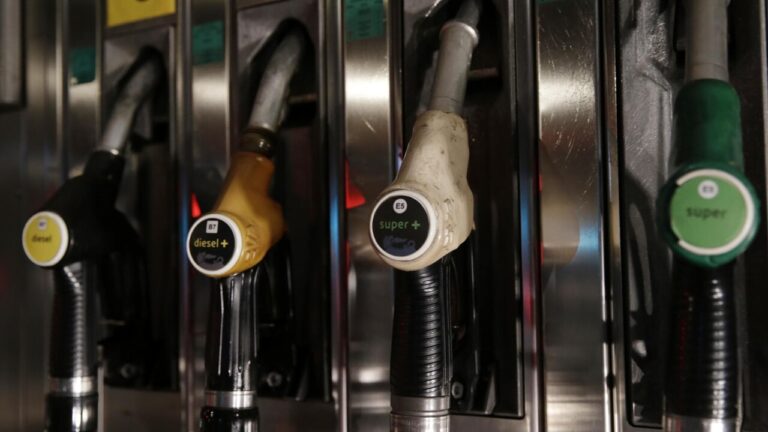
Free up strategic inventories to increase fuel supply and ease price pressure. It is the response agreed by the G7 to the energy crisis: up to 100 million barrels of diesel and crude oil can be placed on the market in the next four months, under the coordination of the International Energy Agency (IEA). This was announced by French President Emmanuel Macron, at the end of a video conference with the group’s heads of state and government.
The intervention will give priority to diesel, with the aim of encouraging a drop in prices also at service stations. “These decisions should push prices down,” Macron said. This is therefore an expected result: the announcement does not yet indicate either the extent of the possible drop at the pump or the time needed for motorists to benefit from it.
How stock releases work
Strategic reserves are stocks of oil and petroleum products preserved to deal with emergencies and supply difficulties. Making them available means putting additional quantities on the market, trying to ease tensions on supply and, consequently, on prices.
The plan announced by Macron foresees a release spread over four months, up to the limit of 100 million barrels. The French president hoped that the decision could start a reduction in prices on world markets, arguing that the markets had already begun to react to the announcement of the meeting.
“Let us do everything necessary so that the price of petrol and diesel at petrol stations can fall as quickly as possible,” he added.
No block on exports among G7 countries
Alongside the release of stocks, the seven countries agreed to avoid restrictions on energy trade within the group. “We have established that there will be no limitations or bans on exports among the G7 members,” explained Macron, reiterating his commitment also for diesel.
According to the French president, Donald Trump was “very clear on this point” after threatening to reduce gas exports from the United States. For Macron, the agreement represents a “clear signal of unity” in the face of the energy crisis.
The decisions were also welcomed by the President of the European Commission Ursula von der Leyen. In a message on “Our citizens need and deserve accessible energy”, he wrote, confirming at the same time the desire to continue on the path of energy transition to strengthen the security of supplies.