

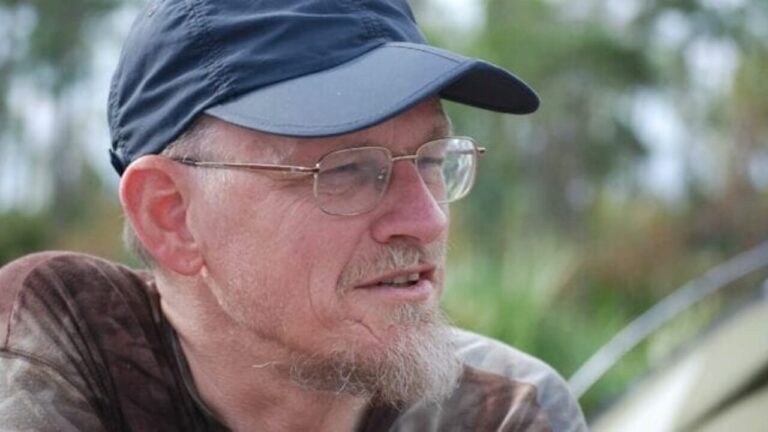
Leo Schilperoord, a 70-year-old ornithologist originally from the small village of Haulerwijk, in the Netherlands, is “patient zero” of the hantavirus, the first to become infected, subsequently giving rise to the outbreak on the cruise ship Mv Hondius. He was the first to die on board the ship. With his wife Mirjam, 69, who also fell ill and died a few days after her husband, he undertook a five-month journey through South America. The couple arrived in Argentina on 27 November 2025, crossed Chile and Uruguay documenting wildlife and continuing to cultivate their common passion for ornithology (the branch of zoology dedicated to the scientific study of birds).
The landfill with scavenger birds
The couple was quite well known in the ornithological community. He had participated in several birding expeditions around the world. At the end of March, the husband and wife returned to Argentina, where they took part in a birdwatching excursion near Ushuaia, the capital of the Argentine province of Tierra del Fuego, Antarctica and the South Atlantic Islands: it is the southernmost city in the world, a famous place among wildlife enthusiasts. On March 27, the Schilperoords visited a large open-air landfill located about six kilometers from the city.
Despite being heavily contaminated and therefore avoided by the locals, the area is a popular destination for birdwatchers thanks to the rare species of birds that populate it, including the white-throated caracara, also known as “Darwin’s caracara”, a species of necrophagous birds of prey (which feed on carrion or organic debris).
By visiting that landfill, according to the first hypotheses formulated, Leo Schilperoord and his wife may have inhaled particles dispersed in the air contaminated by excrement of long-tailed pygmy rice rats, carriers of the Andean strain of the hantavirus which can be transmitted between humans.
The first symptoms and death
On Wednesday 1 April the couple boarded the Mv Hondius ship together with over eighty passengers, many of them scientists and birdwatchers. Schilperoord showed the first symptoms on 6 April: his condition deteriorated rapidly and he died on board on 11 April. His wife Mirjam landed with her husband’s body on the island of St Helena on 24 April. Having also fallen ill, she died at Johannesburg airport (in South Africa) on 25 April, while trying to return to the Netherlands.
The contagion situation
Today, Monday 11 May, the repatriations of approximately 120 passengers from the MV Hondius ship where an outbreak of hantavirus of the Andes strain broke out will be completed. The variant is the only one known for which human-to-human contagion, albeit rare, has been documented. The virus killed three people, the two Dutch ornithologists and an elderly German woman. The ship arrived yesterday on the island of Tenerife, in the Canary Islands, and the disembarkation and repatriation operations of passengers continued for hours. There are currently six infected people, to which one of the five evacuated French passengers could be added. French Prime Minister Sebastien Lecornu announced that one person showed symptoms during the repatriation flight.
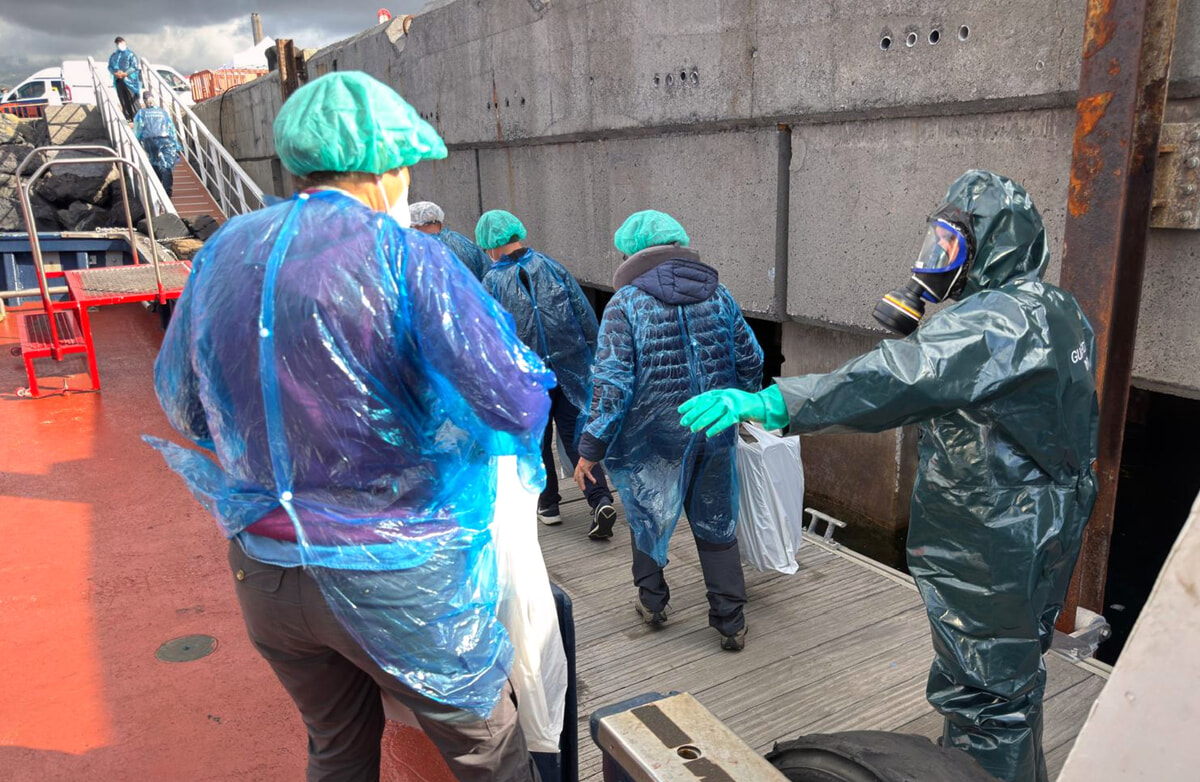
The WHO recommends six weeks of quarantine for any possible contact, yet the states are moving in no particular order. US passengers will not necessarily be quarantined. International and Italian health authorities guarantee: “We are far from a pandemic”.
The US Department of Health, meanwhile, said that one of the 17 American citizens repatriated from the hantavirus-stricken cruise ship tested slightly positive. “One passenger currently has mild symptoms and another passenger tested slightly positive for the Andes virus via PCR test,” the US ministry said. However, all the Italians who came into contact with the virus are fine. They were quarantined as a precaution.