


The hantavirus outbreak that broke out on board the Mv Hondius turns the spotlight on a health emergency that has so far gone unnoticed. The hantavirus – in particular the Andes strain, among the most lethal and the only one capable of limited transmission between humans – has in fact been spreading within Argentina for years. Thanks to climate change, the virus has moved north, escaping from its traditional range in the mountains of Patagonia to reach the cities and most densely populated areas of the country. And the numbers reflect the growing epidemiological risk: the 2025/2026 year, not yet finished, recorded a record number of infections and deaths.
Record numbers
This year’s numbers speak of 101 confirmed infections and 32 deaths, on an average that normally does not exceed 80 cases and 20 deaths. The lethality of the virus also seems to be growing, and this season exceeds 30%, and if infections continue at this rate it will probably surpass the record of 2019, when they were pushed up by the outbreak that broke out during a birthday party in the town of Epuyén, which caused 34 confirmed cases and 11 deaths, providing the first evidence of human-to-human transmission of the Andes hantavirus.
Climate change has contributed to pushing up the infections, which is modifying the distribution area of small rodents which represent the natural reservoir of the virus. The Andean environment has in fact dried up, pushing the animals to move towards the flatter areas of the center and north of the country, which are much more densely populated. In this way the virus has many more opportunities to come into contact with humans: if Andes hantavirus infections were once concentrated in Patagonia, today 83% occur in the centre-north. And in particular years, in which abundant rainfall causes the immeasurable growth of vegetation in the Pampas, which in turn pushes the populations of wild rodents to a demographic boom, the increase in infections becomes more than evident. Like this year, in which the province of Buenos Aires recorded 42 infections and 16 deaths, exceeding any other area of the country.
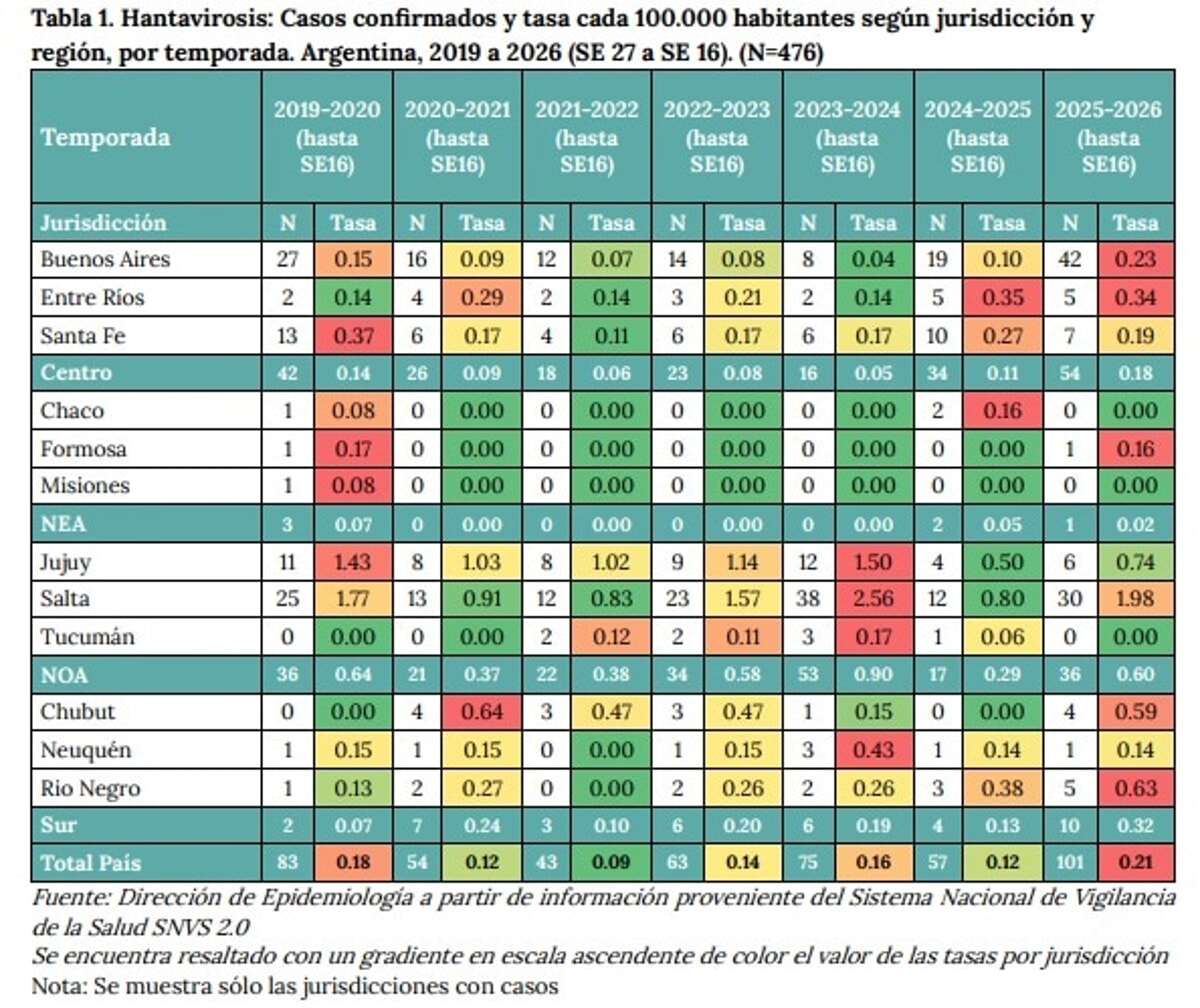
The Argentine Ministry of Health is aware of the problem, against which – in the absence of a vaccine – it claims it can do very little, and in the latest epidemiological bulletin it confirms that the spread of the hantavirus in the country has exceeded the epidemic threshold this year. However, there has been no shortage of controversy, given that Milei’s Argentina is one of the two countries (along with the United States) that have recently abandoned the WHO. Following the outbreak on the Mv Hondius, Director General Tedros Ghebreyesus urged the nation to re-enter the organization to better manage the epidemic. Receiving in response the accusation of exploiting and “politicising” the emergency by Milei.
It is not a pandemic, but a warning for the future
Despite the alarm, it is important to clarify: the virus does not represent a global pandemic danger. There is no reason to think that it can cause large outbreaks outside of areas where the virus is endemic, because although the Andes strain has a mortality rate that can exceed 30%, its ability to spread from person to person is certainly limited and still the subject of debate in the scientific community.

However, it is essential that those traveling to Argentina and other countries in the Andean area are informed of the risks they could run: the outbreak on the cruise ship seems to have started from two tourists who went on an excursion to Patagonia, without probably taking the necessary precautions. The hantavirus will therefore probably not be the next pandemic, but it remains a dramatic warning of the health risks linked to a climate that changes too quickly.
Dossier is the exclusive subscription investigative section of The Vermilion. If you would like to support our journalistic work and subscribe, visit our shop window by clicking here.