
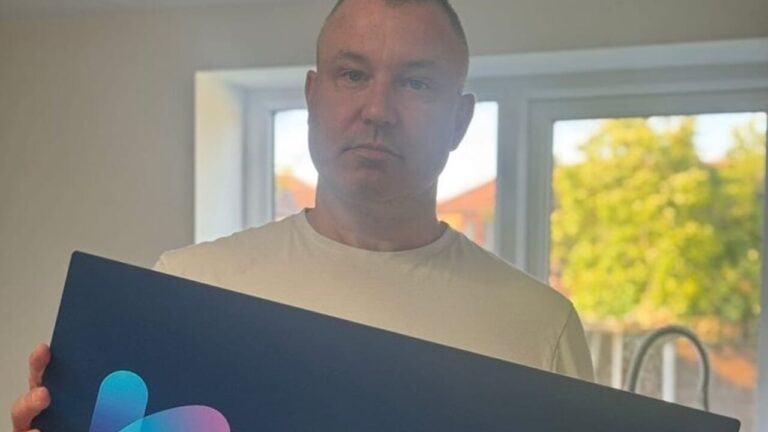
A six-figure salary has always been the symbol of economic success, but inflation, tax pressure and widespread increases in prices, from mortgages to food, are redrawing the boundaries of what we define as “wealth”. In fact, between expenses and taxes, even those who were considered to be in the upper-middle class find themselves with little or nothing in their bank account. This is the case of Graham Robinson, a 45-year-old entrepreneur from Timperley, a suburb of Manchester, who told his situation to The Guardian newspaper, as part of an investigation in which the effects of the high cost of living on different categories of workers were analysed.
The six-figure income
An economic frustration that is also affecting entrepreneurs like Robinson, owner of KeySim, a company that sells specialized cards to businesses. Last year the man earned 126 thousand pounds, equal to around 150 thousand euros. Despite a six-figure income, the 45-year-old has to deal with the harsh reality: “At the end of the month I have nothing left. I had hoped for concrete help to meet the costs of employment. Instead, the employment allowance remains at £10,500, while employers pay for the increase in wages. The increase in the minimum wage – he added – is welcome for workers, but the government gets the headlines, businesses pay the bill and the Treasury recovers a partly through taxes and social security contributions”.
The entrepreneur lives alone and shares the care of his 10-year-old autistic son with his ex-partner, personally taking care of all childcare expenses: “I know that £126,000 seems like a huge sum, but after taxes it’s around £6,500 a month, and it’s not as much as you might think. I don’t have expensive cars – he admitted -, I don’t go on holiday to lavish places. I don’t do anything particularly extravagant, but at the end of the day month are always in the red”.
The mortgage and other expenses
His mortgage payments have increased from around 900 to 1,300 pounds per month (around 1,550 euros), an increase to which must also be added those for food, energy and local taxes. To cover these expenses Robinson draws on the dividends of his business, but comes up against the British tax trap: for incomes above 100 thousand pounds, personal deductions are eliminated, creating an effective rate of 60%.
Last April the entrepreneur gave another interview, talking about how he divides the family budget and revealing the details of a daily life made up of complex joints: “Having an income like that is not the dream I would have imagined”. On that occasion the 45-year-old had described in detail the monthly expenses that weigh on his budget: 1,300 pounds for the mortgage of the house purchased in 2009, to which must be added 900 pounds to pay off loans and credit cards. To complete the picture there are 350 pounds for household utilities, which increased by 100 pounds in a year, and 400 pounds for food expenses.
Of course, a big part of her budget is tied to the special needs of her son, who loves the McDonald’s drive-through and driving around: “We go there a lot, it’s one of his favorite things. Kian finds car journeys relaxing and we go on a couple of long ones every week, usually in Wales. As a result, I can easily spend £500 to £600 a month on petrol.”
“At the end of the month there is nothing left”
When he was young, Robinson thought that a six-figure salary would change his life, but today the scenario is not so idyllic: “At the end of the month I have absolutely nothing left, I have exceeded the maximum limit of my credit limit. I am a single income family and, although I earn a six-figure sum, I have no money to spend at the end of the month.” “I drive an 18-year-old Audi,” he explained. “I wanted a cheap one that I could pay for in full. I have no intention of buying a more luxurious car in installments.”
The tax pressure
The underlying problem, according to the entrepreneur, remains the tax burden: “After taxes, my monthly income is between 5 thousand and 6 thousand pounds. And the tax thresholds have not been changed for years, which is problematic. I have no incentive to earn more, especially if a higher salary would put me in the 60% tax trap. This is caused by the progressive reduction of my personal deduction for incomes above 100 thousand pounds, which it completely disappears when you reach £125,140. Just think that, to have just £1,000 more per month in my net salary, I would have to earn at least £129,757 gross per year.” A condition that excludes the possibility of buying a larger house and prevents the 45-year-old from thinking about the future: “I have not invested a single cent in pension funds. There is no plan B”.