

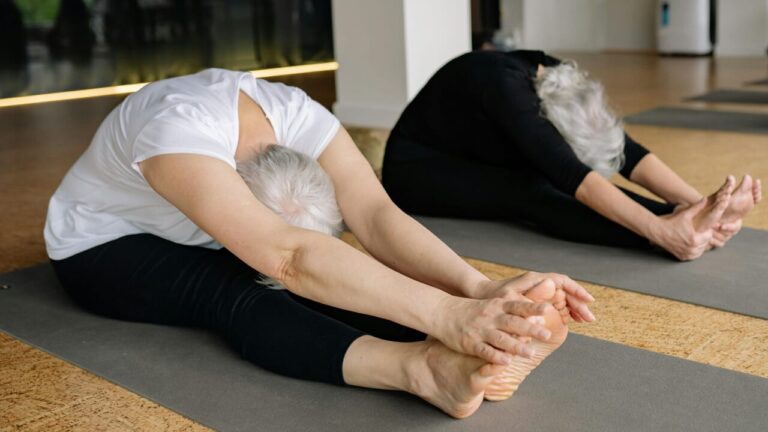
Eating healthy and staying active are fundamental habits for health in old age. But there is another fundamental ingredient for a long life: a sufficient dose of muscular strength. In fact, two very simple tests to evaluate the strength of the legs and grip (how much we can squeeze with the hand) can predict the risk of death of elderly people over the next 8 years, as revealed by research recently published in Jama Network Open.
The research
The study involved five thousand women over 60, monitored for eight years by researchers to observe how much muscle strength influenced mortality. The evaluations were carried out with two extremely simple and rapid tests, commonly used in clinical practice. The first is the grip strength test, measured using a dynamometer which detects the maximum pressure exerted with the hand. The second is the so-called “chair test”, which measures the time it takes a person to stand up and sit down five consecutive times without using their arms to push themselves. These exercises not only serve to measure localized muscle power, but act as indicators of the general health of the musculoskeletal system and the body’s functional reserve.
The link between muscles and mortality
The data that emerged shows a direct relationship between muscle reserve and the reduction of the risk of death. For every 7 kilogram increase in handgrip strength, the researchers observed a 12% decrease in all-cause mortality over the period. In parallel, an improvement of just 6 seconds in chair test execution time was associated with a 4% reduction. The robustness of the data is confirmed by the fact that the results remain statistically significant even after correcting them to take into account variables such as the level of daily physical activity, time spent in a sedentary position, body mass index and the main biomarkers of cardiovascular risk. Muscle strength therefore appears to have an independent predictive value regarding longevity.
The importance of strength for mobility
The relationship between muscles and longevity is linked to their importance in everyday life: without a sufficient dose of strength it becomes difficult to stay active and complete daily activities. “If you don’t have enough muscle strength to get up, it’s difficult to do aerobic activities such as walking, which is the most common recreational activity in the American population over 65,” explains Michael LaMonte, an epidemiologist at the University at Buffalo who coordinated the research. “Aging healthily probably requires an adequate amount of aerobic training and muscle strengthening. Because when we find ourselves unable to get out of our chairs and move around, we’re clearly in trouble.”
How to keep your muscles trained? Fortunately, high-level sports training or gym membership is not required. The loss of muscle tissue, known as sarcopenia, is a physiological process that can however be slowed down significantly through even simple resistance exercises, which can easily be performed at home. It’s always a good idea to consult your doctor before starting new exercise protocols, but daily activities such as lifting small weights, climbing stairs or performing assisted squats can make a difference. Moreover, the goal is not a bodybuilder’s physique, but to maintain the minimum functionality necessary to guarantee motor autonomy and, consequently, improve long-term life prospects.