

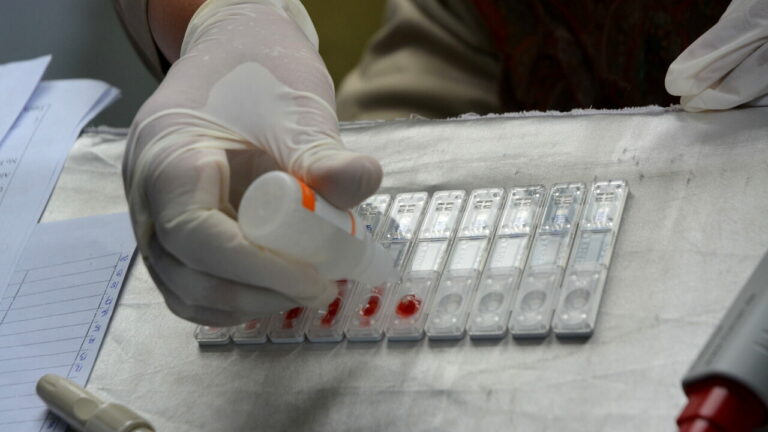
In Russia, HIV continues to represent a health emergency that is difficult to contain. At the end of 2025, there were 1,231,822 people with a diagnosis, approximately 0.8% of the population. And if new cases decreased by 13.4%, the most alarming data concerns treatments: only 629 thousand people, just over half of those diagnosed, had a suppressed viral load.
These are the numbers released by epidemiologists from Rospotrebnadzor, the Russian federal agency for health surveillance. Antiretroviral therapy is essential not only for the health of patients, but also for stopping the spread of the infection: when the viral load is permanently undetectable, the virus is not transmitted sexually. By 2025, however, only 66% of people diagnosed were receiving treatment.
The infection is not confined to groups traditionally considered at risk. Also of concern are infections in healthcare facilities. According to Rospotrebnadzor, in 2025 eight outbreaks of blood-transmitted infections were recorded, including HIV and viral hepatitis, involving a total of 104 patients: the highest number of outbreaks in the last fifteen years.
The scientific journal The Lancet had already reported in October 2025 the difficulties of the Russian healthcare response, including insufficient funding, obstacles to associations involved in prevention and problems with access to treatment. Without strengthening interventions, according to a scenario presented by Russian epidemiologists in October 2026, people living with HIV could rise to 1.47 million by 2030. An increase of almost 240 thousand people in five years.