

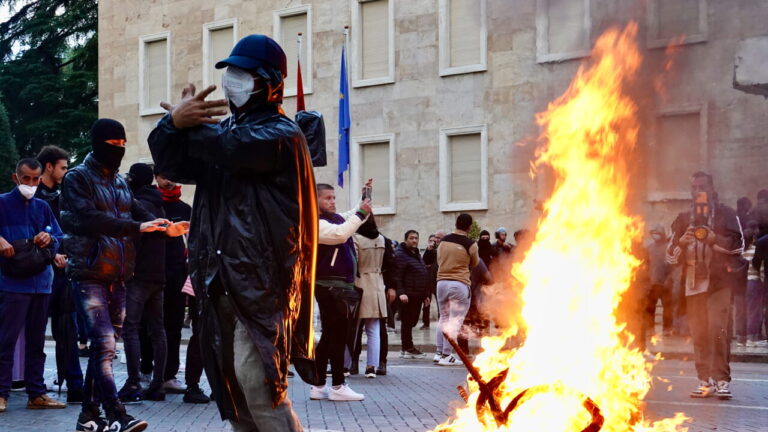
Almost every day in Tirana it is chaos. Not so much due to an unwise management of the police, but due to an overwhelming quantity of demonstrators who took to the streets: thus the city center hosts its weekly dose of urban guerrilla warfare with the sound of fireworks on one side, rubber bullets on the other (in the photo by Riccardo Lazzari, near the title, a protester makes the sign of the eagle, symbol of Albania, in front of Edi Rama’s “dialogue chairs” set on fire).
The battle with fireworks and rubber bullets
Erjon Vishkulli, a 28-year-old Albanian, was injured in the eye and was transferred to the San Carlo hospital in Rome, where he underwent surgery in recent days. In reality, Albanian youth are not very used to what is happening. The last time so many people took to the streets was about six years ago, during the Covid pandemic.
In recent weeks there have also been clashes in Brussels, Milan, Turin, Rome and Bologna. And throughout France. But some protesters that DossierToday.it met in the square in Tirana distance themselves: “What is happening here has nothing to do with other European states.”
The Trump family resort: this is how the protest began
The backdrop to the recent escalation, at the beginning of October, is the Flamingo revolution movement: about five months of peaceful squares, which began on May 31st. “Since then we have protested every day – says Elsa, spokesperson for the movement -. Today is the 146th. For about 135 it was peaceful and also very creative. We were in the main square, near the prime minister’s office. We held activities, including children, families, people of all kinds and all ideologies”.
It all started from the Zvërnec area, near Vlora, in southern Albania. One morning residents found a long-accessible stretch of coastline cordoned off by barbed wire in preparation for the construction of a multimillion-dollar resort after ad hoc changes to environmental regulations came into force. The project, now abandoned, was linked to Affinity, a US investment fund created by Jared Kushner, son-in-law of President Donald Trump.
But when the demonstration turned violent, priorities had already changed. From environmentalist demands alone to a widespread protest against the “rampant corruption” in the country. “In a certain sense we began to build a community,” continues Elsa. Then, on October 13, everything changed: “It was the students who called the protest. In reality, they had been part of the movement right from the start. It was the starting day of university, here in Tirana. But more than anything, people couldn’t take it anymore.”
The investigations and the ministers in prison for corruption
The communication of the “flamingos” is well taken care of, on the web even before on social media. Captivating graphics on the official website frame the five requirements of when the movement was formed and the current, extended ones. Although they have changed priorities over time, the constant is the call for the resignation of the government and the prime minister Edi Ramaa close ally of the prime minister Giorgia Meloni.
Investigations by the Special Structure against Corruption and Organized Crime (SPAK) have led to the imprisonment of six ministers of its executive and even Vlora Hyseni, director of the Albanian intelligence service, was recently placed under house arrest under the presumption of having helped a criminal and having disclosed classified information. Erion Veliaj, mayor of Tirana, is in prison accused of tax crimes and corruption. It caused a sensation when, from behind bars, at the beginning of the month, he released a video reiterating his electoral promises, generated with artificial intelligence.
“I worked two jobs to live in the capital”
Another strong issue is the economic one. Young people from all over the country come to the capital to study, but the cost of living is too high compared to the salaries. “Before the demonstrations started, I was working two jobs, because in Tirana I can’t survive with just one. Since I left the second one, in order to be active in the protest, I have to always turn to my family, who is not in the city – says the protester Emarilda L. on boulevard Dëshmorët e Kombit, near the prime minister’s office -. I get an average of 700-800 euros a month. I do a pretty good job, but Despite this, I can’t make it to the end of the month.”
Many other students confirmed similar stories. “I have met many people who studied journalism, or medicine, and ended up working in a call center – says Alis B., tired after the violent clashes on Saturday -. It is the sector that hires the most. People who arrive in the capital from other cities have no future”.
“Everyone brings something. There are those who come from Italy”
Precisely because the issue concerns them, it was the young people who took to the streets. The departure is almost always from the Ministry of Education: on Saturday 24 October the entrance was set on fire and the images went around the world. From there they move in a procession to the prime minister’s office. The police strategy of blocking the route with vehicles, tear gas and water cannons, as confirmed by several protesters, is rather recent.
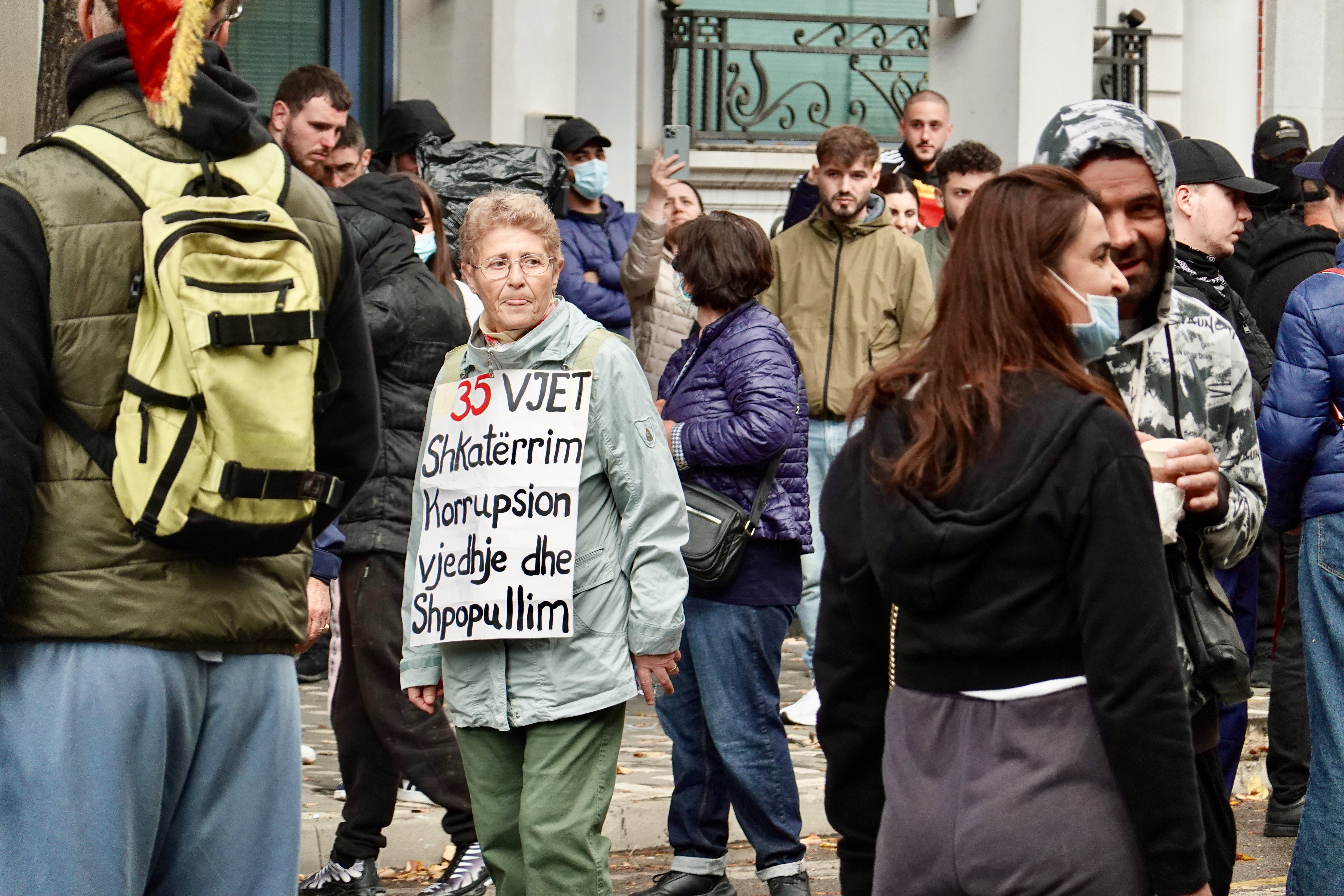
However, we remain within the heart of the centre. We organize ourselves with announcements on social media, which are shared: “It’s a horizontal system, everyone is an organizer. For example, there is a group that only deals with food; one who buys masks and gloves; one who distributes them among the protesters; one who takes care of first aid. Several people who organize among themselves, usually on social media, but also by word of mouth. I have been an activist for over 10 years and I know a lot of them from other countries. There are people who have arrived from abroad, even from Italy, to be part of the movement”, declares Elsa again.
The violent clashes did not spare the two small first aid stations, where on 24 October each nurse and doctor (professional or newly trained, around twenty in total) treated up to 6 people hit by rubber bullets, including those shot in the face. Numerous accredited journalists identifiable by the words “press” were hit: one of them was hit four times in one afternoon.
Tear gas and water cannons: this is how the police defend the ministries
Yes, because “while in the morning Edi Rama invites us to dialogue, in the evening he beats us up”, says Alis, repeating a popular slogan. A few days ago the police changed metal buckshot to less lethal rubber bullets; uses water cannons, tear gas and pepper spray, as well as batons.
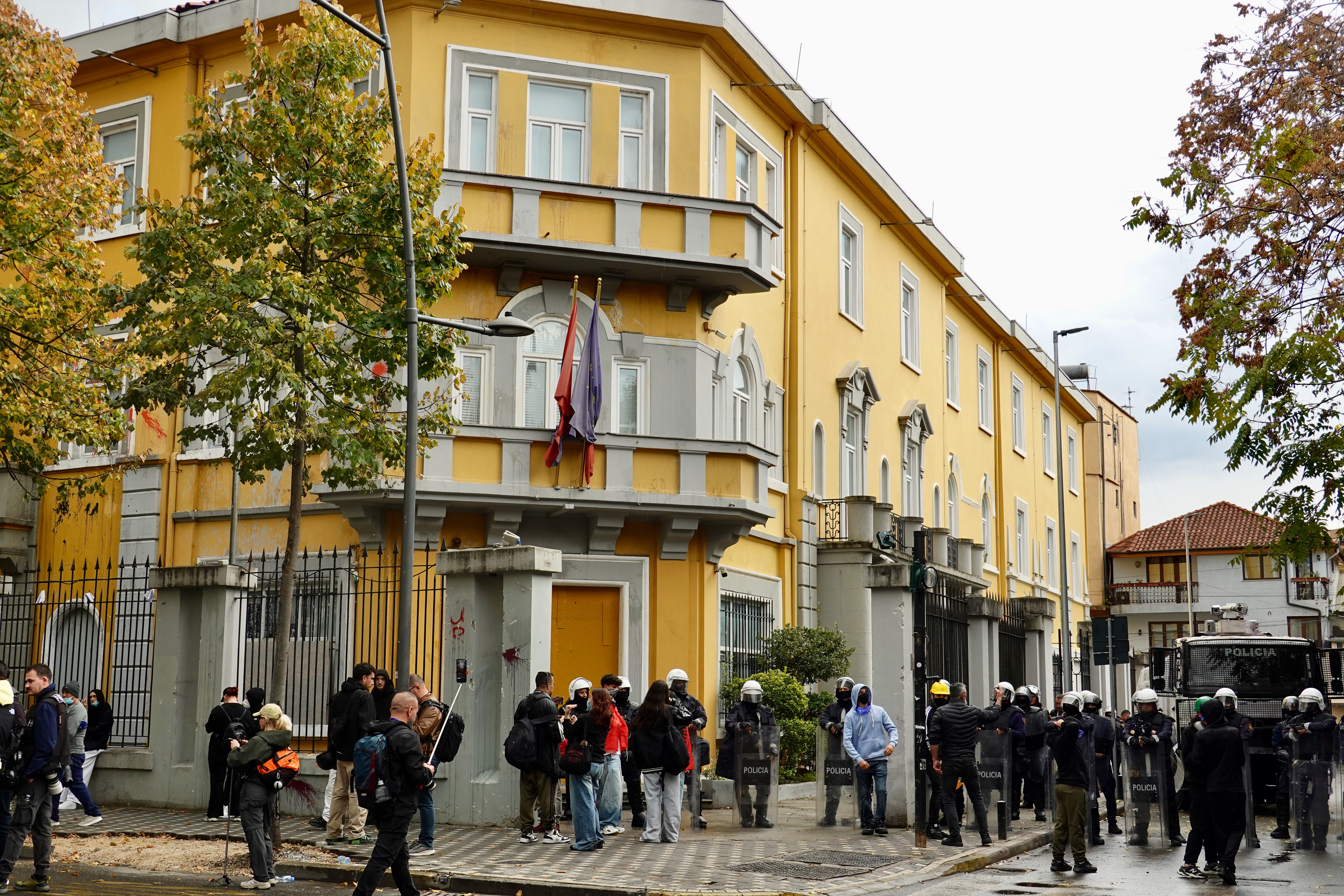
Dozens were arrested, especially on Saturday. Age between 18 and 50 years. But the demonstrators don’t hold back either: especially with the fireworks thrown at eye level towards the officers in riot gear, a dangerous revival with a great visual impact that has come back into vogue after the protests in Georgia.
The arsenal includes a quantity of pebbles and small homemade devices obtained by mounting firecrackers on gas canisters or Molotov cocktails, all filmed and distributed online. On Sunday, in the front row, there was also a small squadron of kids who finally got the fight they had been looking for for hours with the police.
An endemic malaise: what young people are asking for
Despite the youth participation, the fundamental demand remains the resignation of Prime Minister Edi Rama. “We are a generation that grew up with corruption and dictatorship – claims Arb M., returning from the protest -. The corruption here is not like that which can be found in any state in Europe”.
And for this reason, he claims, “the protests in Tirana are not the same as the Italian and European ones. Everyone here knows what they are protesting for. Some paint them as student protests, others as environmental activism. Some as anti-fascism, some as something else. It is none of these”. Immediately afterwards he corrects himself: “In reality it is all of these, combined with the arrogance of this government – says Arb – which does not listen to its people.”
Dossier is the exclusive subscription investigative section of The Vermilion. If you want to support our journalistic work and subscribe, Click here.