

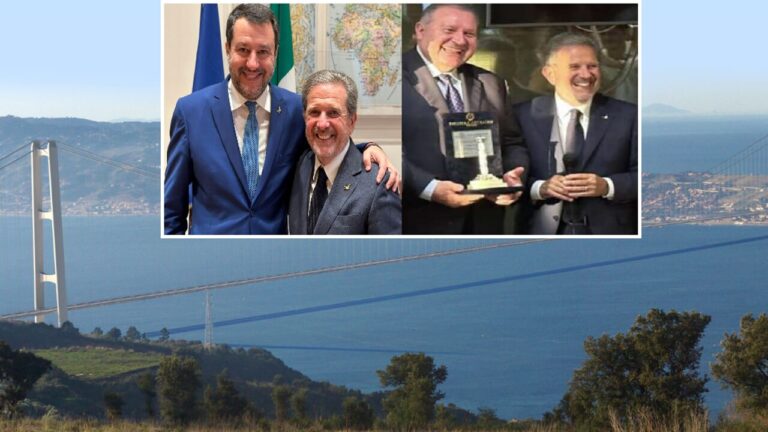
The corruption investigation involving the bridge over the Strait is only the latest stage in a long series of problems that are ruining the “stable connection” project between Calabria and Sicily resurrected by the Meloni government. Among the three investigated by the prosecutor’s office there is also a loyalist of Matteo Salvini, the main sponsor of the work, and a former deputy president of the Court of Auditors. While the process is blocked, unknowns persist and investigations continue, the Bridge continues to cost more and more and the bill for the State increases year after year.
The numerous problems and delays of the Bridge over the Strait of Messina
The first doubts about the Bridge had been of a technical nature, with the unknowns presented by the “definitive” – but not executive – project, especially for the parts linked to the cables that should support the pylons and the anti-seismic issues of the structure, in a complex area like the Strait of Messina.
Then there was the bureaucratic process, with the environmental impact assessment, the numerous requirements, the citizens’ appeals and the protests of those who fall under the expropriation procedures. This accumulation of problems has caused continuous postponements and postponements, disavowing Matteo Salvini’s announcements on the start of work and the laying of the first stone year after year. Until it was rejected by the Court of Auditors. On this last problem, someone was working to solve it, at least according to the investigations of the Rome prosecutor’s office.
What did the suspects do to “unblock” the bridge to the Court of Auditors
The protagonists would be Tommaso Miele, former deputy president of the Court of Auditors, retired since February 2026, and the lawyer Giacomo Francesco Saccomanno, together with the entrepreneur Vincenzo Virgiglio: they are accused, in competition with each other, of corruption in the exercise of their function, corruption for an act contrary to official duties, active corruption by a public official and revelation and use of official secrets.
The hypothesis is that the lawyer and the entrepreneur approached the accounting judge “promising him their support to hold positions in public law bodies after his retirement, subordinating it to his active action for the realization of the aforementioned need”, i.e. the successful outcome of the Ponte case at the Court of Auditors. The promise would have been to become president of the Antitrust or member of a subsidiary company.
The two would also have attempted to approach two other magistrates and reveal to others “information covered by secrecy, acquired by the judge of the Court of Auditors under investigation”, reads the note from the prosecutor’s office. Miele, for his part, would have offered his availability by providing “constant updates on the conduct of the Accounting Court”, revealing confidential information on the orientations of his colleagues.
Saccomanno is a figure close to Matteo Salvini and Ponte: in 2021 he was appointed commissioner for the League in Calabria, his region of birth, in 2022 a candidate in the national political elections as well as being part of the board of directors of the Strait of Messina from 2023 to April 2026. Furthermore, he is president of the Calabra Academy, in whose organizational chart the other suspect, Vincenzo Virgiglio, also appears. At the Academy, Tommaso Miele received the award from Saccomanno in July 2023, counting him among the “Calabrian personalities who are distinguished in the daily commitment of their work and their activity”.
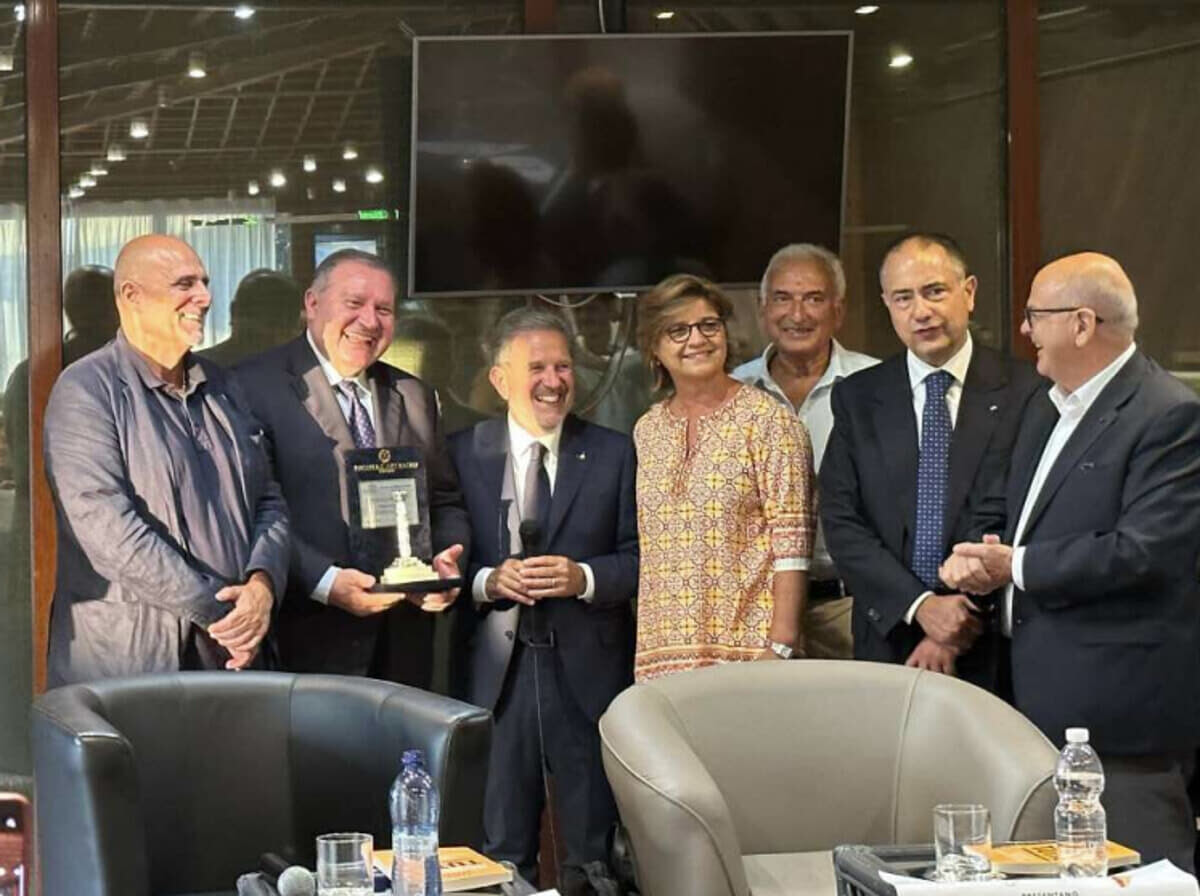
He was also made an honorary member. Pietro Ciucci, CEO of Stretto di Messina Spa, was also present at the same initiative. However, the Court of Auditors rejected the new bridge project, sending the previously approved resolution back to Cipess. All those involved declared themselves unrelated to the matter.
How much does the Bridge cost us every year: the accounts of Stretto spa
The structure isn’t there, but problem after problem the expense grows. The practical manifestation of the costs of the Bridge for the State is the Stretto di Messina spa, the state company in charge of developing the work. Since it was reactivated by the Meloni government in 2023, Pietro Ciucci’s creation – confirmed at the helm as had happened under the Berlusconi government over 20 years ago – has increasingly expanded its structure and, consequently, also its expenses.
According to the latest financial data analyzed by The Vermilion, in 2026 we have reached 114 employees, of which 21 managers, 66 managers and 27 office workers. Managers alone cost over 6 million euros a year, which added to the total of active employees makes 11.5 million euros finalized in 2025: an increase of 33 percent compared to the previous year.
DOSSIER – The Bridge isn’t there, the golden salaries are: who are the managers who cost us 6 million a year
Added to these are the other operating costs of the company: the board of directors accounts for another 412,000 euros per year, the scientific committee for 480 thousand, the board of auditors 50 thousand, the supervisory body 65 thousand. Added to this are IT services, consultancy and minor items such as legal services and insurance which bring the expenditure of the Strait of Messina over 19 million euros in the last year alone.
The “virtual” costs are missing from the account: in the State budget the Bridge is worth 14.5 billion euros, a cost 248 percent higher than the original contract more than 20 years ago. And there is the unknown of the active disputes between the Strait of Messina and Eurolink, the consortium led by Webuild which has asked for around 700 million euros in penalties on appeal for the failure to execute the contract after the stop in 2012. To date, they are still the ones who will have to build the bridge, the same ones who took the Strait of Messina to court together with who, in the event, will pay the bill: the State.
The technicality that sends the costs of the Messina bridge “out of control”. Favors for private individuals and mafia risk: why the construction site never starts