

The new Fer Photovoltaic, wind, hydroelectric and plants powered by waste gases from purification will be able to access a mechanism that not only serves to increase installed capacity, but also tries to decide which plants to build, where to build them and how useful they should be to the functioning of the electricity grid.
The potential overall size is 37.15 GW. Of these, 10 GW are intended for plants of up to one megawatt, which can directly access the mechanism, while 27.15 GW will be assigned through competitive procedures.
The big push for wind power
The most obvious innovation concerns the distribution of the power made available in the auctions. The decree assigns 10 GW to photovoltaic, 16.5 GW to wind, 630 MW to hydroelectric and 20 MW to plants that use residual gases from purification processes.
It is above all wind power that benefits from the new regime. Compared to the transitory Fer It is a precise signal: the government aims to rebalance the development of renewables which in recent years has been driven above all by solar.
What changes for families
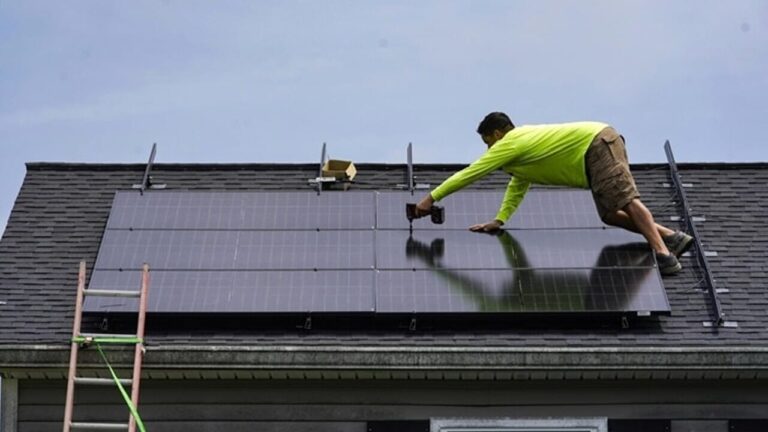
For those who want to put panels on the roof, Fer Plants up to 1 MW can access the mechanism directly, without participating in the auctions reserved for large operators. For a normal domestic system, therefore a few kilowatts, the advantage mainly concerns the energy that is not self-consumed and is fed into the grid. For plants under 200 kW, the GSE withdraws this energy and recognizes an all-inclusive tariff for twenty years on the net production introduced according to a price that will be established by Arera. In short, no bonuses for panels, inverters or batteries but a price that will be paid to energy that is not self-consumed.
How much are the incentives worth?
For plants exceeding one megawatt, the decree sets an exercise price of 80 euros per MWh for photovoltaic, 85 for wind, 90 for hydroelectric and 85 for purification gas. The competitive procedures will start from maximum values of 95, 95, 105 and 100 euros/MWh respectively. However, this is not a fixed rate given to producers. Fer when it is higher, the manufacturer returns it.
In other words, the system tries to prevent incentives from producing extra profits when electricity becomes very expensive.
For photovoltaics the auction becomes more difficult
One of the most important changes concerns plants over one megawatt. To participate in the tenders, you need the qualification to build and operate the plant, connection to the accepted grid and financial solidity requirements. For technologies other than photovoltaic, the decree allows, in certain cases, to also present a favorable environmental impact assessment provision in place of the authorization title. For photovoltaics this possibility is not foreseen.
The consequence is that large solar projects will have to come to auction at a more advanced authorization stage, reducing the risk that the quotas will be occupied by initiatives destined not to be built. The same objective explains the guarantees: the expression of interest requires a guarantee equal to 5% of the standard cost of the investment, which rises to 10% for those who enter a useful position in the ranking.
Accumulation and network become decisive
The new Fer
To decide the quotas, electricity demand, authorization status, network development, production profiles of the different sources and availability of storage will have to be considered. Different coefficients will also be introduced for the various market areas.
In the procedures linked to the European Net Zero Industry Act, projects capable of better integrating into the system will also be rewarded. Among the elements that can be assessed is the presence of batteries with a power equal to at least 25% of that of the system.
The rules also change in the hours in which there is too much energy: in the presence of zero or negative prices or production reduction orders given for network needs, the decree provides specific mechanisms on payments and participation in the balancing market.
New “climate” bonuses of up to 400 euros per year: the government’s plan against the upcoming huge energy tax