

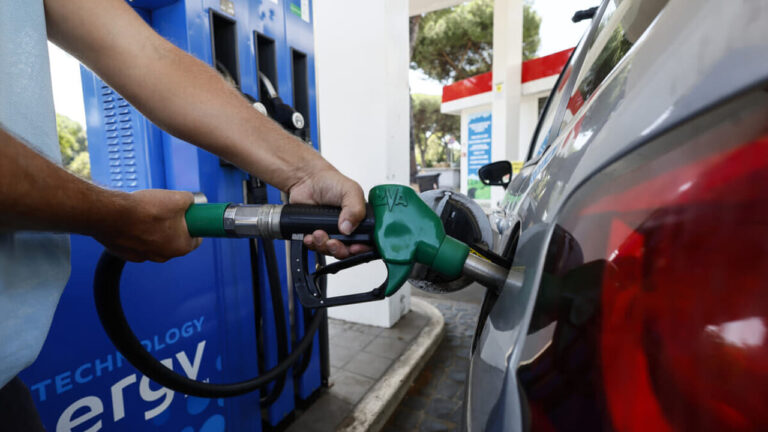
A new extension of the discount on diesel as a “buffer” solution and then a more targeted measure to deal with the high cost of fuel. This is the decision of the Meloni government, which arrived today 25 August, on the eve of the expiry of the discount from the previous extension. This is the result of a video call between Prime Minister Giorgia Meloni, deputies Salvini and Tajani, the leader of Noi Moderati Maurizio Lupi and the Minister of Economy Giancarlo Giorgetti.
From what has been learned from sources at Palazzo Chigi and was then confirmed by Salvini, a new Council of Ministers is expected on 26 August, precisely with the aim of extending the measures already in force for a few days. The duration of the new extension is not known. “The renewal of the discount on excise duties will last a few days, until September. Then I would like to do something more continuous, more substantial and, therefore, money is needed”, Salvini’s words.
Prices rising
The government’s decision came as prices continue to rise. The Ministry of Business and Made in Italy has announced that today 25 August, based on the latest data collected by the Observatory on fuel prices, the average price of fuel in self-service mode along the national road network is equal to 2.015 euros per liter for petrol and 2.136 euros for diesel. On the motorway network, however, the average self-service price is 2.091 euros per liter for petrol and 2.207 euros for diesel.
Last minute decision
However, the government is aware that it cannot continue in this way. The Minister of the Environment and Energy Security, Gilberto Pichetto Fratin, made this clear. “I don’t rule out or confirm anything,” he said regarding an extension of the excise duty discount. Then making an important clarification: “We need to make an assessment of the overall budget impact. We can also adopt criteria other than a generalized discount, focusing on concessions for individual sectors or consumption systems”.
Help yes, not for everyone
It has now been clarified by government sources that the one adopted in the next few hours “will not be the definitive measure, but will serve to allow the provision to be finalized in the time that is necessary. The objective is to prepare a measure more concentrated on the income groups that most need state support, thus making the intervention more effective and selective”.
In recent weeks there has been talk of one-off aid for lower incomes or for specific categories of workers. Hypotheses that could come back into play.