

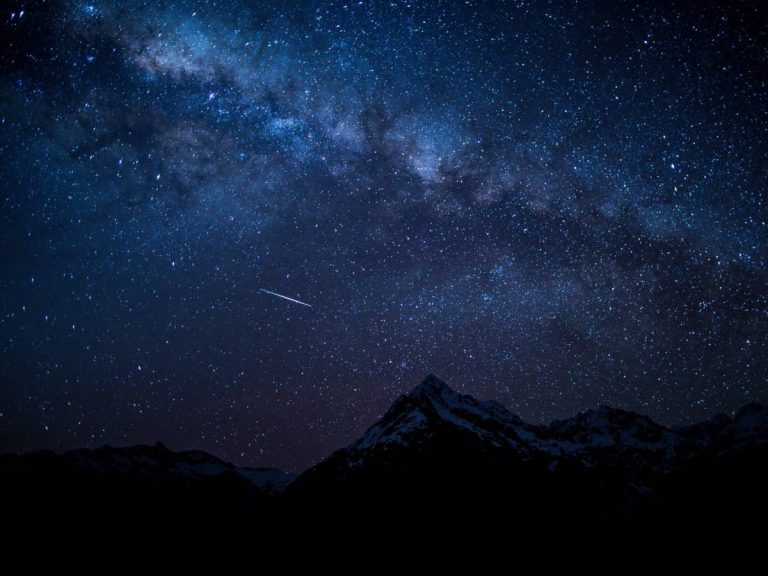
It is one of the most famous moments of the year, since it is possible for everyone, even the least experienced, benefit from a show offered by the celestial vault without the need to use optical tools: the Night of San Lorenzowhich from a popular point of view translates with the observation of the “falling stars” to which to entrust desires to be expressing, is the symbol of an iconic astronomical phenomenon that repeats itself annual and continues to marvel millions of “hunters” throughout the boreal hemisphere.
Obviously the expression of shooting stars is improper, given that in reality it is the meteoric swarm of the Perseidthat the earth is going through during the summer in its journey around the sun. This show can actually admire from the end of July until more than August 20, but the peak of visibility arrives in these days. But what is the most suitable time to observe the swarm? “The ideal is to choose a night between 10 and 13 August, preferably in the second part of the night, sacrificing a little sleep”explains to The courier the astrophysicist Gianluca Masi,“It is then that you are the highest probability of seeing them.”
Our planet in more than one circumstance in the journey around his star comes across similar phenomena, but what happens in this phase of the year is particular:“The earth crosses a precise point of its orbit that coincides with the trail left by Comet Swift-Tuttle“explains the expert. The crossing of this sort of “dust clouds” scattered from the comet therefore offers the show to which millions of people are linked:“These tiny grains, entering the terrestrial atmosphere at very high speeds, burn by friction, leaving behind a brilliant trail”specifies Masi,“This is what we observe: not stars that fall, but crumbs of comets that are incanding crossing the sky”.
Among the meteoric swarms, and during the year there are others, that of the night of San Lorenzo is undoubtedly the most well known, although the fulcrum of the phenomenon is no longer 10 but the night between 12 and 13, with a slip due to the precession of the equinoxes. After the climax, from 13 onwards the phenomenon will still be visible but less intense: this means that the highlight “It will be the dawn of August 13thwhen you can also count 70-80 meteors per hour “.
To make the observation a little more complicated there will be, unlike what happened last year, the moonlight: “It will be full on August 9th”Masi points out, so you can admire only the brighter “shooting stars” in the sky, or about 15/20 every hour.
The best advice is to choose an area far from city lights and not to use optical tools, since “Our eye offers a panoramic vision that allows you to supervise the whole sky in one fell swoop”.