

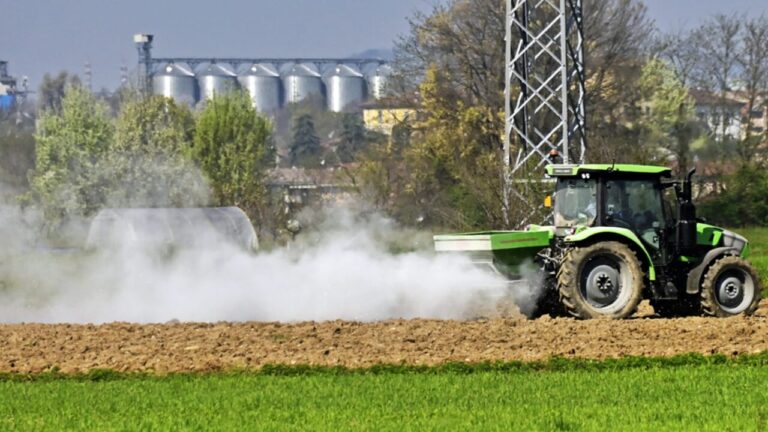
It is not just fuels that are affected by international tensions. The war between the United States, Israel and Iran is also putting pressure on the agri-food sector, caught between new increases in energy prices, problems with the supply of raw materials, tensions over logistics and fears for the stability of the markets. The critical issues concern two related aspects: blocking exports and increasing prices for Italian consumers.
Increases in energy and fertilizers: Coldiretti’s alarm
The alarm is raised by Coldiretti, who speaks openly about the risk of a new energy shock linked to the escalation in the Middle East and the possible compromise of strategic routes and supplies. President Ettore Prandini recalled how the agricultural sector has not yet completely absorbed the effects of previous crises, the war in Ukraine among others. “Unfortunately, the risk of a new energy shock is real.”
The war in Iran in fact directly affects two key factors for agriculture: energy and fertilizers. “We expect further increases in prices both on the energy front and on that of fertilizers and chemical fertilizers”, explained Prandini, recalling that more than 25% of the global availability and more than 33% of the fertilizers used in the world come from areas involved in or close to conflicts.
Any disruptions, he warned, would have an immediate impact on production costs and product availability throughout the supply chain.
The price increase recorded in recent years, linked to the Russian-Ukrainian conflict, has never been completely reabsorbed. In the last four years, Coldiretti recalled, fertilizers have recorded a +46% and energy a +66%. A heavy legacy that makes the agricultural system today more vulnerable to new shocks. It is no coincidence that after the outbreak of the war in Ukraine, food inflation went from 0.6% in 2021 to 9.1% in 2022, up to 10% in 2023, according to Istat data processed by Coldiretti.
Farmers: “Immediate measures and stop to the Co2 compensation mechanism”
Tensions in the Middle East also worry CIA-Italian farmers. The national president Cristiano Fini underlined how the war in Iran and the closure of the Strait of Hormuz cannot drag Italy into a new energy and price crisis.
At the center of the critical issues is the strong dependence on strategic raw materials and the risk of a further increase in energy costs, starting with agricultural diesel. Fini calls for extraordinary and immediate measures against high bills, as well as a European intervention on the availability of fertilizers and the suspension of Cbam, defined as “a cleaver” on the “increases on the doorstep”.
The Cbam (Carbon Border Adjustment Mechanism) it is the European mechanism that serves to make people pay for the cost of CO₂ emissions. It is considered a further factor of inflation as it requires that companies that import certain products into the European Union (including fertilisers, steel, cement, aluminium, electricity) must declare the carbon dioxide emissions generated to produce them and purchase the so-called Cbam certificates, the price of which is linked to the cost of CO₂ in the European market (ETS).
What is the ETS (which the Meloni government doesn’t like) and what does our bills have to do with it?
Ships loaded with fruit blocked
On the trade front, the Iranian crisis is already producing concrete effects. Confagricoltura reports serious problems for the export of fresh products, in particular to the Middle East. The closure of the Strait of Hormuz is blocking ships loaded with fruit, especially apples, and causing cancellations of orders for the coming weeks. Significant damage for a sector in which Italy is among the main producers and exporters in the world.
Finally, from the cooperative world comes a call for a broader vision. Legacoop Agroalimentare underlines how the war in the Gulf is acting as a cost multiplier and the president Cristian Maretti, underlining the risks for exports, calls for a national and European strategy on food reserves, to reduce dependence on trade corridors that cross conflict areas.
Lollobrigida’s response and the final impact on the shopping cart
The Minister of Agriculture and Food Sovereignty Francesco Lollobrigida spoke on the topic in Naples, on the sidelines of a Coldiretti initiative. “We think about how to foresee solutions, trying as always to deal with what are emergency events”, declared the minister, underlining how the executive has already faced similar crises on the energy front.
“As you know, the government has always had recipes for the energy emergency that are suitable for calming the markets, so we are counting on being able to achieve the maximum possible results in this case too.” However, Lollobrigida urged caution regarding the effects on the primary sector: “As far as agri-food is concerned, this is not a given that this will happen.”
The message coming from the sector is clear: the war between Iran, the United States and Israel is not just a geopolitical crisis, but a factor that risks reigniting agri-food inflation, starting from already high production costs and dumping it, once again, on the shopping cart.