

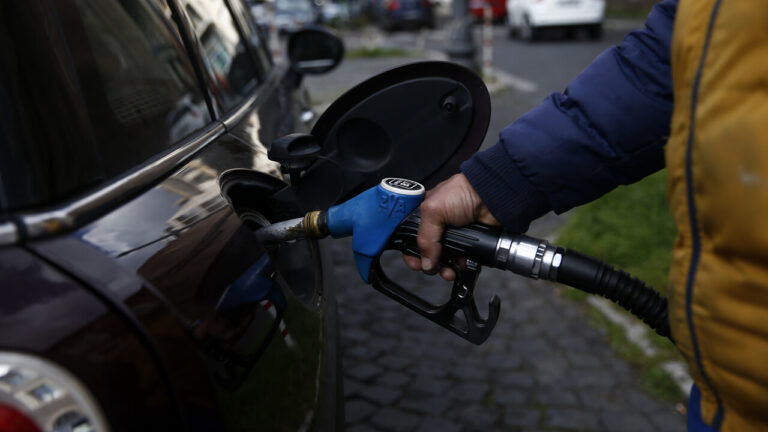
Petrol and diesel prices are running towards two euros per litre, while the war in the Middle East continues, fueling the concern of motorists and petrol station managers. Petrol has been at its maximum since 2 July 2025 and diesel has been at its maximum since 29 October 2023. According to the assessments of Staffetta daily, these are the averages of the prices charged communicated by the managers to the Price Observatory of the Ministry of Business and Made in Italy, recorded at 8am yesterday morning on approximately twenty thousand plants of the national network:
- self-service petrol at 1,744 euros/litre (+20 thousandths, companies 1,750, white pumps 1,732);
- self-service diesel at 1,867 euros/litre (+52, companies 1,876, white pumps 1,849);
- petrol served at 1,879 euros/litre (+20, companies 1,921, white pumps 1,800);
- diesel served at 1,996 euros/litre (+51, companies 2,039, white pumps 1,915);
- LPG served at 0.697 euros/litre (+3, companies 0.708, white pumps 0.686);
- methane served at 1,445 euros/kg (+22, companies 1,447, white pumps 1,443);
- LNG 1,229 euro/kg (+1, companies 1,236 euro/kg, white pumps 1,225 euro/kg).
On the highways it’s worse:
- self-service petrol 1,836 euros/litre (served 2,092);
- self-service diesel 1,949 euros/litre (served 2,206);
- LPG 0.833 euros/litre;
- methane 1,494 euro/kg;
- LNG 1,291 euro/kg.
If we consider the entire national network, since the beginning of the crisis, diesel has grown by more than 10 cents per litre, while petrol has recorded an increase of more than 7 cents. Diesel is at its highest levels for over two years, while petrol has returned to the highest levels of the last three months. Consumer associations also point out that many supplies are still made using stocks purchased around four months ago, when wholesale prices were significantly lower.
Energy markets
The geopolitical tension of these days is also reflected in the energy and financial markets. Brent oil approached 85 dollars a barrel, while WTI came close to 79.9 dollars. West Texas intermediate (WTI), also known as “Texas light sweet”, is a high-quality, light and “sweet” crude oil (with a low sulfur content), extracted in the United States and used as the main benchmark for oil prices in the US market.
Natural gas is also growing: on the TTF market in Amsterdam the price has exceeded 50 euros per megawatt hour. According to Facile.it’s simulations, the effect of these price increases could translate into an average annual burden of around 369 euros for families on electricity and gas bills.
What the government does
It is a problem for both businesses and families. In this situation, what does the Italian government intend to do? The executive fears that the increase in energy costs could have broader repercussions on the economy, with cascading effects on bills, transport and food prices. For this reason, Prime Minister Giorgia Meloni warned that the objective is to avoid speculative phenomena along the entire energy supply chain. “We must prevent the increase in energy from causing an explosion in prices, starting with fuel and basic necessities,” he explained yesterday.
The Prime Minister then declared: “We have already heard in recent hours from the president of Arera that he has already activated the mechanisms that serve to avoid speculative phenomena, he has a specific task force especially to monitor gas prices, we will do everything we can to not let anyone who should speculate win. And I am ready to increase taxes on companies that should speculate on bills”. In the meantime, the Ministry of Business and Made in Italy has convened the Price Alert Commission, also involving the financial police and consumer associations. A dossier on fuels has already been sent to the yellow flames for the necessary checks.
But the government can also do something else, or at least it could. As Giorgia Meloni explained, we could in fact act on the tax lever and hit the famous extra-profits, i.e. the extra profits that would come from speculation on fuel prices. We are always in the field of hypotheses, but the way forward could be to rewrite the bill decree recently passed. Because the economic benefits brought by the measure have been largely absorbed by the recent growth in prices.
Arera and Antitrust
Arera – the regulatory authority for energy, networks and the environment – has announced that it has activated the energy supervision unit. This is a permanent unit for real-time monitoring of wholesale and retail prices of gas and electricity, to “assess the possible effects on the fees applied to end customers and provide the government, Parliament and European institutions with the analytical elements necessary for the relevant assessments”. And then there is Antitrust. There have already been many complaints received by the authority which could evaluate, for example, the hypothesis of a cartel between energy operators to keep prices high.
What about mobile excise duties?
In the middle, there are those who ask to reactivate the mobile excise duty mechanism already envisaged. The mobile excise duty is an automatic fiscal mechanism that reduces the rate on fuel excise duties as the price of crude oil increases, compensating for the greater VAT revenue collected by the State. It serves to control fuel price increases, lowering the tax burden when petrol and diesel prices exceed a certain threshold
As Codacons recalls, “the government already has tools to at least partially limit the burden of the ongoing crisis: it is possible to resort to mobile excise duties as established by decree number 5 of 2023 which, simplifying a measure already introduced with the 2008 budget, allows the government to use the extra VAT revenue guaranteed by fuel price increases to reduce excise duties on petrol and diesel, thus keeping final prices at the pump under control. The ministry of the Economy, in concert with that of the Environment and energy security, adopts the reduction measure”.