

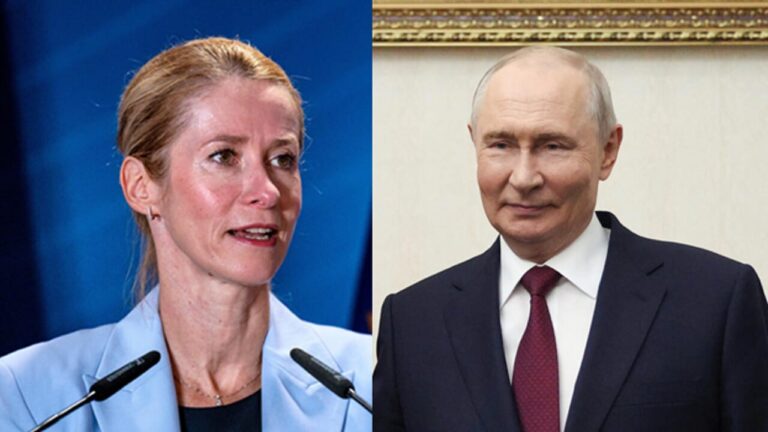
It is not “just” a two-way clash between Moscow and Berlin that has taken place in the last few hours, it is something more and the whole of Europe is at stake. EU high representative Kaja Kallas – at the end of the informal Defense Council, which is intertwined with today’s Foreign Affairs Council – says it clearly: “Russia is hitting Europe with a wave of increasingly kinetic hybrid attacks because it wants to scare us. But it won’t succeed”. The 27 study countermoves to resist the pressure of the “tsar”. We understand better what happens.
Putin vs EU, again
Let’s take a step back. Germany claims Russians are behind the Leipzig drone bomb attacks. And he announces a series of retaliatory measures. This triggers Moscow’s reaction: “We will react to all anti-Russian decisions of Germany.” And he goes further: “There will be devastating responses” in the case of “crazy anti-Russian adventures” in the Baltic. A warning directed not only to Berlin but to all of Europe and the Atlantic Alliance.
The message is understood. “We will respond,” promises Ursula von der Leyen, who hints at unprecedented actions. “Russian attempts to intimidate us, to undermine our unity and will to support Ukraine are in vain and will fail,” echoes Alliance Secretary General Marc Rutte.
The feeling is that the Kremlin wants to raise the level of the conflict. And the warnings have been going on for weeks: Europe has faced sabotage, explosive drones, increasingly reckless “trespassing”. All events that also sound like “tests” carried out to test the reaction capacity of the EU and NATO.
The EU then comes together. We are moving towards the launch next week of a “new high-level group” on defence, made up of leading figures from politics and the armed forces of EU countries, the United Kingdom and Ukraine. There is a powerful package of sanctions under study that would crush the Russian military sector and the strengthening of procedures for boarding the vessels of the Russian shadow fleet throughout Europe. On the financial front, the idea of using frozen Russian assets to help Kiev is being revived. Germany (backed by 10 other member states) then presented a proposal to overcome the veto in matters of foreign and security policy, where unanimity is expected.
Russia is hitting Europe with a wave of increasingly kinetic hybrid attacks.
With this, Putin wants to scare us away from supporting Ukraine.
He won’t succeed.To the contrary, we will increase our support and invest in our own defense. We are also planning the most… pic.twitter.com/J8m9FYzTkD
— Kaja Kallas (@kajakallas) September 1, 2026